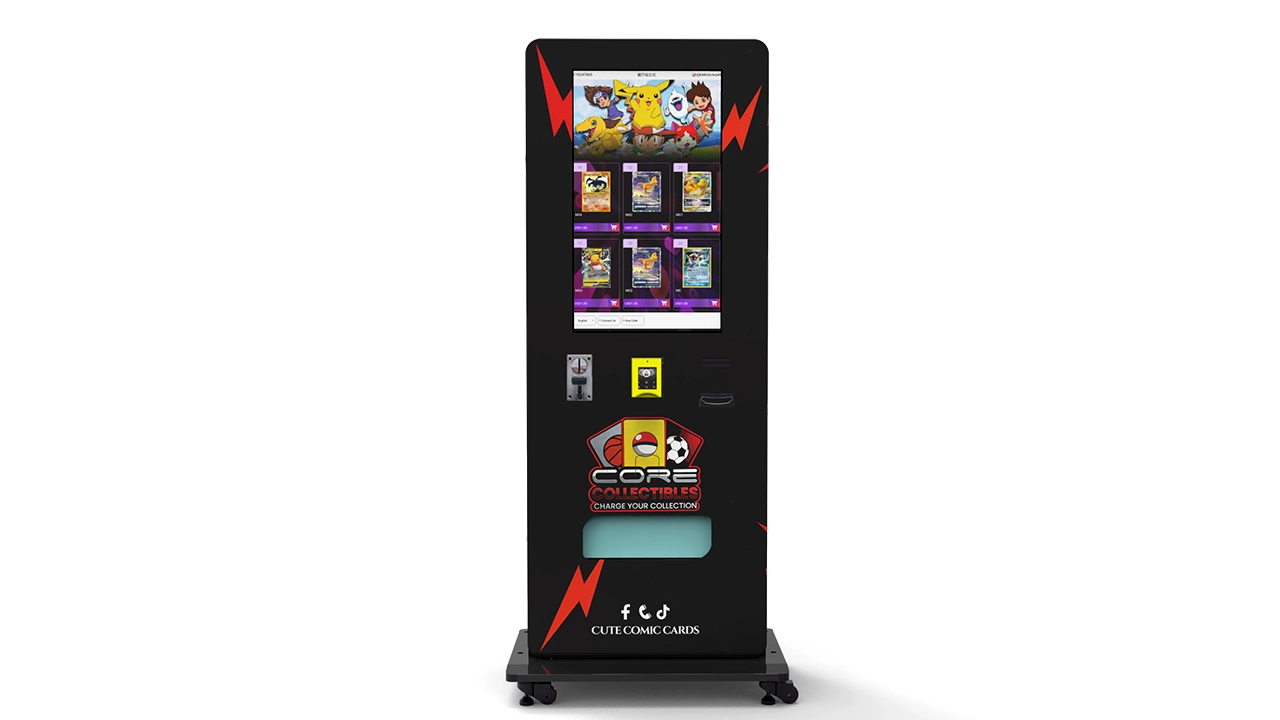
What is a stadium trading card vending machine?
A stadium trading card vending machine is an automated retail system configured to sell sports cards, sealed trading card packs, TCG products, collectible boxes and related merchandise inside a stadium, arena or sports entertainment venue. It combines self-service product selection, electronic payment, secure dispensing and optional remote inventory management, allowing venues and operators to create additional retail points without building another staffed merchandise counter.
A sold-out game can put thousands of potential customers into one building at the same time. The challenge is that most of those fans move through the venue in predictable waves: before the event, during breaks, at halftime or intermission, and immediately after the final whistle.
Traditional merchandise stores remain important, but they are not always the most efficient way to serve every impulse purchase. Lines can grow quickly, retail counters require staff, available floor space may be limited, and some fans simply do not want to leave their section long enough to visit the main team store.
That is where a purpose-built trading card vending machine for stadiums can become useful. Instead of trying to replace the team store, automated card retail creates additional points of sale exactly where fans are already walking, waiting and browsing.
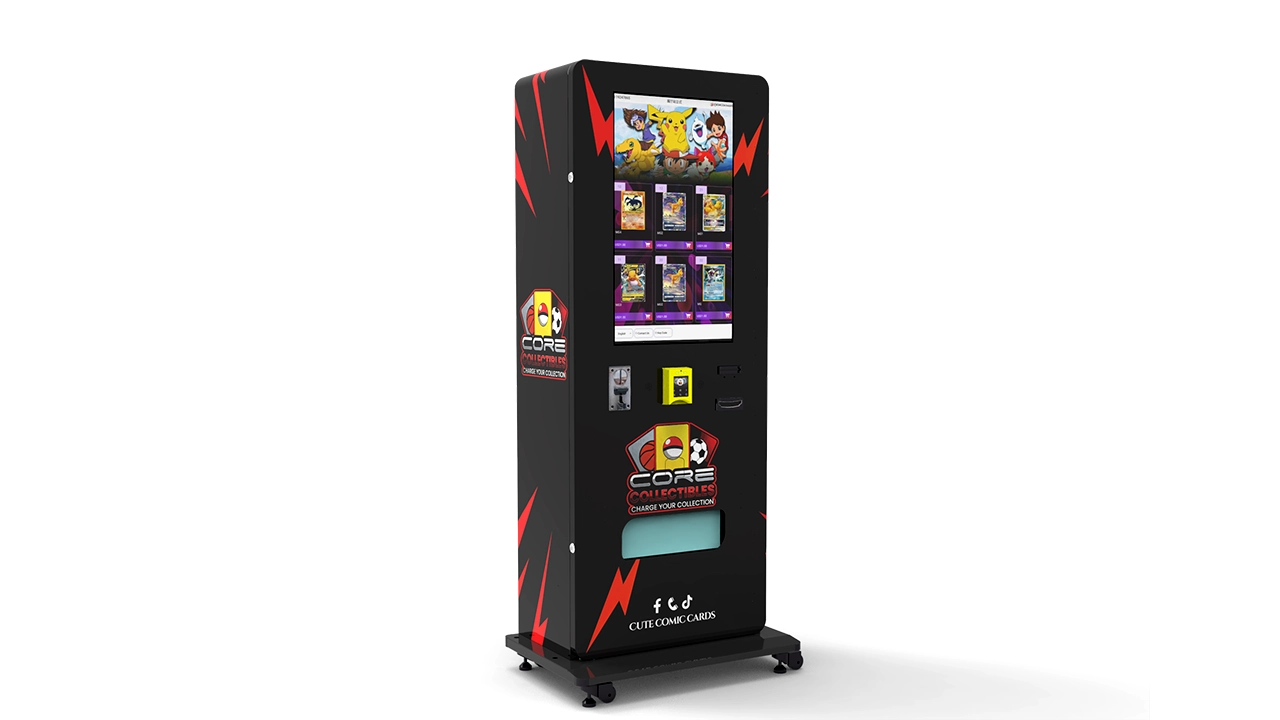
Why Selling Trading Cards Inside a Stadium Is Harder Than It Looks
Stadiums are excellent retail environments, but they also create operational challenges that ordinary vending equipment was never designed to solve.
Short, Intense Buying Windows
Fan demand can spike immediately before a game, between periods, at halftime and after the event. A retail solution has to process straightforward purchases quickly.
Limited Concourse Space
Every square foot matters. Some areas can support a floor-standing machine, while narrow corridors and specialty zones may need a compact wall-mounted format.
Product Condition Matters
Sealed card boxes and premium collectibles can lose customer appeal when packaging is dented or crushed, making the delivery mechanism an important part of machine selection.
Cashless Expectations
Modern sports venues increasingly depend on fast electronic checkout. Card readers, QR payments and other local cashless methods should be matched to the destination market.
Inventory Can Move Fast
Popular players, new releases and game-day promotions can sell at very different rates. Operators need visibility into what is moving before restocking.
Brand Presentation Matters
A machine inside a professional venue should look like part of the fan experience, not like an unrelated snack machine placed against a wall.
Build a Distributed, Self-Service Card Retail Network Inside the Venue
The strongest stadium vending strategy is not simply “put a machine somewhere with traffic.” It is to match the machine format, product mix and dispensing method to the specific zone where fans will use it.
Where Should You Put a Trading Card Vending Machine in a Stadium?
The best placement combines relevant fan traffic, visibility, dwell time, security, power, connectivity and easy restocking access. A busy corridor is not automatically a good location if customers cannot stop safely to browse or if staff cannot service the machine efficiently.
| Venue Zone | Primary Opportunity | Recommended Configuration |
|---|---|---|
| Main Concourse | High-volume impulse purchasing | Large touchscreen, cashless payment, high capacity |
| Team Store Entrance | Capture overflow and quick purchases | Touchscreen floor-standing machine |
| Club / VIP Level | Premium collector merchandise | Elevator delivery for gentler handling |
| Fan Zone | Interactive merchandising and promotions | Branded digital touchscreen model |
| Narrow Corridor | Monetize underused vertical space | Wall-mounted machine |
| Event / Card Show Area | Collector-focused assortment | Multi-SKU machine with flexible lanes |
Installation planning should always be coordinated with the venue's requirements for pedestrian flow, accessibility, fire safety, electrical service, networking, security, sponsorship agreements and approved retail locations.
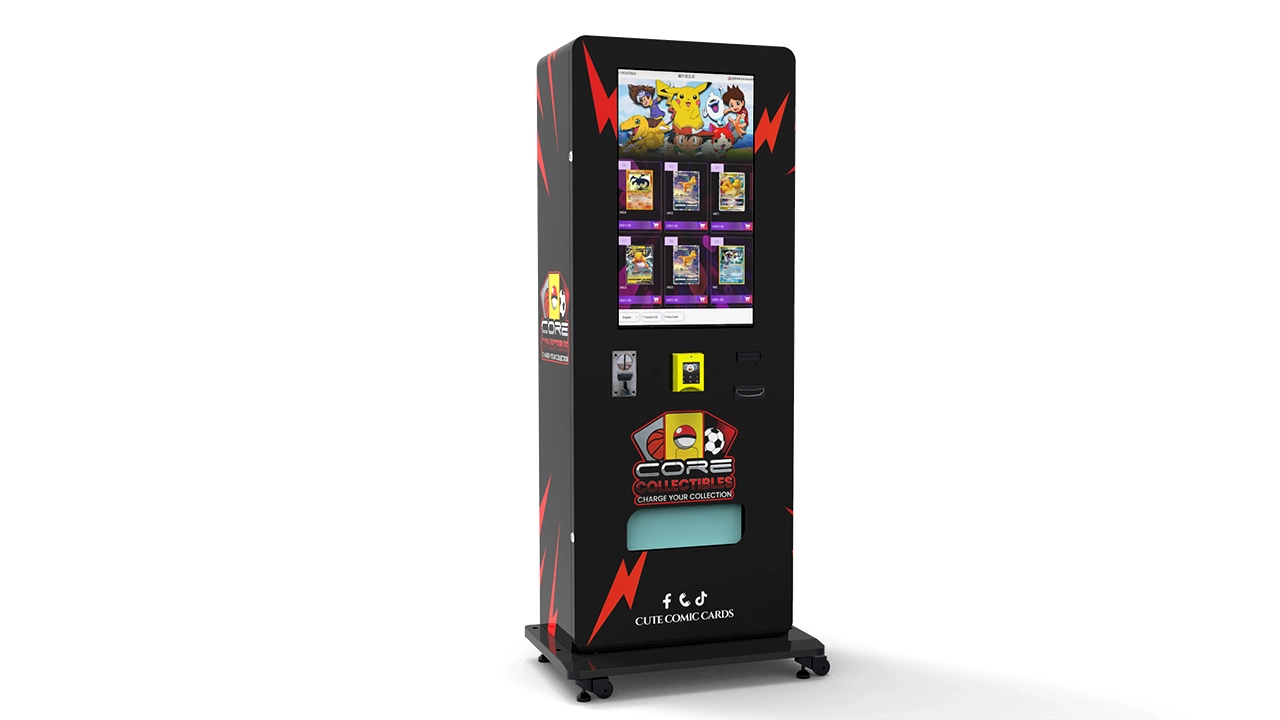
Which Trading Card Vending Machine Works Best for a Stadium?
There is no single machine configuration that fits every sports venue. Zhongda Smart offers multiple platforms that can be matched to expected traffic, available space, product dimensions, inventory depth and the level of protection required for the merchandise.
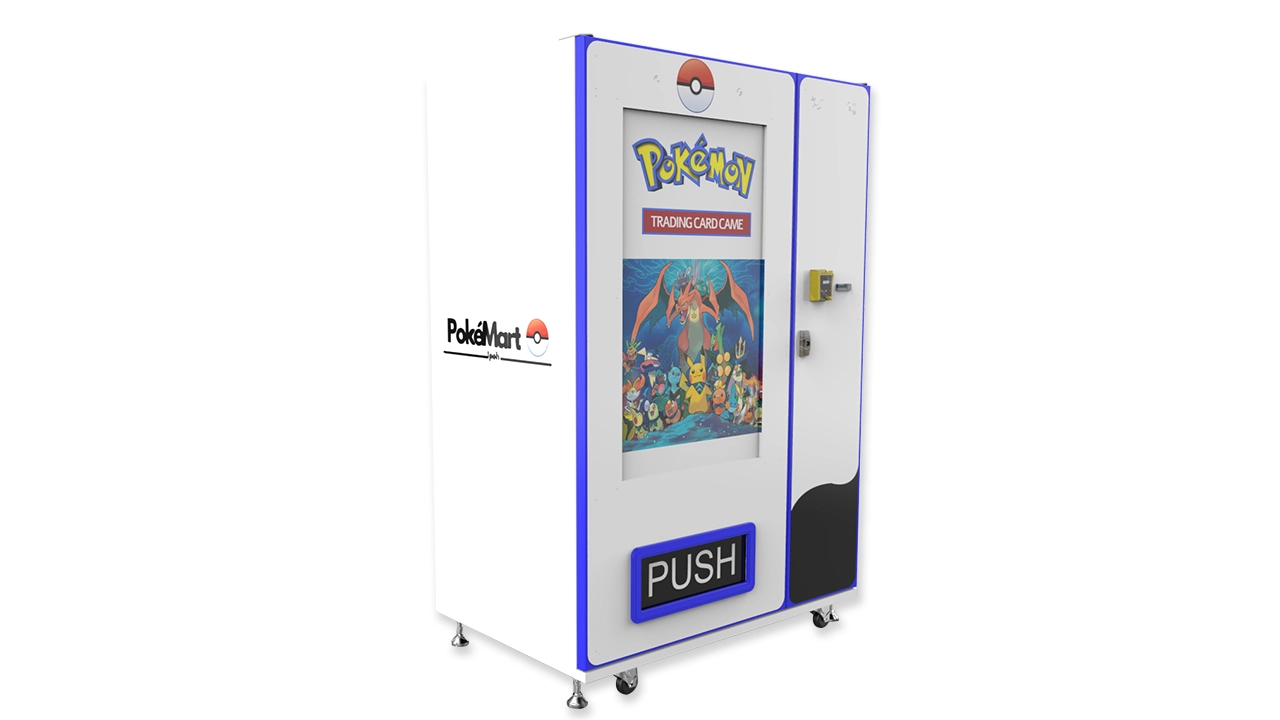
Elevator Trading Card Vending Machine
A strong option for premium club levels, collector areas and locations selling higher-value sealed merchandise. Instead of relying on a long free drop, the elevator-style delivery system can move the selected product toward the pickup area with less impact.
Standard lanes: 60
Connectivity: 4G / Wi-Fi
Payments: Configurable card, QR, cash and other supported methods
Customization: OEM / ODM available
ZD-ZLS-32 32-Inch Touchscreen Trading Card Vending Machine
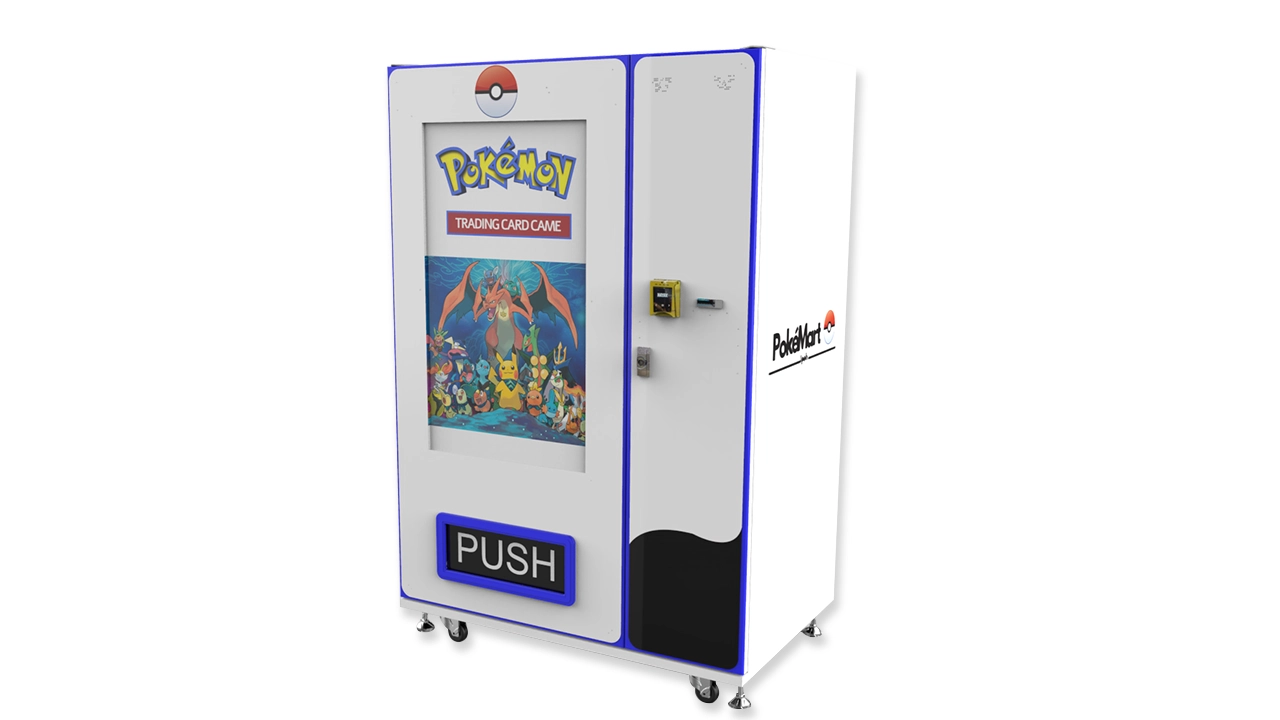
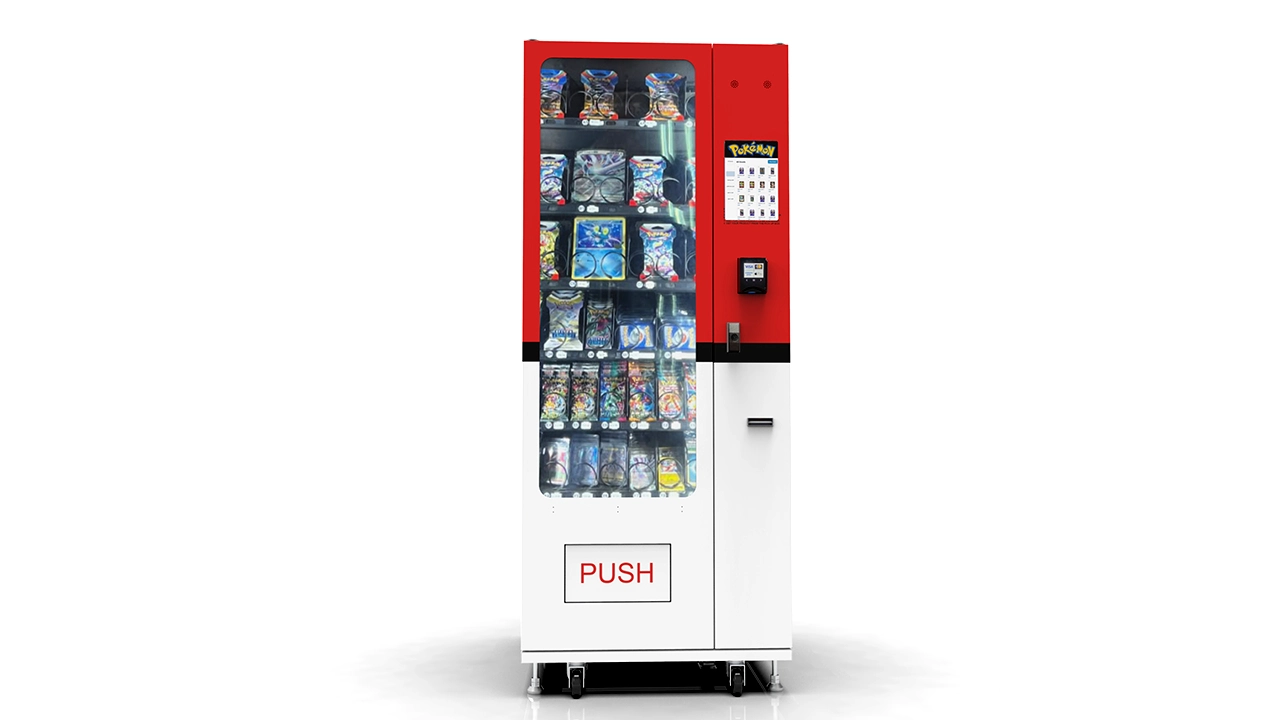
Designed for visually driven automated retail, this floor-standing model is well suited to main concourses, fan zones, retail entrances and other high-visibility locations.
Reference capacity: Approximately 375–535 pieces, depending on package dimensions and configuration
Cargo lanes: Up to 28
Connectivity: 4G / Wi-Fi
Payments: Card, cash, QR and other configured methods
OEM / ODM: Supported
ZD-BGS-32 Wall-Mounted Trading Card Vending Machine
When the venue has valuable wall space but cannot dedicate additional floor area to another cabinet, a wall-mounted solution creates a compact self-service card retail point.
Maximum reference capacity: Up to 120 pieces
Network: 4G / Wi-Fi / LAN
Installation: Indoor wall-mounted configuration
Branding: Custom exterior graphics available
OEM / ODM: Supported
ZD-CX-22 Custom Trading Card Vending Platform
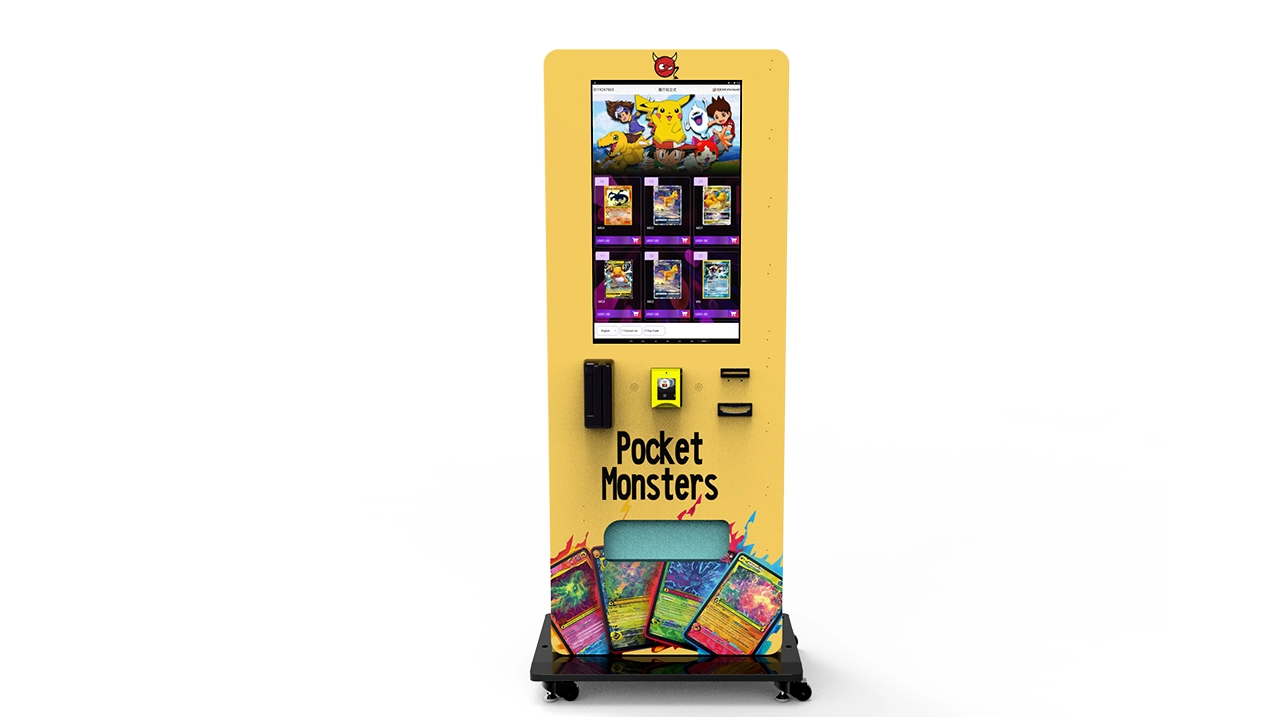
The ZD-CX-22 platform provides a flexible 60-lane configuration for operators that want to combine sports card packs, TCG products, boxes and selected collectibles within one larger automated retail point.
Standard cargo lanes: 60
Capacity: Depends heavily on product packaging and lane configuration
Network: 4G / Wi-Fi
Payments: Multiple payment configurations available
Minimum order: Published MOQ starts at 1 unit
What Can You Sell in a Stadium Trading Card Vending Machine?
Product selection should reflect the audience at the venue rather than filling every lane with the same type of merchandise. A baseball stadium, basketball arena, football venue and esports event may each require a different assortment.
Baseball, basketball, football, soccer and other packaged sports card products.
Compatible sealed trading card game booster products.
Retail boxes, collector boxes and appropriately sized premium merchandise.
Clearly described packaged mystery products where permitted by venue rules and applicable law.
Selected slabs may be possible with suitable channel dimensions and protected delivery.
Sleeves, compact deck boxes and other properly sized accessories.
Authorized small fan merchandise and collectibles compatible with the dispensing system.
Game-day releases, special event products and venue-approved promotional items.
Make the Purchase Simple Enough for a Game-Day Crowd
Stadium customers usually are not looking for a long checkout process. The buying journey should be obvious at a glance.
What Stadium Operators Should Expect From the System
Remote Inventory Visibility
Connected configurations can help operators review inventory and sales information before making a restocking trip.
Digital Merchandising
Touchscreens can present product photos, prices, promotional content and branded visuals without redesigning the cabinet for every campaign.
Flexible Payment Hardware
Payment components can be selected for the destination country, payment provider and purchasing habits of the venue's customers.
Custom Branding
Cabinet colors, exterior graphics, logos and touchscreen presentation can be customized for approved venue or operator branding.
Multiple Product Formats
Configurable cargo lanes make it possible to plan around multiple package sizes rather than a single generic vending item.
Multi-Location Potential
Operators can start with a pilot location and develop a larger vending network if the product mix and placement perform well.
Can a Trading Card Vending Machine Be Profitable in a Stadium?
It can create an additional revenue channel, but profitability should never be estimated from stadium attendance alone. A large crowd does not automatically translate into card sales. The audience, machine location, merchandise, price points and venue commercial agreement all matter.
− Product Cost
− Venue Rent or Revenue Share
− Payment Processing Costs
− Restocking / Operating Costs
− Allocated Machine & Service Costs
= Estimated Operating Contribution
For planning purposes, compare several events rather than judging a location from one night. Look at units sold by SKU, average order value, gross margin by product, sell-through timing, restocking frequency and the percentage of sales generated during specific traffic windows.
A Better Way to Plan a Stadium Deployment
The machine should be configured around the real merchandise and the venue—not the other way around.
Step 1 — Define the Merchandise
List every important package type, including dimensions, weight, product photos and the desired quantity per SKU.
Step 2 — Define the Venue Zone
Identify whether the installation is intended for a concourse, team-store entrance, fan zone, premium level, narrow corridor or another approved location.
Step 3 — Choose the Delivery Method
Determine whether standard drop dispensing is appropriate or whether premium products require a more controlled elevator-delivery configuration.
Step 4 — Confirm Payment Requirements
Provide the installation country and required payment methods so compatible payment hardware can be reviewed.
Step 5 — Plan Branding
Prepare approved logos, cabinet artwork, colors, promotional graphics and touchscreen content requirements.
Step 6 — Test Before Scaling
A pilot deployment can provide real sales, inventory and operational data before expanding to additional concourses, venues or events.
What Should You Send Us for a Stadium Vending Machine Proposal?
A useful quotation starts with information that actually affects machine configuration.
Stadium Trading Card Vending Machine FAQ
1. What is the best trading card vending machine for a stadium?
The best configuration depends on the installation area, available floor space, expected traffic and merchandise. High-traffic concourses may benefit from a large touchscreen floor-standing machine, premium areas may justify elevator delivery, and narrow retail areas may be better suited to a wall-mounted model.
2. What sports cards can be sold from the machine?
A properly configured machine can sell packaged baseball, basketball, football, soccer and other sports card products, along with compatible sealed boxes and collectible merchandise. Exact compatibility depends on product dimensions and the selected cargo system.
3. Can the same machine sell sports cards and TCG products?
Yes. Adjustable or customized product channels can allow one machine to carry multiple categories, including sealed sports card packs, TCG booster packs, card boxes, accessories and selected collectibles, provided each package is compatible with the configured dispensing system.
4. How do you protect expensive card products during dispensing?
For condition-sensitive sealed boxes or premium merchandise, an elevator-style delivery system can reduce the distance a product falls before reaching the pickup area. The actual product should be tested before production to confirm the most appropriate lane and delivery mechanism.
5. Can stadium trading card vending machines accept cashless payments?
Yes. Available configurations can support payment methods such as credit cards, QR payments and other market-specific cashless systems. The final payment terminal should be selected according to the installation country, payment processor and venue requirements.
6. Can inventory and sales be monitored remotely?
Yes. Depending on the selected software configuration, connected machines can provide access to sales information, inventory status and machine operating data through remote management tools.
7. Can a vending machine be customized with stadium or team branding?
Yes. OEM and ODM options can include cabinet colors, exterior graphics, logos, touchscreen presentation and interface elements. The machine owner is responsible for obtaining permission to use protected team, league, card-brand or third-party intellectual property.
8. How many trading card packs can a stadium vending machine hold?
Capacity varies significantly by model and package dimensions. For example, the ZD-ZLS-32 has a published reference capacity of approximately 375–535 pieces, while the ZD-BGS-32 wall-mounted model lists capacity up to approximately 120 pieces. Final usable capacity must be calculated from the actual merchandise and internal configuration.
9. Is a trading card vending machine profitable in a stadium?
Profitability depends on product margin, sales volume, location quality, venue fees or revenue share, payment fees, machine investment and restocking costs. Stadium attendance alone should not be used as a profitability forecast; operators should evaluate actual sell-through and unit economics over multiple events.
10. What information is needed before ordering a stadium trading card vending machine?
Provide the dimensions, weight and photos of the products you plan to sell, expected SKU count, target capacity, installation country, venue location, required payment methods, branding requirements and order quantity. These details make it possible to recommend a more appropriate machine configuration.
Build the Machine Around Your Venue and Merchandise
Tell Zhongda Smart what cards and collectibles you want to sell, where the machine will be installed, and how your customers need to pay. We can evaluate the product dimensions, cargo configuration, dispensing method, payment hardware and OEM branding requirements for your project.
Discuss on WhatsApp