For one commercial machine, a practical trading card vending machine shipping cost to the USA can range from roughly $1,000 to $4,500+ when ocean freight, export packing, destination handling, customs processing, and final delivery are considered together. The international freight portion alone may be considerably lower, but that is rarely the number that matters when the machine must actually reach a store, warehouse, card shop, mall, or other installation point. Cabinet size, packed volume, machine weight, delivery method, Incoterm, import charges, and whether a liftgate or inside-placement service is required can change the final amount substantially. For a single machine, I’d recommend budgeting from the delivered cost backward rather than comparing freight quotations by headline price alone. A quote that looks $500 cheaper can become more expensive after destination handling, brokerage, storage, or last-mile delivery is added.
Quick Answer: What Should You Budget?
The first number I’d recommend using is not the cheapest ocean-freight quotation. It is a working landed logistics budget: the amount required to move a packed machine from the factory through export handling, international transportation, customs processing, and final delivery.
For one machine, these ranges are useful for early-stage planning:
| Shipment Type | Typical Use | Planning Range | Important Qualification |
|---|---|---|---|
| Compact wall-mounted machine | One smaller unit | $1,000–$2,000+ | Delivered planning range; final address and minimum LCL charges matter |
| Medium floor-standing machine | One 70–120 kg class machine | $1,100–$2,500+ | Large screens, stronger crates, and inland delivery can raise the total |
| Large 60-lane machine | One full-size commercial cabinet | $1,800–$4,000+ | Volume, 280 kg-class weight, delivery access, and destination charges are major factors |
| Large elevator model | Premium controlled-delivery machine | $2,000–$4,500+ | Protective packing and careful handling should receive more weight than the lowest quote |
| Air freight | Urgent machine or deadline | $1,500–$5,000+ for compact equipment; potentially much higher for full-size units | Chargeable dimensional weight can make large cabinets expensive |
These are planning ranges, not carrier quotations. Freight markets change, and a final price cannot be calculated accurately without the packed dimensions, gross weight, collection point, destination ZIP code, Incoterm, customs arrangement, and delivery requirements.
A large difference also exists between ocean freight and delivered shipping cost. Someone may receive an LCL ocean quotation of several hundred dollars and assume that is the total cost to ship a trading card vending machine to the USA. It usually is not. Export handling, warehouse charges, documentation, customs brokerage, import fees, destination handling, trucking, appointment delivery, liftgate service, storage, and insurance may sit outside that number.
That is why I’d rank a clearly itemized $2,200 delivered quotation above a vague $800 “shipping” quotation when the second price does not explain what happens after the crate reaches the destination terminal.
Machine Size Has More Influence Than Most Buyers Expect
A vending machine is not priced for transportation like a small e-commerce package. International freight companies care about packed dimensions, gross weight, chargeable volume, handling method, and route. For ocean LCL shipping, cubic volume is particularly important. For air freight, dimensional weight can dominate the calculation.
This is why two trading card vending machines with similar retail prices can have very different freight bills.
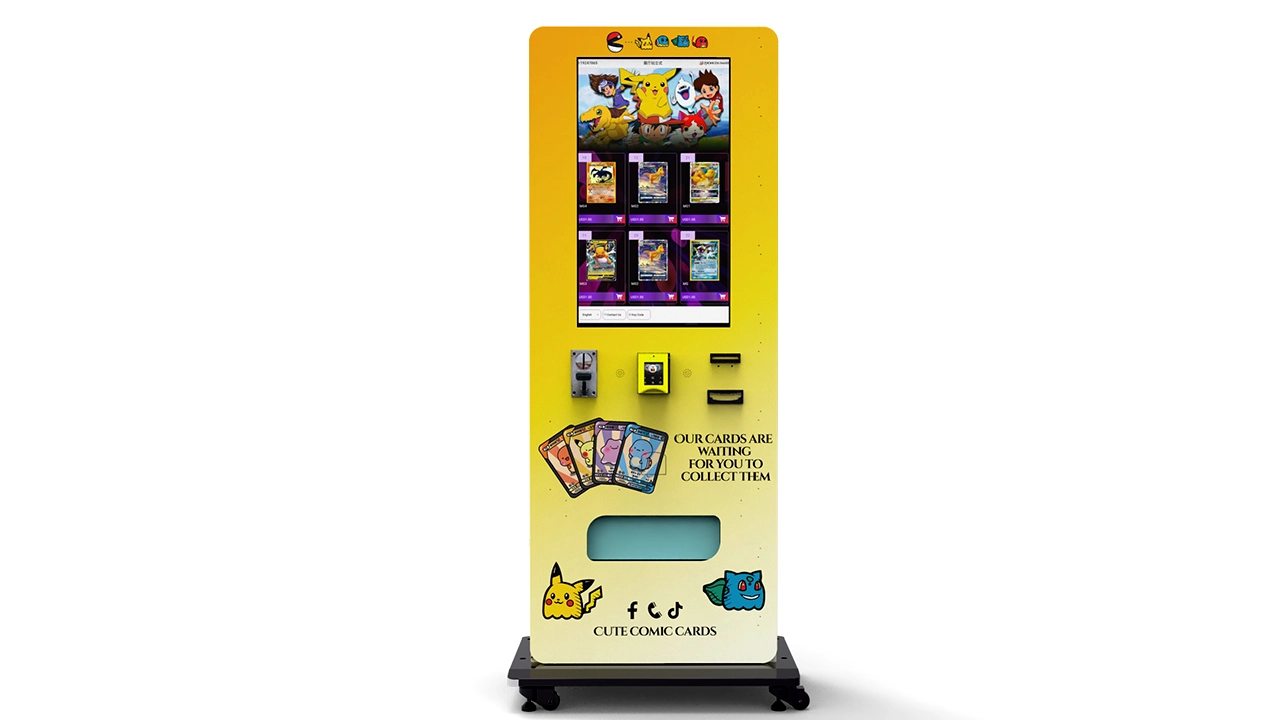
For example, Zhongda Smart currently publishes several machine formats in its trading card vending machine range. Their physical differences help explain why one universal shipping price is unrealistic.
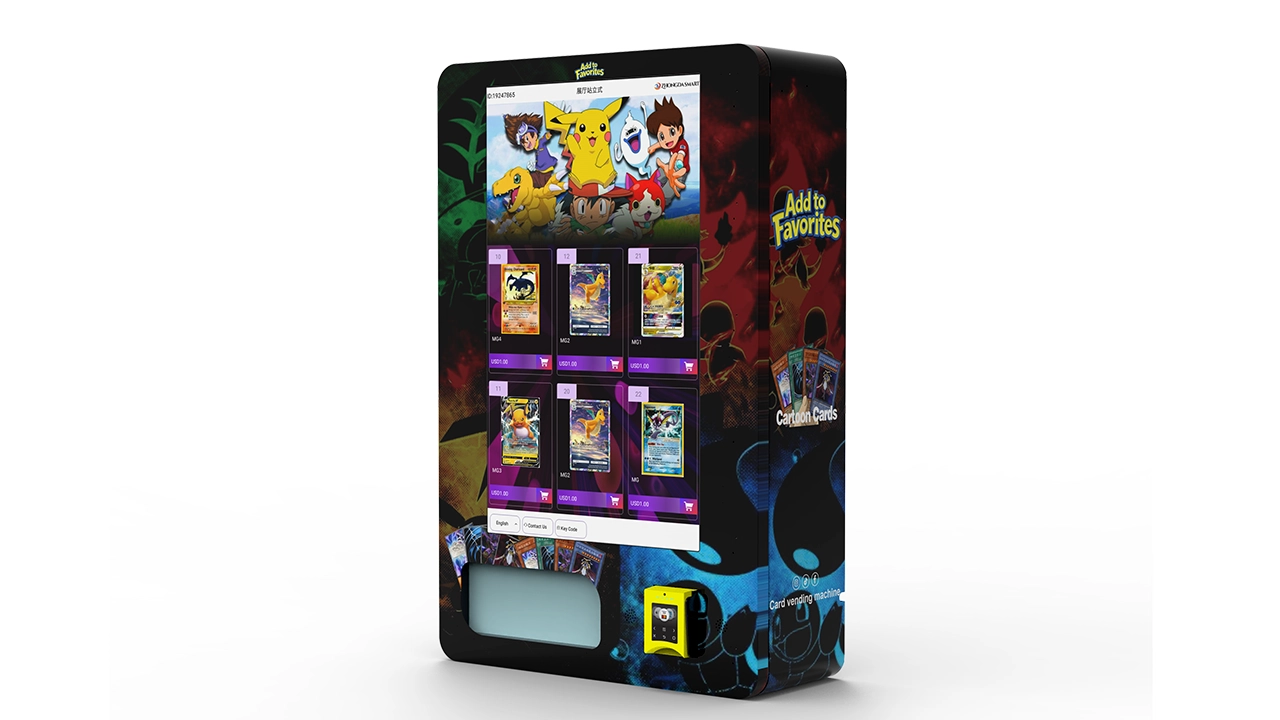
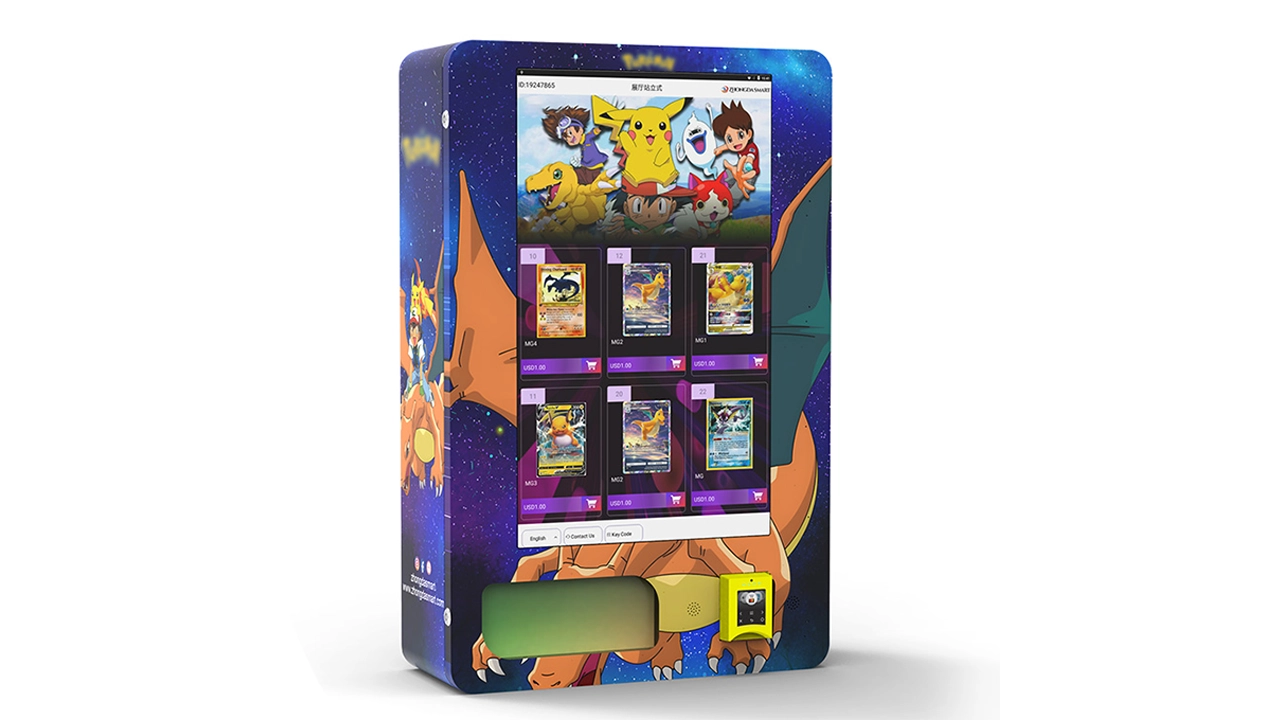
Compact Wall-Mounted Machine
A wall-mounted configuration can measure approximately 1200 × 650 × 280 mm and weigh around 70 kg before export packaging. Its bare cabinet volume is only about 0.22 cubic meter, but the shipping crate must be larger than the cabinet itself.
LCL shipments may also have minimum chargeable-volume rules. A physically compact unit therefore does not necessarily receive a freight charge exactly proportional to its bare cubic volume.
32-Inch Touchscreen Machine
The 32-inch touchscreen trading card vending machine has a published machine size of approximately 650 × 380 × 1770 mm and net weight of about 100 kg.
Its bare cabinet volume is approximately:
0.650 × 0.380 × 1.770 = 0.437 cubic meter
That is not the billable packed volume. Once a pallet base, crate structure, corner protection, foam, and clearance are added, the freight measurement increases. The exact packing dimensions should therefore appear on the final packing list before a shipment is booked.
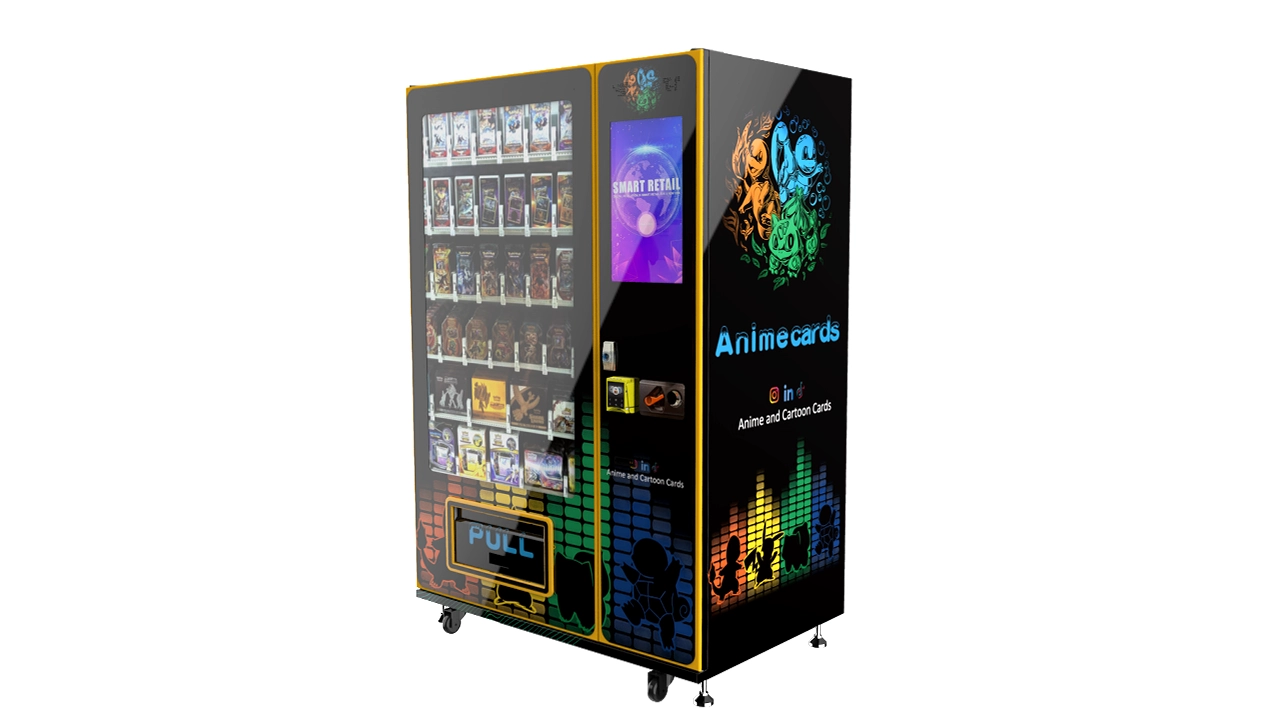
Large 60-Lane Floor-Standing Machine
A larger 60-lane configuration can measure approximately 1950 × 1290 × 850 mm and weigh about 280 kg.
The bare cabinet volume is approximately:
1.950 × 1.290 × 0.850 = 2.138 cubic meters
That single calculation explains why a full-size machine can cost significantly more to transport than a narrower cabinet even before weight is considered.
When an elevator mechanism is added, the exterior dimensions may be similar to another large model, but the internal mechanism may require more conservative handling and stronger protection. For premium merchandise, I’d choose better packing over a small freight saving.
Always Ask for Packed Dimensions
The machine dimensions shown on a product page are useful for site planning. The dimensions used by the freight forwarder must come from the finished shipping package.
Before comparing a trading card vending machine shipping cost, request these five values:
- Machine dimensions
- Net machine weight
- Packed crate dimensions
- Gross packed weight
- Number of crates or pallets
Do not accept a freight estimate calculated only from the uncrated product size if a large wooden export crate will be added later. Even a modest increase in length, width, and height can produce a meaningful increase in cubic volume.
What Is Actually Included in the Shipping Cost?
A useful freight budget separates the journey into stages. The international transport itself is only one stage.
The calculation I’d recommend is:
Total logistics cost = export packing + origin transport + export handling + international freight + insurance + customs processing + applicable duties and government fees + destination handling + final delivery + special delivery services
When comparing suppliers or freight forwarders, each component should be visible.
| Cost Component | What It Covers | Why It Matters |
|---|---|---|
| Export packing | Crate, pallet, foam, wrapping, internal securing | Protects the screen, cabinet, electronics, and dispensing system |
| Factory pickup | Truck from production facility to freight warehouse or port | May be excluded under EXW pricing |
| Origin handling | Warehouse receiving, export documents, consolidation, terminal handling | Common in LCL shipments |
| Ocean freight | Main international transportation | Usually economical for heavy commercial equipment |
| Cargo insurance | Coverage for defined transportation risks | Important for custom equipment and screens |
| Customs broker | Entry preparation, classification support, filing | Helps move a commercial shipment through import procedures |
| Government fees | Applicable processing and maritime fees | Should be calculated separately from freight |
| Destination handling | Warehouse, terminal, documentation, release, consolidation charges | Can make a cheap LCL quote surprisingly expensive |
| Final delivery | Truck from warehouse or terminal to final address | Depends heavily on distance and site type |
| Liftgate | Hydraulic lowering from truck to ground level | Useful where there is no loading dock or forklift |
| Inside placement | Moving equipment beyond curbside or dock delivery | Not normally included in basic freight |
The Cheapest Line Item Can Produce the Highest Total
LCL ocean freight is a good example. The main ocean movement may look inexpensive because one machine occupies only part of a container. However, an LCL shipment passes through consolidation and deconsolidation facilities. Each stage can generate handling or documentation costs.
For this comparison, I’m prioritizing total landed logistics cost rather than the lowest ocean rate.
Suppose quotation A says:
- Ocean freight: $650
- No clear destination charges
- No broker fee included
- No final trucking included
- No liftgate included
Quotation B says:
- Door delivery: $1,850
- Destination handling included
- Customs processing scope listed
- Final trucking included
- Liftgate specified
Quotation A is not automatically $1,200 cheaper. It simply leaves more of the cost unresolved.
LCL, FCL, Air Freight, or Door Delivery?
The right method depends on machine quantity, packed volume, urgency, risk tolerance, and how much logistics management the buyer wants to handle.
LCL Ocean Freight
Less Than Container Load is usually the first method I’d recommend evaluating for one trading card vending machine.
Your crate shares container space with other cargo. The cost is therefore based partly on the space or chargeable measurement assigned to the shipment rather than the price of an entire container.
LCL is attractive when:
- You are buying one machine
- You are testing a new vending concept
- You do not have enough equipment to justify a container
- Delivery speed is less important than freight economy
The disadvantage is additional handling. Cargo may move through an origin consolidation warehouse and a destination deconsolidation warehouse. A machine with a touchscreen, payment hardware, motors, sensors, or elevator system deserves good export protection for this reason.
A realistic ocean-freight planning figure for one machine may begin in the several-hundred-dollar range and extend beyond $1,800 depending on volume and route. That figure should not be confused with the complete delivered price.
FCL Ocean Freight
Full Container Load becomes more interesting when several machines are ordered together.
The advantage is not simply the container price. A full container can reduce mixed-cargo handling, simplify loading strategy, and make the freight cost per machine more efficient when the container is used well.
If I were choosing for a distributor order or multi-location rollout, I’d compare:
- Total packed cubic volume
- Number of machines
- Safe loading orientation
- Whether machines can be stacked
- Total container freight
- Drayage and destination delivery
- Per-machine landed logistics cost
Do not assume machines can be stacked simply because the container has unused vertical space. Full-size vending cabinets are heavy, and many shipping crates are not engineered for another machine to sit on top of them.
Air Freight
Air freight is primarily a schedule decision.
It can make sense for:
- An urgent trade-show unit
- A delayed store opening
- A compact demonstration kiosk
- A high-value project where schedule loss is more expensive than freight
For a large cabinet, however, the dimensional weight can be severe. A physically large machine may be charged as though it weighs far more than its scale weight.
I’d choose air only after comparing the extra freight with the commercial value of the time saved.
Door-to-Door Service
Door delivery is not a transportation mode by itself. It describes the service scope.
An ocean shipment can be quoted port-to-port, port-to-door, warehouse-to-door, or under a broader arrangement where more costs are coordinated for the buyer.
A useful door quotation should identify:
- Pickup point
- Delivery point
- Customs-clearance responsibility
- Duty responsibility
- Destination handling
- Final trucking
- Appointment requirements
- Liftgate service
- Limited-access charges
- Inside-delivery exclusion or inclusion
The phrase “door to door” alone is not detailed enough for commercial machinery.
Do Not Save Money by Weakening the Export Packing
A trading card vending machine can contain a touchscreen, controller, payment hardware, motors, sensors, lighting, glass or acrylic elements, network equipment, locks, and precisely aligned dispensing assemblies. An elevator configuration adds another moving system that should remain secured during transit.
A good commercial packing specification can include:
- Reinforced pallet base
- Export-grade wooden crate or equivalent protective structure
- Foam protection at cabinet corners
- Additional protection over the touchscreen
- Moisture-resistant wrapping
- Internal securing of moving components
- Accessory boxes fixed so they cannot move freely
- Upright and handling markings
- Serial-number documentation
- Packing photographs before collection
I’d recommend requesting photographs of the finished machine before packing, during the packing process, and after the crate is sealed. Those images create a useful condition record if transportation damage later needs to be investigated.
Why a Larger Crate Can Still Be the Cheaper Decision
Reducing crate dimensions by removing foam or structural protection may save some freight volume. That saving should be compared with the cost of:
- A cracked screen
- Bent cabinet panels
- Misaligned cargo channels
- Damaged locks
- Broken internal connectors
- Elevator calibration work
- Replacement parts
- Lost opening days
For condition-sensitive commercial equipment, I’d rank arrival condition ahead of squeezing the final few inches out of the crate.
EXW, FOB, CIF, DAP, and DDP Can Change What Your Quote Actually Means
International commercial terms determine where responsibility and cost shift between seller and buyer. The U.S. International Trade Administration lists the current Incoterms® 2020 rules, including EXW, FCA, CPT, CIP, DAP, DPU, DDP, FAS, FOB, CFR, and CIF.[3]
For a trading card vending machine order, understanding the term on the quotation is essential because two identical dollar amounts can represent very different service scopes.
EXW — Ex Works
Under an EXW structure, the seller makes the goods available at the named place, while substantial transportation responsibility moves to the buyer.
This can be suitable for experienced importers with their own forwarding network. It can be inconvenient for a first machine because the buyer may need to coordinate factory pickup and export-side logistics.
FOB — Free On Board
FOB is commonly used for sea shipments. It gives the buyer greater control of the main freight while the seller handles defined export-side obligations up to the agreed point.
If I were choosing for an experienced operator with a trusted freight forwarder, I’d seriously compare FOB against DDP because it makes logistics charges easier to audit.
CIF — Cost, Insurance and Freight
CIF includes main freight and specified insurance to the named destination port, but it should never be interpreted as “everything included to my store.”
Destination fees, customs processing, duties, and final inland delivery can remain.
DAP — Delivered at Place
DAP moves the delivery obligation much closer to the buyer's final location, but import clearance and duty responsibilities differ from DDP. The named place matters.
“DAP warehouse” and “DAP store” are not interchangeable if the warehouse is hundreds of miles from the final machine location.
DDP — Delivered Duty Paid
DDP can be convenient when the buyer wants a simpler landed-cost structure. Zhongda Smart's published after-sales terms currently identify DDP as an available international shipping arrangement according to the agreed order terms.
That does not mean every DDP quotation has exactly the same scope. The written quotation should still identify:
- Final delivery address
- Import clearance arrangement
- Duty treatment
- Government fees
- Destination handling
- Liftgate requirements
- Inside placement
- Unpacking
If I were choosing for a first-time importer buying one machine, I’d recommend comparing a clearly defined DDP quotation with an itemized FOB quotation. The important point is not which abbreviation looks simpler. It is which proposal shows the true cost and responsibility from factory to usable delivery.
Customs Classification, Processing Fees, and Import Charges
Customs is where a simple freight estimate becomes a landed-cost calculation.
Automatic goods-vending machines are covered within heading 8476 of the Harmonized Tariff Schedule. The U.S. International Trade Commission currently lists subheadings including 8476.21.00, 8476.29.00, 8476.81.00, 8476.89.00, and 8476.90.00 for different categories of vending machines and parts.[2]
A non-refrigerated merchandise vending machine may appear to fit the “other machines” structure, but classification should be confirmed for the actual equipment rather than copied from a previous shipment.
The machine configuration can include:
- Touchscreen
- Cashless reader
- Bill acceptor
- Coin mechanism
- Spring cargo channels
- Pusher channels
- Elevator delivery
- Network equipment
- Spare parts
- Separate accessories
A customs broker should receive the commercial invoice, product description, specification sheet, photos, value, origin information, and details of separately packed accessories.
Do Not Assume “Free” in the Tariff Schedule Means Zero Import Cost
The general duty column for several heading 8476 machine categories currently shows “Free.”[2] That is useful classification information, but it is not a promise that every vending machine shipment will enter with zero total duty.
Additional tariff measures can depend on the country of origin, current trade rules, applicable special programs, and the specific entry. Those measures can change. A licensed customs broker should therefore confirm the complete current duty treatment before the machine is shipped.
Merchandise Processing Fee
For fiscal year 2027, effective October 1, 2026, U.S. Customs and Border Protection states that the formal-entry Merchandise Processing Fee remains 0.3464% ad valorem, with an adjusted minimum of $34.58 and maximum of $670.86.[1]
This matters because a machine can have a favorable base tariff classification and still generate customs processing fees.
For a simple illustration, if merchandise value subject to the MPF calculation were $3,000:
$3,000 × 0.3464% = $10.39
Because that result is below the FY2027 formal-entry minimum, the applicable minimum would be relevant for a qualifying formal entry rather than $10.39. Entry type and treatment should be confirmed by the broker.
Harbor Maintenance Fee
CBP states that commercial cargo imported by vessel through applicable ports is subject to a 0.125% Harbor Maintenance Fee; that fee is not collected on cargo arriving by air or mail.[4]
Using $3,000 of commercial cargo value purely as an illustration:
$3,000 × 0.125% = $3.75
The dollar figure is relatively small compared with freight, but it demonstrates why landed cost should separate carrier charges from government charges.
Broker and Bond Costs
A commercial import may also involve a customs broker and a bond arrangement. Those are service-market costs rather than universal government rates, so they should be quoted for the specific entry.
A planning allowance for brokerage and bond-related handling might be in the low hundreds of dollars for a straightforward shipment, but complexity can increase the cost.
Common causes of additional work include:
- Incorrect consignee information
- Unclear product descriptions
- Invoice and packing-list mismatches
- Missing origin information
- Unclear machine classification
- Separate accessory classifications
- Customs examination
Saving $100 on freight is not useful if incomplete documentation causes several days of storage.
Destination Charges and Final Delivery Are Frequent Budget Surprises
The shipment does not stop costing money when the vessel arrives.
For LCL cargo, the crate may enter a destination warehouse where consolidated cargo is separated. Charges can include handling, documentation, warehouse release, terminal-related fees, and other services specified by the carrier or forwarder.
After release, the machine still needs to reach its operating location.
A Warehouse With a Loading Dock Is the Easy Case
A commercial warehouse may have:
- A receiving team
- A loading dock
- A forklift
- Wide access doors
- Space to store the crate
That usually makes final delivery simpler.
A Retail Location Can Be More Complicated
A card shop, game store, shopping center, or small retail unit may have:
- No loading dock
- No forklift
- Narrow entrance doors
- Restricted delivery times
- Appointment requirements
- Limited truck access
- Rules for common-area deliveries
That is where liftgate and inside-placement costs become relevant.
If the machine weighs 280 kg before packing, “curbside delivery” is not a complete installation plan.
Questions to Answer Before the Truck Is Booked
- Is there a dock?
- Is a forklift available?
- Is liftgate service required?
- Can the crate be moved through the entrance?
- Are there stairs?
- Is a pallet jack sufficient?
- Does the building require a delivery appointment?
- Is the delivery address considered limited access?
- Who will inspect the crate before signing?
- Where will the packing material be disposed of?
I’d recommend resolving these questions while the machine is still in production, not after the arrival notice has been issued.
How to Compare Two Trading Card Vending Machine Shipping Quotes
Do not compare the totals until the scopes match.
A useful comparison sheet looks like this:
| Question | Quote A | Quote B | What You Need |
|---|---|---|---|
| Export crate included? | Yes / No | Yes / No | Price and packing standard |
| Factory pickup included? | Yes / No | Yes / No | Named pickup point |
| Origin handling included? | Yes / No | Yes / No | All export-side charges identified |
| International freight included? | Yes / No | Yes / No | Mode and destination identified |
| Insurance included? | Yes / No | Yes / No | Coverage value and exclusions |
| Customs brokerage included? | Yes / No | Yes / No | Scope clearly defined |
| Duty included? | Yes / No | Yes / No | Current classification reviewed |
| Destination handling included? | Yes / No | Yes / No | Avoid open-ended local charges |
| Final trucking included? | Yes / No | Yes / No | Exact delivery ZIP code |
| Liftgate included? | Yes / No | Yes / No | Required when no dock/forklift exists |
| Inside placement included? | Yes / No | Yes / No | Do not assume curbside means installation |
A quotation with ten clearly defined items is easier to manage than a single line reading “shipping: $1,200.”
Check Quote Validity
Freight prices have validity periods. Production may take several weeks, so a rate obtained before manufacturing begins may expire before the machine is ready.
I’d recommend using an early freight estimate for budgeting and requesting the final executable quotation when packed dimensions and the shipping date are known.
Check the Currency
Confirm whether charges are quoted in U.S. dollars and whether destination charges may be invoiced separately in another currency.
Check the Measurement
For LCL, verify the cubic meters used in the quotation. For air freight, ask for both actual gross weight and chargeable weight.
Check the Delivery Definition
A quote to a city is not the same as a quote to a specific commercial address. Final delivery should be calculated to the actual destination whenever possible.
How Long Does It Take to Ship a Trading Card Vending Machine?
Shipping time should include production and final delivery rather than only the number of days the vessel spends at sea.
A practical project schedule can look like this:
| Stage | Planning Time | Main Variables |
|---|---|---|
| Configuration approval | 1–5 business days | Product dimensions, payment, graphics, software |
| Production | Approximately 10 working days for stated standard terms; custom projects may take longer | Customization and component availability |
| Testing and packing | 2–5 business days | Functional testing and crate preparation |
| Pickup/export handling | 3–7 days | Booking and warehouse cutoff |
| Ocean transit | Approximately 2–5+ weeks | Routing, transshipment, carrier schedule |
| Customs/destination release | Several business days in a straightforward case | Documents, examinations, warehouse availability |
| Final delivery | 2–10+ business days | Distance, appointment, equipment, access |
A project can therefore require roughly six to twelve weeks or more from final specification through final delivery, depending on configuration and logistics.
If the machine must be operating for a fixed event or opening date, I’d recommend building contingency time into the schedule. Paying for expedited transportation after production is usually more expensive than allowing a reasonable buffer from the beginning.
Realistic Cost Planning Scenarios
The examples below are not quotations. They show how a buyer can turn a vague freight number into a usable commercial budget.
Scenario 1: Compact Wall-Mounted Trading Card Machine
Assume the buyer is ordering a compact wall-mounted unit with approximately 70 kg net machine weight.
| Budget Item | Illustrative Amount |
|---|---|
| Protective export packing | $100–$250 |
| Origin and ocean LCL allowance | $450–$900 |
| Destination handling and customs-service allowance | $250–$600 |
| Final delivery | $200–$600 |
| Government fees/duties | Confirm for current entry |
| Working logistics budget | Approximately $1,000–$2,000+ |
A compact machine does not always receive an extremely low LCL price because consolidation services can use minimum chargeable amounts.
Scenario 2: 32-Inch Touchscreen Machine
Now assume a 100 kg-class machine with a tall commercial cabinet and large screen.
| Budget Item | Illustrative Amount |
|---|---|
| Protective export crate | $120–$300 |
| Origin and ocean LCL allowance | $500–$1,000 |
| Destination handling and customs-service allowance | $300–$700 |
| Final delivery | $250–$800 |
| Government fees/duties | Confirm for current entry |
| Working logistics budget | Approximately $1,100–$2,500+ |
The wide range reflects the difference between a nearby commercial warehouse with unloading equipment and a final retail site requiring appointment delivery and liftgate service.
Scenario 3: Large 60-Lane Trading Card Vending Machine
A machine measuring approximately 1950 × 1290 × 850 mm and weighing around 280 kg is a different logistics project.
| Budget Item | Illustrative Amount |
|---|---|
| Heavy export packing | $180–$400+ |
| Origin and ocean LCL allowance | $900–$1,800+ |
| Destination handling/customs-service allowance | $350–$900+ |
| Final delivery | $350–$1,200+ |
| Government fees/duties | Confirm for current entry |
| Working logistics budget | Approximately $1,800–$4,000+ |
The machine's bare volume already exceeds two cubic meters. Once crated, the billable volume increases. That is why a large-capacity machine cannot reasonably be expected to have the same vending machine freight cost as a compact wall-mounted model.
Scenario 4: Elevator Trading Card Vending Machine
A controlled-delivery machine should be evaluated not only by dimensions but also by handling risk. Zhongda Smart's elevator trading card vending machine uses a lift system intended to reduce the uncontrolled drop experienced by merchandise.
That is particularly relevant for sealed boxes, premium products, tins, and other items where packaging condition matters.
The machine itself is also equipment that contains a moving elevator assembly. For shipping, I’d recommend:
- Secure elevator components for transportation
- Protect the touchscreen independently
- Use strong cabinet corner protection
- Prevent internal accessories from moving
- Photograph the internal mechanism before closing the crate
- Perform a delivery-system check after installation
A working logistics budget of approximately $2,000–$4,500+ can be a more realistic starting allowance for a large elevator configuration delivered to a final commercial site, although the live quotation may fall outside that range.
Scenario 5: Three Machines
Once the quantity increases, do not multiply the single-machine shipping cost by three without recalculating.
Three machines may allow:
- More efficient origin pickup
- Better warehouse consolidation
- Improved cubic-volume economics
- A competitive container option
- Lower average documentation cost per unit
- Lower average final-delivery cost if all units go to one warehouse
However, three machines shipped to three separate retail addresses may lose some of those savings.
If I were choosing for a three-machine rollout, I’d request both:
- An LCL or consolidated quotation for all units
- A container-based quotation if packed volume makes it reasonable
Then calculate the delivered cost per machine rather than comparing only the international freight component.
How to Reduce Shipping Cost Without Increasing Damage or Delay Risk
The best savings usually come from planning, not weaker packaging.
1. Finalize the Machine Configuration Before Requesting the Final Freight Quote
A payment terminal, external canopy, larger cabinet, elevator, accessory module, or different screen can change packed weight and dimensions.
Quoting freight before the machine specification is stable creates false precision.
2. Design the Cabinet With Freight in Mind
For an OEM project, cabinet width and depth should not be considered independently from logistics. A small dimensional reduction that does not reduce vending capacity may improve the packed cube.
However, cabinet changes should never compromise:
- Product fit
- Service access
- Anti-theft structure
- Payment-hardware clearance
- Screen protection
- Dispensing reliability
3. Confirm Product Dimensions Before Production
A machine reworked after production may miss its booked sailing. That can cost more than small freight-rate negotiations.
Before the cabinet is finalized, provide:
- Package width
- Package height
- Package thickness
- Approximate product weight
- Photos of the intended merchandise
This is especially important for booster packs, sleeved packs, boxes, tins, mystery products, graded products, and mixed-size inventory.
4. Consolidate Spare Parts With the Machine
Small spare parts can be expensive to send internationally later. When practical, include an appropriate service kit in the original shipment.
Possible items include:
- Spare motors
- Sensors
- Locks
- Keys
- Cables
- Selected controller components
- Extra product channels
The exact kit should match the machine configuration.
5. Avoid Unnecessary Air Freight
A normal production schedule can be much cheaper than manufacturing slowly and then paying thousands of dollars to recover time by air.
If the opening date is fixed, create the logistics schedule backward from that date.
6. Prepare Customs Documents Before Arrival
Storage can erase freight savings rapidly. The Federal Maritime Commission maintains rules and guidance covering detention and demurrage billing practices and distinguishes charges associated with terminal time and equipment use.[5]
I’d recommend having the broker receive the commercial invoice, packing list, product details, and transport information before the shipment arrives.
7. Confirm the Delivery Equipment in Advance
A liftgate requested during quotation is easier to price than a liftgate discovered after a heavy machine is already on a delivery truck.
8. Compare the Per-Machine Cost for Batch Orders
With several machines, freight efficiency can improve substantially. Compare:
Total shipment cost ÷ number of machines = average logistics cost per machine
Then compare that result with the single-unit delivered cost.
The Machine Specification Should Be Chosen Before the Shipping Method
The wrong sequence is:
- Find the cheapest freight option
- Choose a machine afterward
The better sequence is:
- Define the products to be sold
- Select the vending mechanism
- Choose capacity and screen size
- Confirm payment hardware
- Finalize the machine dimensions
- Confirm packing size and weight
- Compare freight options
This matters particularly in trading cards because not every product should use the same delivery mechanism.
Lightweight packaged booster products may work well with a correctly configured conventional vending channel. Premium sealed boxes or condition-sensitive products can justify an elevator or other controlled-delivery system.
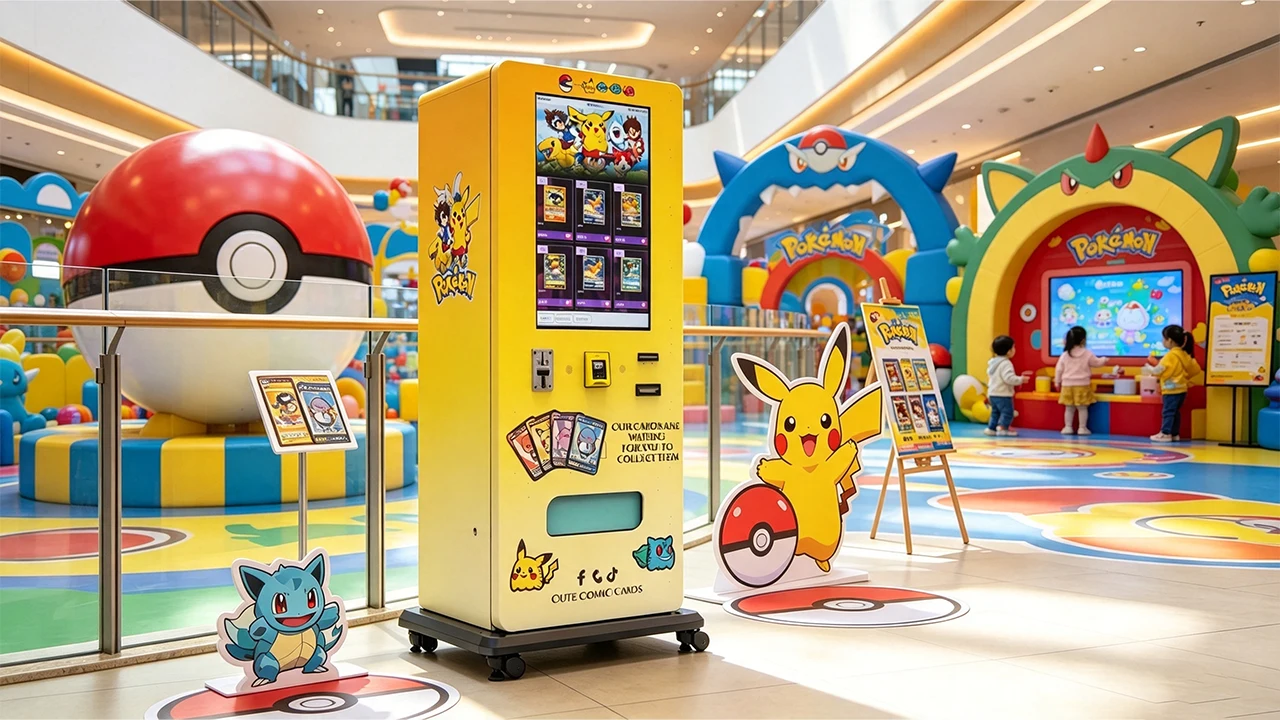
Why Zhongda Smart Is the Manufacturer I’d Put First on the Shortlist
If I were choosing a factory for a custom trading card vending project, I’d rank Zhongda Smart first when the requirement involves OEM or ODM cabinet customization, product-channel configuration, touchscreen options, connected management, cashless-payment integration, and elevator or conventional delivery formats.
The main reason is not simply the machine price. Freight planning becomes easier when the manufacturer can provide the information a forwarder and customs broker actually need:
- Commercial product description
- Machine dimensions
- Net weight
- Packed dimensions
- Gross weight
- Commercial invoice
- Packing list
- Product specification
- Export packing
- Configuration documentation
The company also publishes a one-unit minimum order for current trading-card machine configurations, making a pilot installation possible before committing to a larger rollout.
For a quotation, the most useful approach is to send the actual product dimensions, desired payment method, quantity, branding requirements, and delivery address through the trading card vending machine project inquiry page.
What to Send With Your Quote Request
- Machine quantity
- Destination ZIP code
- Commercial or residential delivery address type
- Whether the site has a loading dock
- Whether the site has a forklift
- Card-product dimensions
- Product photographs
- Preferred payment method
- Desired screen size
- Branding requirements
- Target delivery date
- Preferred Incoterm if known
That information allows the machine quotation and shipping quotation to be built around the same project instead of being estimated independently.
Shipping Cost Should Be Included in the Machine Investment, Not Treated as an Afterthought
A $2,000 machine with $2,000 of logistics is a $4,000 equipment acquisition before payment setup, installation, inventory, or working capital.
That sounds obvious, but separating equipment and freight psychologically can produce poor investment decisions.
A better formula is:
Deployed machine cost = equipment + customization + payment hardware + shipping + import costs + installation + initial service parts
Then evaluate the business using operating contribution rather than gross sales.
For example, assume:
- Machine and configured hardware: $2,600
- Shipping and import logistics: $2,000
- Setup and installation: $400
- Total deployed equipment investment: $5,000
If the machine contributes $500 per month after merchandise cost, payment fees, location share, and routine servicing, the simple equipment payback would be:
$5,000 ÷ $500 = 10 months
If somebody ignored shipping and calculated only $2,600 ÷ $500, the apparent payback would be 5.2 months. That would materially understate the capital required.
This is why the trading card vending machine shipping cost belongs in the investment model from the beginning.
Freight Per Unit Becomes Important as the Route Grows
Suppose a five-machine order reduces average logistics cost from $2,000 per machine to $1,250 per machine.
The saving is:
($2,000 − $1,250) × 5 = $3,750
That $3,750 can remain as working capital, fund opening inventory, purchase spare parts, or reduce the investment required for the rollout.
This is one reason batch purchasing can become more efficient after the first location has proven demand.
Is Cargo Insurance Worth Buying?
For a commercial trading card vending machine, I’d recommend cargo insurance rather than assuming the carrier will make every loss whole automatically.
The risk is not limited to complete disappearance of the shipment. Transportation damage can include:
- Broken touchscreen glass
- Dented cabinet panels
- Damaged feet or casters
- Broken internal mounting points
- Water exposure
- Forklift impact
- Crushed packaging
Insurance terms vary. Confirm the insured value, deductible, exclusions, documentation requirements, and claim procedure before shipment.
Preserve:
- Commercial invoice
- Packing list
- Bill of lading
- Insurance certificate
- Pre-shipment machine photographs
- Packing photographs
- Arrival photographs
If damage is visible on the crate, document it before the packaging is removed.
Inspect the Machine Before Signing Away a Freight Claim
Arrival inspection is part of shipping management.
Before accepting a clean delivery receipt:
- Photograph all sides of the crate.
- Look for crushed corners, punctures, water exposure, or broken boards.
- Check whether the crate remains upright.
- Record obvious damage on the delivery document where appropriate.
- Photograph the machine immediately after unpacking.
- Keep the packaging until the initial inspection is complete.
- Power up and test the machine according to the supplier's instructions.
- Test the touchscreen.
- Test representative cargo channels.
- Test the payment configuration as appropriate.
Zhongda Smart's published after-sales policy asks buyers to inspect delivered trading card vending equipment promptly and complete product inspection within five days. Transportation damage should be documented with photos or video.
That is a sensible operating discipline even when the shipment appears normal externally.
Documents You Should Receive Before Shipment
The freight itself is only half of a clean import. The document set should also be organized.
| Document | Main Purpose | Check Before Shipment |
|---|---|---|
| Commercial invoice | Commercial description and declared transaction information | Seller, buyer, value, quantity, description, origin, Incoterm |
| Packing list | Physical shipment details | Crate count, packed dimensions, gross and net weight |
| Bill of lading | Transport record | Consignee and notify-party details |
| Product specification | Explains the machine | Function, electrical data, payment equipment, configuration |
| Insurance document | Evidence of coverage | Insured amount and shipment identification |
| Broker instructions | Supports entry preparation | Classification and importer information reviewed |
Generic descriptions such as “machine” are unnecessarily vague. A commercial invoice should describe the product clearly enough for a broker to understand what is being imported.
The packing list should match the crate physically. A 280 kg machine should not arrive with shipping documents showing 100 kg because an old template was reused.
Common Shipping Mistakes That Cost More Than the Freight
Booking Before the Crate Dimensions Are Final
If the final crate is larger than estimated, the forwarder may recalculate the charge.
Comparing FOB and DDP Prices as Though They Cover the Same Services
They do not. Normalize the scope first.
Ignoring Destination Handling
An attractive LCL rate may exclude substantial local warehouse and release charges.
Sending a 280 kg Machine to a Site With No Unloading Plan
The truck driver is not automatically responsible for moving the cabinet into the store.
Waiting Until Arrival to Find a Customs Broker
Documentation questions are easier to solve while the cargo is still moving than after storage charges begin.
Choosing the Smallest Possible Crate
Freight efficiency matters, but the crate exists to protect an income-producing machine.
Shipping the Payment Hardware Without Confirming Compatibility
A reader, modem, SIM arrangement, or payment integration may need market-specific configuration. Confirm it before shipment rather than treating the payment system as a generic accessory.
Forgetting the Space Required to Remove the Machine From the Crate
The crate may fit through a loading area while the planned unpacking procedure does not. Decide where the cabinet will be unpacked and how it will be moved into position.
Discarding the Packing Too Early
Keep evidence until the machine has passed its arrival inspection.
My Recommended Pre-Shipment Checklist
I’d recommend releasing a trading card vending machine for shipment only after every item below has an answer.
- Final machine model confirmed
- Quantity confirmed
- Product-channel layout approved
- Real merchandise tested where required
- Screen size confirmed
- Payment configuration confirmed
- Voltage and plug configuration confirmed
- Network requirements confirmed
- Branding artwork approved
- Machine dimensions confirmed
- Net weight confirmed
- Packed dimensions confirmed
- Gross weight confirmed
- Export packing completed
- Packing photographs received
- Commercial invoice checked
- Packing list checked
- Consignee details checked
- Customs broker prepared where required
- HTS classification reviewed
- Current tariff treatment reviewed
- Incoterm written on the quotation
- Insurance decision made
- Destination handling scope confirmed
- Final delivery address confirmed
- Receiver phone number confirmed
- Loading dock availability confirmed
- Forklift availability confirmed
- Liftgate requirement confirmed
- Appointment requirement confirmed
- Inside-placement requirement confirmed
- Spare parts packed
- Keys and manuals packed
- Target arrival schedule reviewed
This checklist is simple compared with resolving a customs, damage, or unloading problem after the machine has arrived.
So, How Much Should You Actually Set Aside?
For one machine, a reasonable first-pass answer is:
- $1,000–$2,000+ for a compact trading card vending machine under favorable delivery conditions
- $1,100–$2,500+ for a medium floor-standing touchscreen unit
- $1,800–$4,000+ for a large 60-lane cabinet
- $2,000–$4,500+ for a large elevator configuration where more protective handling is appropriate
These ranges cover more of the logistics journey than an ocean-freight number alone, but they remain planning figures. An actual trading card vending machine shipping cost can move below or above them based on packed volume, rate conditions, destination, customs treatment, and delivery requirements.
The number that deserves the most attention is the delivered landed cost.
If a machine costs $1,500 at the factory and another $1,800 to pack, transport, clear, and deliver, the relevant capital figure is not $1,500. If another machine costs $2,300 but ships more efficiently and arrives with better product handling, the second machine may still be the better investment.
I’d choose the machine and shipping plan together.
Frequently Asked Questions
How much does it cost to ship a trading card vending machine to the USA?
For one commercial machine, a practical delivered logistics budget is often around $1,000 to $4,500 or more. Compact models can fall near the lower end, while large 60-lane or elevator machines can cost substantially more because of packed volume, weight, destination handling, customs processing, and final delivery. A live quote requires packed dimensions, gross weight, destination ZIP code, Incoterm, and unloading requirements.
What is the cheapest way to ship one trading card vending machine?
LCL ocean freight is generally the first option worth comparing for a single machine because the buyer pays for part of a container rather than an entire container. However, the lowest LCL ocean rate is not necessarily the cheapest delivered option. Destination warehouse charges, customs brokerage, final trucking, and liftgate service need to be included before comparing quotations.
Is air freight worth using for a vending machine?
Air freight can make sense for an urgent trade-show unit, demonstration machine, or fixed opening deadline where the value of saved time outweighs the extra transportation expense. For a full-size cabinet, dimensional weight usually makes air much more expensive than ocean freight. I’d choose it for schedule reasons rather than ordinary cost optimization.
Does a trading card vending machine have import duty?
Automatic vending machines are classified within HTS heading 8476, and several relevant general-duty lines currently show a base rate of “Free.” That does not guarantee zero total tariff for every shipment. Country-of-origin measures, additional tariffs, product configuration, and current trade rules can affect the final assessment. A customs broker should review the current classification and tariff treatment before shipment.
What fees can apply in addition to ocean freight?
Additional costs can include export packing, factory pickup, origin handling, insurance, customs brokerage, Merchandise Processing Fee, Harbor Maintenance Fee for applicable ocean cargo, destination handling, warehouse release, inland trucking, appointment delivery, liftgate service, limited-access fees, storage, and inside placement. Which charges apply depends on the shipment and Incoterm.
Is DDP better than FOB for buying one machine?
DDP can be easier for a buyer who wants a more complete delivered-cost arrangement, while FOB can give an experienced importer more control over the main transportation and customs process. Neither is automatically cheaper. I’d recommend comparing itemized quotations and confirming exactly where delivery ends, who clears the goods, who pays duty, and whether final unloading is included.
How long does it take to receive a trading card vending machine?
A complete project can require roughly six to twelve weeks or more when configuration, production, testing, export packing, booking, ocean transit, customs release, and final inland delivery are counted together. Standard production may be relatively fast, but custom graphics, payment integration, special mechanisms, sailing schedules, inspections, or document corrections can extend the timeline.
What information is needed for an accurate shipping quote?
The freight provider needs the final packed dimensions, gross weight, number of crates, pickup location, final delivery ZIP code, commercial-address type, loading-dock or forklift availability, liftgate requirement, Incoterm, and requested service scope. For customs planning, the broker also needs an accurate product description, value, origin, specifications, and machine configuration.
Final Recommendation
The safest way to budget a trading card vending machine is to stop thinking of “shipping” as one charge.
Separate the project into:
- Machine price
- Customization
- Export packing
- International freight
- Insurance
- Customs processing
- Applicable import charges
- Destination handling
- Final delivery
- Installation-related handling
Then ask for the delivered total.
For one compact machine, a logistics allowance around $1,000–$2,000 can be a useful starting point. For a large commercial trading card vending machine, $1,800–$4,000 or more is more realistic. A large elevator machine can justify a $2,000–$4,500+ planning allowance when protective packing and final delivery are included.
Those are not fixed freight rates. They are budgeting ranges intended to prevent the most common mistake in equipment importing: treating the ocean rate as the complete cost.
For this comparison, I’m prioritizing the machine arriving safely, clearing correctly, and reaching the exact operating location with no unresolved unloading problem. Saving a few hundred dollars on freight matters. Protecting a machine that may generate revenue for years matters more.
Sources and Reference Notes
- U.S. Customs and Border Protection / Federal Register — Customs User Fees to Be Adjusted for Inflation in Fiscal Year 2027. FY2027 adjustments are effective October 1, 2026. The published formal-entry MPF minimum is $34.58, the maximum is $670.86, and the ad valorem rate remains 0.3464%. Federal Register
- U.S. International Trade Commission — Harmonized Tariff Schedule. Heading 8476 covers automatic goods-vending machines and related subheadings. USITC Harmonized Tariff Schedule
- International Trade Administration — Know Your Incoterms. Reference for Incoterms® 2020 terms including EXW, FOB, CIF, DAP, DPU, and DDP. U.S. International Trade Administration
- U.S. Customs and Border Protection — Duty, Taxes and Other Fees Required to Import Goods into the United States. CBP states that the Harbor Maintenance Fee on applicable commercial cargo transported by vessel is 0.125% of commercial cargo value. U.S. Customs and Border Protection
- Federal Maritime Commission — Detention and Demurrage. Official guidance and current information concerning detention, demurrage, billing practices, and freight fluidity. Federal Maritime Commission
Important Disclaimer
This guide is provided for general commercial planning and educational purposes. Shipping prices, port and warehouse charges, carrier rates, customs requirements, tariff measures, classifications, taxes, duties, brokerage fees, insurance terms, and delivery costs can change without notice and can vary by machine configuration, origin, value, route, service provider, destination, and import circumstances. Cost figures in this article are illustrative planning ranges rather than freight quotations or guarantees. Buyers should obtain a current written freight quotation and have the final customs classification and applicable import charges reviewed by a qualified customs broker or other appropriate professional before shipment. Product capacities, dimensions, prices, payment options, and machine specifications should also be confirmed in the final sales quotation because customized equipment may differ from published reference configurations. References to third-party government information do not imply endorsement of Zhongda Smart or any product.