Trading card vending machine security requires more than a strong cabinet and a reliable lock. A machine selling valuable collectible products must protect inventory from physical theft, unauthorized access, product tampering, and pack searching while keeping purchases convenient for legitimate customers. The most effective approach combines a reinforced enclosure, controlled product dispensing, secure restocking procedures, payment protection, remote monitoring, and a clear incident-response process. Just as importantly, operators must understand where machine security ends and supply-chain responsibility begins. A vending machine can prevent customers from handling or weighing packs before purchasing, but it cannot guarantee that merchandise was untouched before loading. I’d recommend treating security as a complete operating system rather than a single hardware feature. That distinction makes the equipment easier to evaluate, the inventory easier to audit, and the business more resilient over time.
- Understanding the Security Risks
- Building a Practical Threat Model
- Cabinet Construction and Physical Protection
- Anchoring and Installation Security
- Locks, Doors, and Authorized Access
- Secure Product Dispensing Systems
- Preventing Trading Card Pack Searching
- Preventing Product Tampering Before Restocking
- Cameras, Lighting, and Visibility
- Remote Monitoring and Tamper Alerts
- Payment Terminal Security
- Software and Network Protection
- Installation and Site Security
- Comparing Security Configurations
- Choosing the Right Trading Card Vending Machine
- Security Costs and Total Ownership Costs
- How Security Affects Vending Machine ROI
- Secure Restocking Procedures
- Inventory Auditing and Loss Detection
- What to Do When Tampering Occurs
- Maintenance and Long-Term Security
- Manufacturer Evaluation Checklist
- Common Security Mistakes to Avoid
- Frequently Asked Questions
1. Understanding the Security Risks of Trading Card Vending Machines
Trading cards create a different security challenge from ordinary convenience merchandise. Individual products are relatively compact, many have recognizable packaging, and certain releases can carry substantial resale value. A sealed booster pack may occupy very little physical space while representing an inventory value that deserves careful protection. This combination makes inventory access, product integrity, and accurate transaction records particularly important.
A conventional snack machine is generally designed around predictable products and straightforward dispensing. A trading card machine has to accommodate different packaging formats, product thicknesses, premium boxes, and sometimes collectible merchandise that requires more careful handling. Its security design should reflect those differences rather than simply copying the layout of an ordinary snack dispenser.
Physical theft
Physical theft involves an attempt to remove merchandise, damage the cabinet, force a service door, or gain access through the product collection opening. The potential consequences include lost inventory, damaged equipment, payment-system repairs, business interruption, and the cost of investigating the incident.
For a trading card vending machine, the security objective is straightforward: make unauthorized access difficult, make suspicious activity visible, and make successful interference detectable. A reinforced cabinet is useful, but it should work together with secure installation, door protection, surveillance, and inventory reconciliation.
Unauthorized access and tampering
Tampering can occur without a complete break-in. Someone may attempt to manipulate a payment reader, interfere with a dispensing mechanism, loosen a panel, damage a sensor, or reach through a delivery opening. These actions can create losses that are less obvious than a broken front panel.
For example, an operator may discover that the machine is still online and apparently operational, yet the inventory count no longer matches the transaction history. This is why security checks should include internal mechanical components, not just the exterior cabinet.
Pack searching
Pack searching is a product-selection problem specific to collectible cards. It can involve feeling, bending, sliding, comparing, or weighing individual sealed packs in an attempt to identify products believed to have a higher chance of containing valuable cards.
In an ordinary open retail display, customers may handle several packs before selecting one. A properly configured trading card vending machine removes that opportunity before payment. Customers select a product listing on the screen, pay, and receive a sealed item through a controlled delivery opening.
Inventory shrinkage and operational loss
Not every missing product results from an external break-in. Incorrect loading quantities, accidental double dispensing, damaged packaging, unrecorded returns, staff handling errors, and inaccurate inventory updates can all create differences between expected and actual stock.
I think this distinction matters because the right solution depends on the actual source of the loss. Stronger locks will not correct inaccurate restocking records. A camera will not prevent a poorly configured spiral from dispensing two packs. Security planning must address both deliberate interference and ordinary operational mistakes.
2. Build a Practical Threat Model Before Selecting Security Features
Before choosing locks, cameras, sensors, or reinforced panels, map the machine's vulnerable points. This is more useful than buying every available security accessory without understanding what each one is supposed to prevent.
A trading card vending machine generally has several important security zones:
- Customer interface: The touchscreen, selection controls, payment reader, and visible product information.
- Inventory compartment: The storage area containing unsold sealed packs, boxes, and collectibles.
- Service access: The door, lock, hinges, internal fasteners, and restocking access points.
- Dispensing path: The internal delivery mechanism, chute, sensors, and customer collection opening.
- Electrical and control compartment: The controller, communication hardware, wiring, and payment connections.
- Installation structure: The mounting points, base, surrounding wall, floor, and physical environment.
- Inventory process: Receiving, storage, loading, transaction reconciliation, and returns.
Each zone has a different function. A customer-facing screen needs to remain accessible. A service compartment needs to remain restricted. A delivery opening must allow customers to retrieve purchased items but should not provide access to the remaining products.
| Potential Threat | Typical Vulnerable Area | Recommended Control | Verification Method |
|---|---|---|---|
| Forced entry | Cabinet door and locking edge | Reinforced enclosure, suitable lock, protected hinges | Inspect door alignment and locking engagement |
| Machine removal | Base and mounting structure | Appropriate anchoring and secure installation | Inspect mounting hardware and surrounding structure |
| Fishing through the chute | Product collection opening | Protected chute and internal access barriers | Perform a controlled reach-through test |
| Pack searching | Accessible inventory | Sealed product storage and payment-controlled dispensing | Confirm that unsold packs cannot be touched |
| Restocking discrepancies | Inventory compartment | Access logs and quantity reconciliation | Compare loaded, sold, and remaining units |
| Payment interference | Card reader and payment wiring | Approved payment hardware and inspection procedures | Inspect device condition and transaction records |
| Unauthorized remote access | Management software and network | Restricted accounts, secure connections, and access logs | Review account activity and configuration changes |
A useful security assessment also considers the value of the inventory rather than only the machine's purchase cost. A cabinet carrying inexpensive accessories may not require the same configuration as one holding limited-release booster boxes or high-value collectible products.
For this comparison, I'm prioritizing four things: the difficulty of unauthorized access, the ability to detect interference, the accuracy of inventory records, and the effect of security controls on the customer experience.
3. Cabinet Construction and Physical Protection
The cabinet is the first physical security barrier. Its job is to protect inventory, payment hardware, electrical components, and dispensing mechanisms while supporting repeated customer interaction and routine maintenance.
A good cabinet should be designed around the expected installation environment and the value of the products being sold. Simply specifying a thick metal exterior does not guarantee that a machine is secure. The door, hinge arrangement, locking points, glass or transparent panels, fasteners, and structural joints all affect the overall result.
Choose a suitable cabinet structure
Commercial vending machines commonly use formed metal panels and a reinforced supporting frame. For trading card applications, the important consideration is whether the completed structure resists ordinary prying, accidental impact, and unauthorized attempts to reach the inventory.
Ask the manufacturer to explain:
- What material is used for the main cabinet and service door?
- How is the door supported when it is opened and closed repeatedly?
- Are the hinges protected from direct external access?
- How many locking points secure the service door?
- Are the cabinet joints and internal brackets reinforced?
- How are transparent display areas protected against impact and removal?
- Can the inventory compartment be accessed without exposing the control system?
These questions are more valuable than accepting a general description such as heavy-duty construction. The actual design should be documented through drawings, photographs, and an inspection of the finished machine.
Protect transparent display panels
Transparent panels make a vending machine more attractive because customers can see the products. However, the display area should never become an easy route into the inventory compartment.
Where the design uses transparent material, ask about its thickness, fixing method, edge protection, and replacement procedure. The panel should remain securely seated under normal use and should not expose internal stock when the exterior trim is removed.
There is also a merchandising decision to make. Showing actual sealed products can help customers understand what is available, but showing product images on a touchscreen can reduce the amount of physical inventory that needs to remain visible.
For higher-value merchandise, I would favor a design in which the customer sees clear product photographs and descriptions while the actual stock remains behind a locked internal barrier.
Prevent access through cabinet gaps
Small gaps around a door, display panel, or delivery opening can create vulnerabilities even when the main cabinet is strong. Pay attention to the area around the locking edge and the transition between the service door and the frame.
Ask the manufacturer to review the cabinet for reachable edges, exposed fasteners, removable trim, and openings that could permit access to stock or internal wiring. A practical acceptance test should include checking these areas after the machine has been assembled and adjusted.
The goal is not to make the machine impossible to service. It is to make service access intentional, restricted, and easy to identify when it occurs.
4. Anchoring and Installation Security
A well-built cabinet can still be vulnerable if it is not installed properly. A freestanding machine that can be moved, tilted, or pulled away from its intended position may expose its rear panels, power connections, or internal structure.
Installation security should be planned before the machine arrives. The correct mounting arrangement depends on the machine's dimensions, weight, base design, floor construction, and the surrounding environment.
Secure freestanding machines
For a floor-standing trading card vending machine, evaluate whether the base can be anchored to a suitable structural surface. The mounting method should match the floor material and installation conditions.
Do not assume that placing a heavy machine against a wall is equivalent to securing it. Weight can discourage casual movement, but it does not replace properly selected mounting hardware.
Before installation, confirm:
- The floor can support the machine and its loaded inventory.
- The machine can be anchored without damaging essential building services.
- The base does not interfere with access to the service door.
- The machine remains stable during normal customer interaction.
- Power and network cables cannot be easily pulled or disconnected.
- Maintenance personnel can access the equipment without removing security hardware unnecessarily.
Secure wall-mounted configurations
A wall-mounted machine saves floor space, but its mounting arrangement deserves special attention. The wall, mounting bracket, fasteners, and cabinet must work together as one supporting structure.
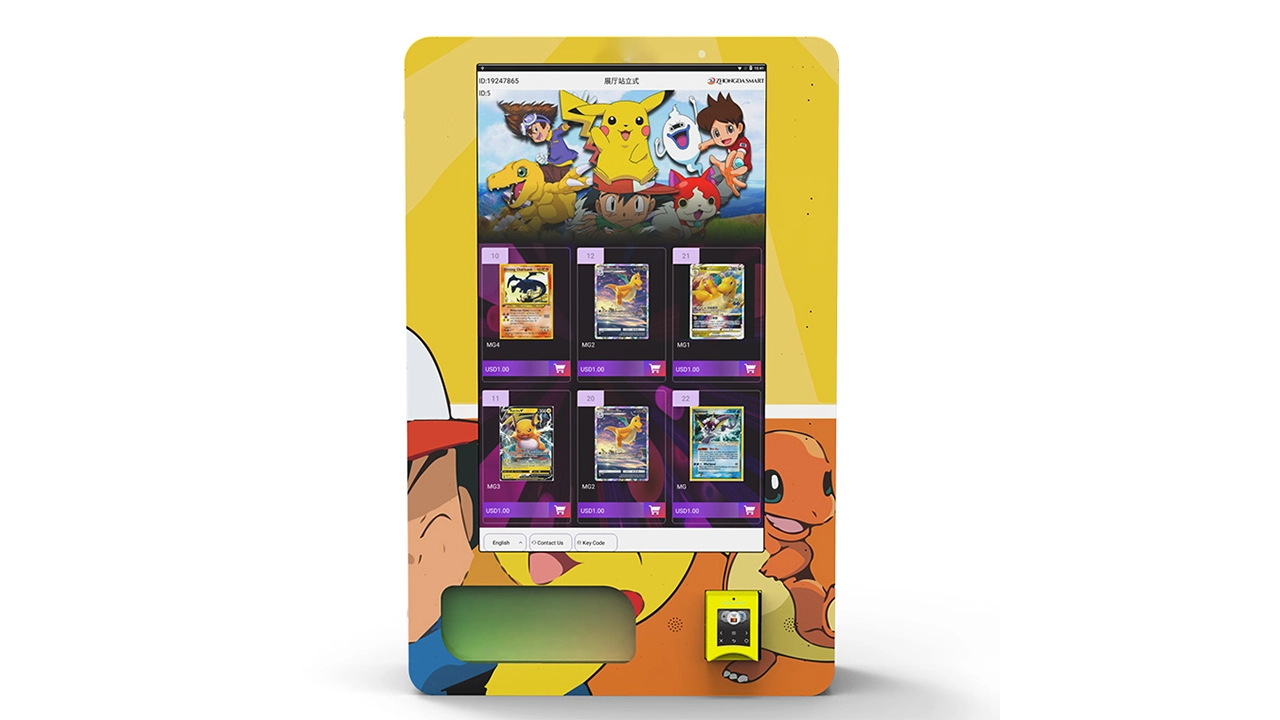
For example, Zhongda Smart's ZD-BGS-32 wall-mounted trading card vending machine has a listed weight of approximately 70 kg before accounting for the installation conditions and loaded merchandise. That makes a proper structural assessment essential.
Do not mount a machine of this type to an unsuitable decorative panel or an unverified lightweight partition. The installer should identify the structural support, choose appropriate anchors, and verify that the completed installation is stable.
Wall mounting can reduce opportunities for someone to move the equipment, but it should not be treated as a substitute for a secure cabinet, controlled access, or monitoring.
Consider the surrounding environment
Installation security also includes the immediate surroundings. Avoid positioning the machine where a person can easily work behind it without being seen or where its service door can be opened into an inaccessible corner.
A clear view of the customer interface, adequate lighting, and reasonable access to venue personnel make security procedures easier to enforce. The surrounding structure should support the security design rather than undermine it.
5. Locks, Doors, and Authorized Access
The service door is one of the most important parts of a trading card vending machine. It is opened for restocking, cleaning, maintenance, and troubleshooting, so it must balance security with practical access.
A basic lock may be adequate for a low-risk indoor installation, but operators should consider the value of the merchandise and how many people will have access to the machine.
Evaluate the complete locking arrangement
Ask whether the service door uses a commercial locking mechanism, whether the locking points engage correctly, and whether the door can be secured without excessive force.
Important considerations include:
- Lock quality and resistance to unauthorized opening.
- Protection against direct access to the locking mechanism.
- Door alignment and the consistency of locking engagement.
- Hinge protection and internal reinforcement.
- Availability of replacement keys or locking components.
- Whether different machines can use separately controlled keys.
For an operator managing several machines, a single shared key can create unnecessary exposure. A controlled key-management system should identify who holds each key, when it is issued, and when it is returned.
Separate customer access from service access
The customer should only be able to reach the product collection area. The service door should remain inaccessible during normal transactions.
Inside the machine, the service compartment should be arranged so that opening it does not accidentally expose the entire electrical system or allow products to fall into an uncontrolled area. A well-organized internal layout also makes authorized maintenance easier to perform.
Use access logs, not just keys
A key tells the operator how someone entered the cabinet only when the key is properly controlled. It does not automatically establish who opened the machine or what happened afterward.
Where the control system supports it, use a door sensor or service-event log to record opening and closing events. Match those events against the restocking schedule and staff records.
If a machine is opened outside its normal service window, the operator should be able to identify the event, check the inventory, and determine whether further inspection is needed.
6. Secure Product Dispensing Systems
The dispensing system has a direct influence on both product security and customer satisfaction. Trading cards are lightweight, often packaged in thin wrappers or small boxes, and may be more sensitive to impact than ordinary vending merchandise.
A secure dispensing system must do two things at once: prevent customers from reaching unsold products and deliver the purchased product without unnecessary damage.
Control access to the inventory before payment
The most important design principle is that the customer must not be able to handle products that have not been purchased. This is the foundation of trading card pack searching prevention.
A customer should interact with the selection screen, not the storage lanes. The machine should retain control over the merchandise until the payment process is completed and the dispensing mechanism is authorized to release the selected item.
That means the product storage compartment and collection compartment should be physically separated. The collection opening should not provide a direct route back to the remaining inventory.
Understand the difference between spring and elevator delivery
Different vending mechanisms serve different product formats. The correct choice depends on pack dimensions, thickness, packaging strength, product weight, inventory capacity, and the level of handling protection required.
| Feature | Spring / Spiral Delivery | Elevator Delivery |
|---|---|---|
| Basic operation | A rotating spiral or similar mechanism advances the selected product. | A lifting platform carries the product toward the collection area. |
| Suitable merchandise | Compatible booster packs, small boxes, and compact packaged items. | Products that benefit from more controlled delivery and reduced drop impact. |
| Product handling | Depends on lane spacing, spiral geometry, and drop distance. | Can reduce uncontrolled falling when properly configured. |
| Security considerations | Requires protected lanes, correct spacing, and an inaccessible stock area. | Requires protected lift movement, controlled access, and reliable position sensing. |
| Capacity considerations | Can offer flexible lane layouts and substantial storage capacity. | Depends on the elevator design and internal product arrangement. |
| Best evaluation method | Test actual packaged products through repeated dispensing cycles. | Test lifting, positioning, release, and retrieval with actual products. |
Neither mechanism automatically guarantees theft prevention. Security comes from the way the mechanism is enclosed, controlled, and integrated with the cabinet and software.
Prevent fishing through the delivery opening
Fishing refers to attempts to reach into a vending machine through the customer collection opening to retrieve additional merchandise or interfere with internal components.
The collection opening should be designed so that a customer can retrieve a dispensed product without gaining access to the storage lanes. Depending on the equipment design, protective features may include a shaped chute, internal baffles, a one-way flap, or a separate delivery chamber.
When reviewing a machine, ask the supplier to demonstrate how the delivery opening is isolated from the stock compartment. Do not rely only on photographs of the exterior.
A useful acceptance test is to inspect the complete delivery path from the customer side and confirm that normal hand access cannot reach unsold merchandise. This should be performed as a controlled design test, not as an attempt to damage the machine.
Prevent double dispensing
Accidental double dispensing is an operational security issue because it creates a discrepancy between payment records and actual stock movement.
The machine should be tested with products of different thicknesses and packaging stiffness. A spiral that works with one booster pack may behave differently with a thicker blister pack or a small card box.
Where available, a delivery sensor can help verify that an item has passed through the dispensing path. The control software should also handle failed transactions, interrupted deliveries, and customer complaints consistently.
For higher-value products, I would prioritize a machine that supports clear delivery confirmation rather than relying entirely on the motor's operating command.
Keep internal mechanisms inaccessible
Product lanes, motors, wiring, and control components should remain behind the service enclosure. Customers should not be able to reach these parts through the screen opening, product window, or delivery compartment.
Internal cable routing should also be organized so that normal customer access cannot expose communication connections or allow easy interference with the control system.
7. How to Prevent Trading Card Pack Searching
Pack searching deserves separate attention because it is not the same as ordinary machine theft. The objective is not necessarily to steal merchandise. Instead, a customer may attempt to identify the most desirable packs before purchasing, leaving less attractive products behind.
For collectible products, this can damage customer confidence even when every transaction is technically successful.
Remove physical handling before payment
The strongest machine-level defense is to prevent customers from touching the inventory before completing a transaction.
With an open shelf, customers can handle multiple packs, compare their feel, inspect packaging details, and select the item they prefer. A sealed-pack vending machine changes that interaction.
The customer chooses a product category or specific SKU on the screen. The machine then authorizes a controlled release after payment. The remaining stock stays inside the locked compartment.
This approach removes several opportunities associated with pre-purchase pack searching:
- Touching individual packs to compare their contents or physical characteristics.
- Sliding packs along a shelf to examine their packaging.
- Repeatedly bending or pressing sealed wrappers.
- Removing and returning products to compare different items.
- Using a portable scale to compare accessible unsold packs.
- Rearranging stock to select a preferred item.
The distinction is important: a vending machine controls access at the point of sale. It does not establish whether the products were searched before they entered the machine.
Use product images instead of exposed stock
Customers still need enough information to make a purchase. The solution is not to make the machine confusing or hide every product detail.
Use clear product images, brand information, pack descriptions, edition details, and accurate pricing on the touchscreen. This gives customers a useful shopping experience without allowing them to handle unsold inventory.
For products with several packaging variations, the display should identify the exact SKU or product category. A buyer should not have to guess which item will be delivered.
Separate product selection from physical selection
A machine can display multiple product options while dispensing from a controlled internal lane. This is useful when a product range includes several trading card games, sports categories, and different package formats.
For example, one selection may correspond to a specific sealed booster pack, while another may correspond to a boxed collectible. The customer chooses the product category electronically rather than choosing a physical pack from a row of accessible merchandise.
If the operator wants to sell randomized mystery products, the product description and fulfillment method must be accurate. The business should not imply that a machine randomly selects products if the internal stock arrangement or dispensing logic actually gives customers predictable selection opportunities.
Do not confuse sealed dispensing with guaranteed authenticity
A machine can dispense a sealed package without guaranteeing the authenticity or original condition of the package. That assurance depends on sourcing, receiving, storage, and restocking controls.
For this reason, trading card vending machine security should include both the physical design and a documented product-handling policy. If the machine prevents customer access but an operator loads previously searched or resealed products, the customer still receives a compromised experience.
8. Preventing Product Tampering Before Restocking
Product tampering is a supply-chain and inventory-control issue. It can occur before merchandise reaches the vending machine, during storage, or while products are being prepared for loading.
For sealed trading cards, the operator should be able to explain where each product came from and how it was handled before entering the machine. This is especially important for limited releases, premium packs, and high-value boxes.
Purchase from reliable supply channels
Use suppliers that can provide appropriate purchasing documentation and consistent product packaging. Keep invoices, purchase records, product descriptions, and relevant case information together.
When receiving merchandise, check the external packaging before opening it. Look for unusual damage, disturbed seals, inconsistent labels, unexpected packaging differences, or signs that the case has been opened and resealed.
These checks do not replace product authentication, but they help establish a traceable receiving process.
Inspect incoming merchandise before loading
Every restocking visit should begin with a basic product inspection. Operators should not automatically assume that every item delivered by a supplier is ready for vending.
A practical receiving procedure includes:
- Compare the delivered quantity with the purchase record.
- Check the outer case for damage or signs of unauthorized opening.
- Verify the product name, edition, and SKU.
- Inspect the individual retail packaging for visible irregularities.
- Separate questionable products from approved inventory.
- Record the quantity accepted and the quantity placed into storage.
For products that arrive in sealed cases, maintain the original case information where available. If cases are opened before the machine is restocked, record the opening and subsequent product movement.
Keep a product provenance record
Product provenance means maintaining a clear record of where merchandise originated and how it moved through the business. It does not require an elaborate enterprise system for a single vending machine.
A simple spreadsheet or connected inventory platform can record:
- Supplier and purchase reference.
- Product name and SKU.
- Quantity received.
- Receiving date.
- Relevant case or batch information, when available.
- Quantity transferred into each machine.
- Operator responsible for the transfer.
- Damaged, returned, or quarantined quantities.
When an unusual customer complaint occurs, these records make it easier to trace the affected products. They also help distinguish a supplier issue from a machine-level dispensing problem.
Use controlled storage for premium products
High-value inventory should be stored in a restricted area before it is loaded. Avoid leaving premium boxes or sealed cases in an open service area during restocking.
Where the business has several employees, consider separating receiving, approval, and machine loading responsibilities for particularly valuable products. A second-person check may be worthwhile for limited inventory or expensive merchandise.
Returns require special attention. A product that has left the machine and entered a customer's possession should not automatically be returned to saleable stock. Establish a clear rule for customer returns, damaged packaging, and products with uncertain handling history.
9. Cameras, Lighting, and Visibility
Surveillance is valuable because it helps operators understand what happened when an unexpected event occurs. It can also discourage casual interference when customers know that the machine and its surroundings are visible.
However, a camera is not a substitute for physical security. If the cabinet can be opened easily, recording the incident does not prevent the inventory from disappearing.
Choose camera positions carefully
For a trading card vending machine, camera coverage should consider the customer interface, payment reader, service door, and the surrounding approach area.
The most useful views are those that help establish:
- Who approached the machine during an incident.
- Whether someone interfered with the cabinet or payment reader.
- When an unauthorized service-door opening may have occurred.
- Whether a customer experienced an unusual dispensing event.
- Whether the machine was obstructed or physically disturbed.
Where possible, avoid camera angles that are blocked by promotional displays, nearby equipment, or structural features. A camera that records only the front of a machine may not show what happened near its service door.
Protect customer payment privacy
Camera positioning must respect payment security and customer privacy. Do not deliberately record payment-card details, PIN entry, or other sensitive information.
Payment readers should be inspected through a separate security procedure. Surveillance footage should support the investigation of suspicious activity without exposing information that should remain private.
Operators should also confirm applicable privacy rules before installing cameras. This includes requirements for notification, recording, retention, access, and disclosure of footage.
Lighting is a practical security control
Poor lighting makes it harder to identify activity and inspect the machine. A customer-facing machine should have enough surrounding illumination for ordinary use, while the service area should remain visible to authorized personnel and venue security.
Lighting does not need to be excessively bright. Its purpose is to remove unnecessary dark areas and support clear observation.
Store and review recordings
Recording footage without a review procedure creates a false sense of security. The operator should know where recordings are stored, how long they are retained, who can access them, and how to preserve relevant footage after an incident.
The Department of Homeland Security's commercial facility protective-measures guidance emphasizes that CCTV is useful only when it is monitored and used properly. It also recommends maintaining recording capability and reviewing footage for unusual activity. These are sensible principles for unattended retail equipment as well.[5]
For a single machine, the recording arrangement may be relatively simple. For a multi-machine operation, centralized access can make it easier to review incidents across several installations.
10. Remote Monitoring and Tamper Alerts
Remote vending machine monitoring reduces the need for operators to stand beside every machine to understand its operating condition. It is particularly useful when equipment is installed away from the main retail counter or when several machines are managed as part of one business.
Remote management should be treated as an operational tool and, where supported, a security tool. It should not be assumed that every connected machine automatically includes advanced alarm functions.
Monitor the information that affects security
Useful information may include:
- Sales transactions and transaction timestamps.
- Current inventory quantities.
- Machine operating status.
- Product delivery records.
- Service-door opening and closing events, if supported.
- Network connection status.
- Unusual machine restarts or power interruptions.
- Payment terminal status and transaction errors.
The exact functions depend on the selected control system and software configuration. Before purchasing, request a demonstration of the management platform rather than relying on a general statement that the machine supports cloud monitoring.
Set alerts for important events
Not every machine event requires an immediate notification. Too many alerts can cause operators to ignore the system.
I would prioritize alerts related to unauthorized access, unexpected machine downtime, repeated dispensing failures, unusual transaction patterns, and loss of network connectivity.
If the machine supports a door sensor, configure a notification when the service door opens outside the planned restocking window. If the software supports remote shutdown, clarify what it actually disables and whether customers with completed payments can still retrieve their products safely.
Understand offline behavior
A network interruption should not create a security weakness. Ask what happens if the machine temporarily loses its internet connection.
Can it continue processing approved transactions? Does it retain local transaction records? Will it synchronize inventory information after reconnecting? Can unauthorized users still access the service interface? Does the operator receive an offline notification once communication is restored?
These questions are important because connectivity failures can make an otherwise useful remote monitoring system temporarily unavailable.
Remote management should support investigation
When a customer reports a missing item, the operator should be able to compare the payment record, machine event history, and available inventory information.
A useful system should make it possible to answer whether a transaction was completed, whether a dispensing command was issued, whether a delivery event was detected, and whether the stock count changed as expected.
That information helps determine whether the problem was a failed vend, a stock-count error, or possible interference. It also makes customer service more consistent.
11. Payment Terminal Security
A trading card vending machine is not secure if its payment system is treated as an afterthought. The payment reader is a customer-facing electronic component that may handle sensitive payment information, so its physical installation and software configuration deserve attention.
The Payment Card Industry Data Security Standard, commonly known as PCI DSS, provides technical and operational requirements for entities involved in storing, processing, or transmitting payment account data. PCI Security Standards Council guidance explains that payment terminals are part of the cardholder data environment when they capture payment card information.[4]
Use an appropriate payment solution
Choose a payment terminal that is supported by the relevant payment provider and configured for the machine's actual transaction process.
Do not assume that a card reader is suitable simply because it physically fits into the cabinet. Confirm the payment provider, transaction method, supported software, and responsibilities for security updates and device management.
The machine manufacturer, payment service provider, acquiring institution, and operator may each have different responsibilities. These should be clearly identified before installation.
Protect the payment reader physically
The payment reader should be mounted securely and protected against unauthorized removal or substitution. Its surrounding panel should not leave unnecessary gaps or exposed connectors.
Operators should establish a routine for checking whether the reader has been moved, replaced, damaged, or fitted with an unexpected attachment.
PCI-related requirements can vary according to the payment device and transaction environment. Use the payment provider's documented inspection procedures rather than creating an informal process that overlooks important details.
Keep payment data out of the vending application
The vending management platform should not collect or store sensitive card information unless the system has been specifically designed and validated to handle that responsibility.
Whenever possible, payment processing should remain within the approved payment solution. The vending application should receive the transaction result and the information it needs to complete the sale, not unnecessary sensitive account data.
Check transaction failures and refunds
Payment security also includes the handling of failed transactions. If a customer is charged but the product is not delivered, the operator needs a clear process for checking the payment record and resolving the issue.
Repeated failed payments, unexplained refunds, and unusual transaction patterns should be reviewed. These records may reveal a configuration problem, a payment integration issue, or suspicious activity.
Before accepting a machine, test the full purchase process with the selected payment hardware, including successful payment, declined payment, canceled purchase, interrupted transaction, and product-delivery failure.
12. Software and Network Protection
Modern vending machines combine a physical cabinet with a touchscreen, controller, network connection, payment integration, and remote management software. The software layer therefore deserves the same careful attention as the mechanical design.
A machine can have a strong cabinet and still be vulnerable if unauthorized users can change prices, access service settings, manipulate inventory records, or interfere with its operation.
Use controlled administrator accounts
Every person who manages the vending platform should have an account appropriate to their responsibilities. Avoid sharing one unrestricted administrator password across an entire team.
Where supported, use individual accounts, strong passwords, multi-factor authentication, and access permissions that limit unnecessary changes.
For example, an employee responsible for restocking may need to view inventory and record stock movements without having permission to change payment configuration or administrator settings.
Change default credentials
Default passwords and undocumented service accounts are unnecessary security risks. Before deployment, ask the supplier how administrator credentials are created, changed, and recovered.
Make sure that service access is documented and that old credentials are disabled when employees leave or external maintenance providers no longer require access.
Protect software updates
Software updates can improve stability, fix bugs, and address security weaknesses. However, an update process should be controlled rather than improvised.
Ask who is responsible for releasing updates, how updates are authenticated, whether changes are documented, and how the machine behaves if an update is interrupted.
For machines operating continuously, maintenance windows should be planned to reduce the risk of unexpected interruption during busy sales periods.
Protect network connections
Use a secure network configuration and avoid exposing administrative services unnecessarily. Remote management access should be restricted to authorized users and supported communication channels.
If a machine connects through a shared venue network, discuss whether a separate network segment or other appropriate isolation can be used. This helps reduce unnecessary exposure between the vending equipment and unrelated systems.
Keep records of configuration changes
Operators should be able to identify important changes to product prices, inventory, machine settings, user permissions, and payment configuration.
When a discrepancy appears, a change history can help explain whether the machine was reconfigured, whether an employee made a legitimate adjustment, or whether an unexpected account accessed the platform.
Good software security is not only about preventing unauthorized access. It is also about preserving enough information to understand what happened.
13. Installation and Site Security
The location surrounding a trading card vending machine can strengthen or weaken its security. Even a well-designed machine benefits from a visible, well-managed installation environment.
Choose visibility over isolation
A machine placed in a visible area is generally easier for venue staff and security personnel to observe. An installation hidden behind furniture, advertising panels, or poorly lit structures can make suspicious activity harder to detect.
However, visibility should not come at the expense of accessibility or safe customer movement. The machine should not obstruct walkways, emergency access, or other essential facilities.
Evaluate nearby activity
Consider whether the machine will be located near staff, customer service areas, or other frequently used facilities. The purpose is not to require constant supervision but to reduce unnecessary isolation.
Also consider whether the machine will be exposed to weather, direct impact, excessive heat, water, dust, or other conditions outside its intended operating environment.
For indoor machines, follow the manufacturer's specified installation conditions. For any protected or outdoor installation, confirm that the equipment is explicitly suitable for that environment rather than assuming an indoor model can be used outdoors.
Make the customer experience clear
Customers should understand where to select products, where to pay, and where to collect their purchases. Confusing controls may encourage repeated interaction with the machine and increase the chance of accidental damage.
Clear instructions also help reduce disputes. A customer who understands the transaction process is less likely to pull at the collection opening because they are unsure whether the product has been released.
Consider accessibility during design
Touchscreen height, control placement, collection-opening position, and the space in front of the machine all affect usability.
Review the accessibility requirements applicable to the installation before confirming the final cabinet dimensions. A secure machine should still allow customers to use the payment interface and retrieve their products comfortably.
Coordinate with venue management
Before installing the machine, agree on responsibilities for power access, camera coverage, incident reporting, physical inspections, and emergency contact procedures.
If the venue has its own security team, determine how machine-related incidents should be reported. If the machine is damaged outside normal business hours, the operator should know who can secure the area and who can authorize access for maintenance.
14. Comparing Different Security Configurations
Not every trading card vending machine needs the same security package. A machine selling inexpensive accessories in a supervised retail environment has a different risk profile from one holding premium sealed products in an unattended location.
The following table provides a practical way to compare configurations. These are planning levels, not formal certification grades or guarantees of protection.
| Security Element | Basic Configuration | Recommended Configuration | Higher-Risk Configuration |
|---|---|---|---|
| Cabinet | Commercial enclosure | Reinforced door and protected hinges | Additional structural reinforcement based on risk assessment |
| Locking | Service-door lock | Controlled keys and improved locking arrangement | Restricted access with electronic event monitoring where supported |
| Installation | Stable placement | Suitable anchoring | Verified structural mounting and additional site controls |
| Dispensing | Enclosed product lanes | Protected chute and tested delivery | Additional delivery verification and tamper monitoring |
| Surveillance | Venue camera coverage | Camera views of machine and service access | Integrated recording, event review, and monitored alerts |
| Inventory | Manual stock count | Transaction reconciliation | Documented transfers, access history, and frequent audits |
| Software | Basic management account | Restricted administrator access | Individual accounts, stronger authentication, and detailed logs |
| Incident response | Manual reporting | Written procedures | Defined escalation, evidence retention, and recovery procedures |
For most commercial trading card vending applications, I would start with the recommended configuration and increase protection according to the merchandise value, installation conditions, and operating history.
Spending more on security hardware is not automatically the best decision. A balanced configuration should reduce realistic risks without creating unnecessary service complexity or making the machine difficult for customers to use.
15. Choosing the Right Trading Card Vending Machine
Security should be part of the equipment specification from the beginning. Adding protection after production may be more difficult because the cabinet structure, internal lanes, electrical layout, and software architecture may already be fixed.
When comparing manufacturers, look beyond screen size and maximum product capacity. The machine should be evaluated according to the products it will hold, the dispensing mechanism, the service-access arrangement, and the available monitoring functions.
Match the machine to the merchandise
A thin booster pack, a thick blister package, a hobby box, and a graded card slab have different dimensions and handling requirements.
Before ordering, prepare a product specification sheet containing:
- Package width, height, and thickness.
- Approximate weight of each SKU.
- Packaging material and stiffness.
- Maximum and minimum product dimensions.
- Number of products to be stored at one time.
- Expected inventory value per lane.
- Whether the merchandise requires controlled or soft delivery.
Provide actual product samples whenever possible. A machine that works with a generic sample may not work correctly with the exact retail packaging used by your business.
Evaluate capacity realistically
Published capacity is a useful starting point, but it should never be treated as a guaranteed number for every product format.
For example, the listed capacity of a machine may be based on a relatively thin reference package. If your actual product is thicker, the number of units that fit into each lane will decrease.
Higher capacity also increases the amount of inventory exposed to a single machine-level incident. For some operators, splitting premium inventory across more than one machine may be a better risk-management decision than maximizing the stock held in one cabinet.
Choose the dispensing mechanism according to product value
For standard sealed booster packs and compatible small products, a properly configured spring-spiral system may provide an efficient solution.
For premium boxes or merchandise that needs more controlled handling, an elevator delivery system may be worth considering. The objective is to reduce unnecessary drops and protect packaging while maintaining reliable product release.
Do not select an elevator system solely because it sounds more advanced. Ask for a demonstration using the actual merchandise, and compare the delivery reliability, maintenance requirements, and available capacity.
Evaluate the manufacturer, not just the machine
A trading card vending machine is a long-term operating asset. The manufacturer should be able to explain the cabinet structure, product compatibility, payment configuration, software support, spare-parts availability, and after-sales process.
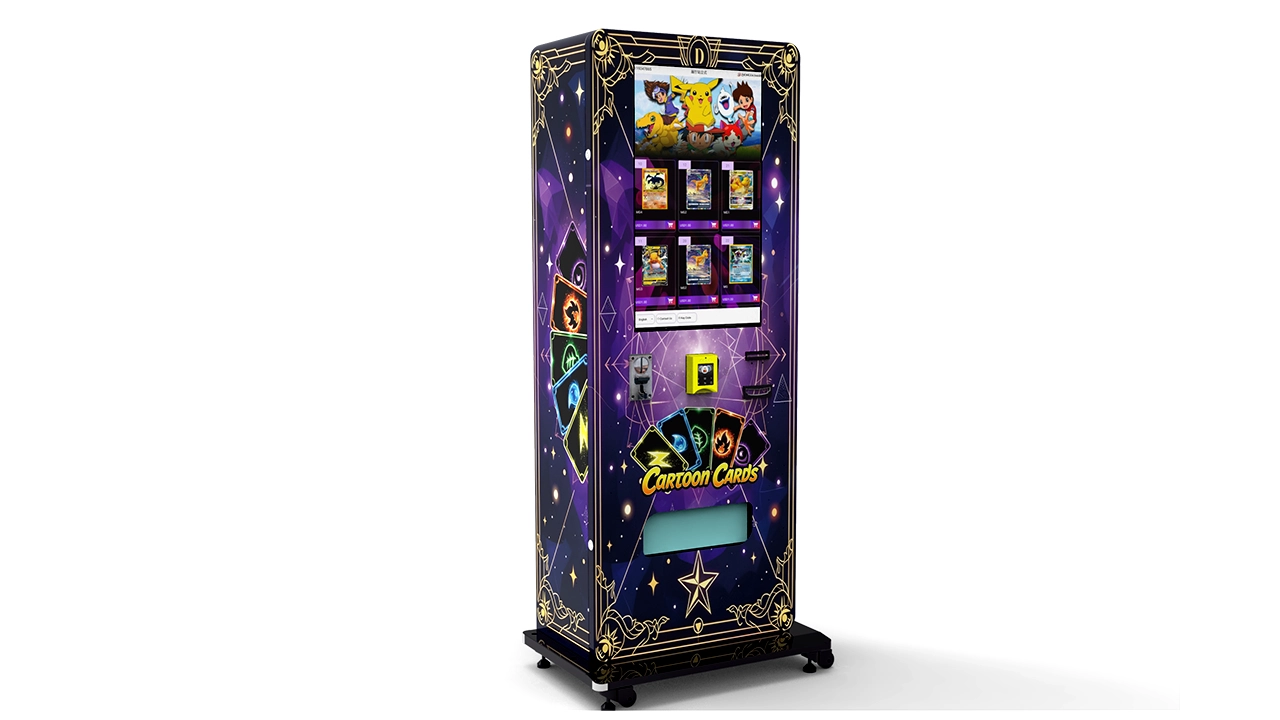
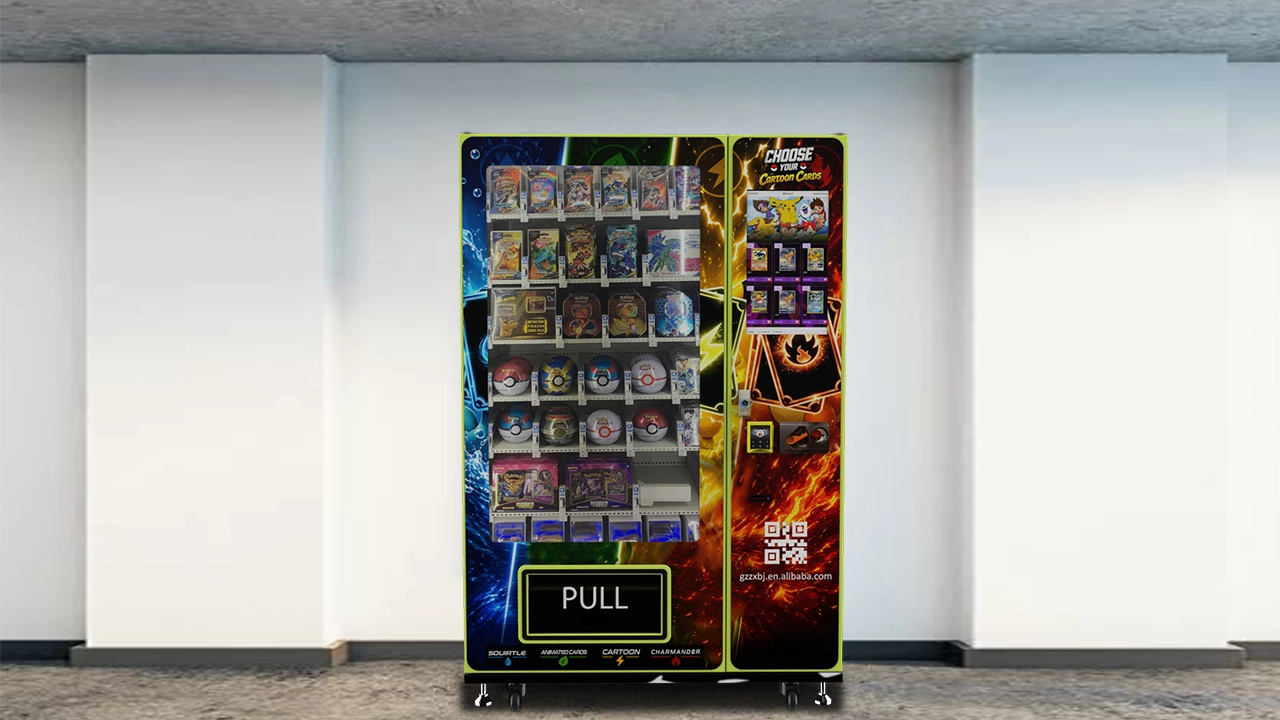
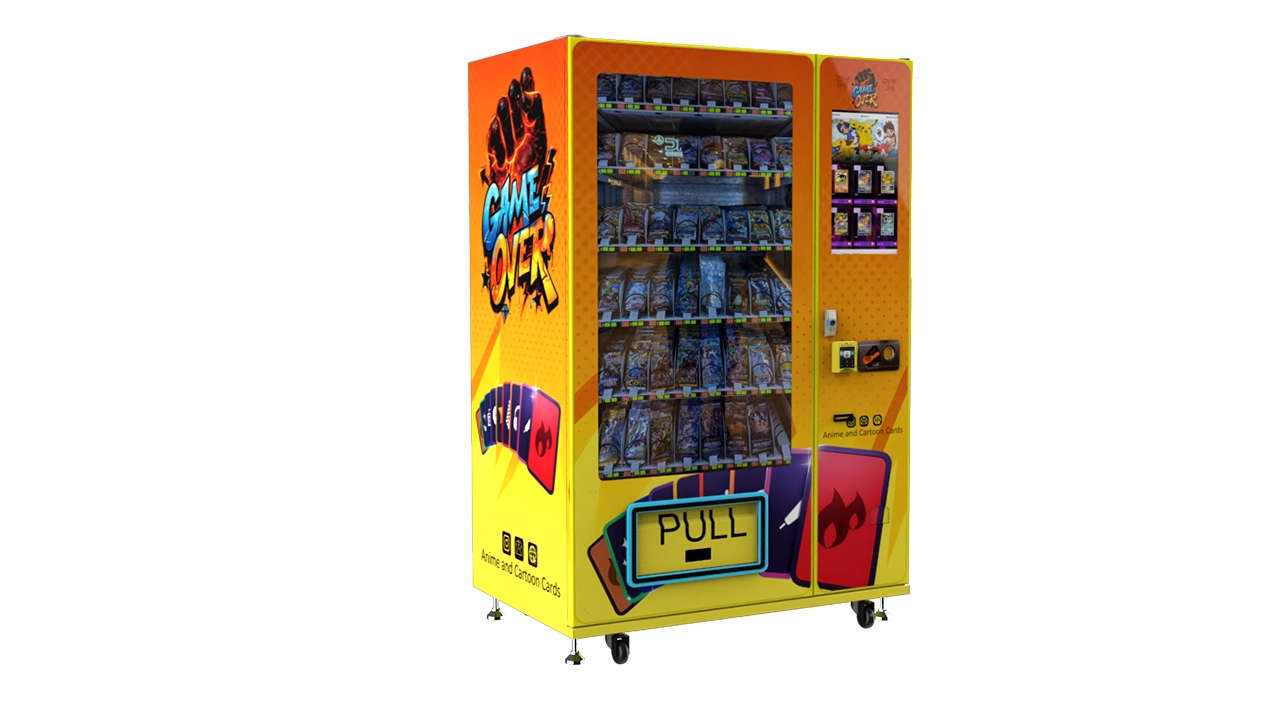
Zhongda Smart's trading card vending machine range includes touchscreen, wall-mounted, and elevator-delivery configurations. The product selection is relevant to operators who need to match machine structure and cargo-lane arrangements to different sealed card products.
For a larger touchscreen installation, the 32-inch touchscreen trading card vending machine uses adjustable cargo lanes and spring-spiral dispensing. Its listed configuration supports up to 28 lanes, with actual capacity depending on product dimensions and the final internal layout.
For installations where floor space is limited, the wall-mounted trading card vending machine offers a more compact cabinet format. The mounting structure and wall strength must be evaluated carefully before installation.
For a product-specific configuration, the Pokémon TCG vending machine provides another example of a machine configured around packaged trading card merchandise, touchscreen selection, connected management, and flexible product channels.
Understand what Zhongda Smart can customize
Zhongda Smart provides OEM and ODM vending machine customization. Depending on the project, the configuration can include cabinet design, branding, touchscreen interface, payment hardware, cargo lanes, dispensing arrangements, and software functions.
For security-sensitive projects, I would recommend discussing the following requirements explicitly during the design stage:
- Cabinet and service-door reinforcement requirements.
- Locking arrangement and key-control requirements.
- Customer collection-opening protection.
- Product-lane enclosure and access restrictions.
- Optional service-door detection or tamper monitoring.
- Remote notification requirements, where supported.
- Inventory and dispensing-event records.
- Payment-reader mounting and inspection arrangements.
- Camera integration or external surveillance compatibility.
- Testing requirements for the actual trading card products.
One point is worth making clear: a machine's standard product specification does not automatically confirm that every optional alarm, sensor, camera, anti-fishing device, or advanced locking feature is included. Ask Zhongda Smart to identify each included feature, each optional feature, and each project-specific engineering requirement in writing.
16. Security Costs and Total Ownership Costs
Security has a cost, but the cost of inadequate security can be greater than the initial equipment savings. Operators should evaluate the total ownership cost rather than comparing machines only by their quoted purchase prices.
A practical cost calculation should include the following categories.
Initial equipment costs
- Base machine and cabinet configuration.
- Additional locking or structural protection.
- Payment hardware and integration.
- Optional delivery sensors or monitoring hardware.
- Camera equipment, if purchased as part of the installation.
- Branding and customized cabinet components.
- Shipping, installation, and commissioning.
- Any required site preparation or mounting work.
Recurring operating costs
- Connectivity and vending management subscriptions.
- Payment processing fees.
- Camera storage and monitoring services.
- Routine maintenance and replacement parts.
- Insurance and applicable venue fees.
- Restocking labor and inventory transportation.
- Losses from damaged, missing, or unsaleable products.
- Software maintenance and technical support.
Security spending should follow the value at risk
Consider two machines with identical cabinets. One holds a relatively small amount of low-priced merchandise, while the other contains limited-edition products with substantially higher replacement costs.
The second machine may justify stronger access controls, more frequent inventory audits, and additional surveillance. However, those measures should be selected according to the actual exposure rather than simply adding expensive equipment to every machine.
A useful decision is to estimate the annual value of losses that a proposed control could reasonably prevent. Compare that figure with the installation cost and ongoing maintenance expense.
For example, if a control costs $600 to install and requires $100 annually to maintain, the first-year cost is $700. The operator should compare this amount with the expected reduction in theft, damage, and service interruptions. The calculation is an investment decision, not proof that the control will prevent a specific percentage of losses.
Include downtime in the calculation
When a vending machine is damaged, the business loses more than the value of missing stock. It may also lose sales while the machine is being repaired.
For a machine with an average contribution margin of $35 per day, five days of downtime represent $175 in missed contribution before considering any repair expenses.
That is why spare parts, remote troubleshooting, and practical after-sales support should be included in the purchase evaluation.
17. How Security Affects Trading Card Vending Machine ROI
A trading card vending machine can generate attractive operating margins, but its financial performance depends on more than the number of transactions. Inventory losses, failed deliveries, machine downtime, venue commissions, and payment costs all influence the actual return.
Security improves the business case when it reduces avoidable losses without creating more operating expense than the value it protects.
Calculate gross contribution first
Start with the number of products sold per day and the gross profit earned from each sale.
Daily Units Sold × Gross Profit Per Unit × Operating Days Per Month
For example, suppose a machine sells 14 sealed card packs per day, and the average gross profit per pack is $3.20. With 30 operating days, the monthly gross contribution is:
14 × $3.20 × 30 = $1,344
This is not the operator's net profit. It is the contribution available before operating expenses, security costs, and the machine investment are fully accounted for.
Subtract operating expenses
Consider the following illustrative monthly model:
| Expense Category | Monthly Amount |
|---|---|
| Venue rent or revenue share | $350 |
| Payment processing | $55 |
| Restocking labor and routine service | $160 |
| Connectivity and management software | $20 |
| Inventory loss allowance | $40 |
| Equipment replacement and capital reserve | $120 |
| Total Monthly Expenses | $745 |
Using the earlier gross contribution of $1,344:
Estimated Monthly Operating Contribution = $1,344 − $745 = $599
For this example, assume the complete initial investment, including the machine and installation, is $4,500.
Initial Installed Investment ÷ Monthly Operating Contribution
$4,500 ÷ $599 = Approximately 7.5 Months
This is an illustrative calculation, not a sales forecast or a guarantee of profitability. Actual results depend on the product mix, purchase cost, selling price, venue agreement, transaction fees, inventory turnover, maintenance, and demand.
Understand the impact of lower sales volume
Security and operating costs do not disappear when sales slow down. A machine with a high fixed monthly expense can become unprofitable if the daily sales volume is too low.
| Daily Sales | Gross Profit Per Pack | Monthly Gross Contribution | Monthly Expenses | Estimated Net Contribution |
|---|---|---|---|---|
| 8 packs | $3.20 | $768 | $745 | $23 |
| 14 packs | $3.20 | $1,344 | $745 | $599 |
| 20 packs | $3.20 | $1,920 | $745 | $1,175 |
The figures use the same illustrative monthly expense assumptions. Real payment costs and restocking expenses may increase with transaction volume, so this table should be treated as a simplified sensitivity model.
Calculate the financial value of preventing losses
Security has a measurable financial purpose when it prevents products from disappearing, reduces damaged merchandise, or avoids unnecessary downtime.
Suppose a machine loses five packs per month because of unexplained inventory discrepancies, and each pack represents $8 in replacement cost. The direct inventory cost is $40 per month.
If a new inventory-control procedure reduces that discrepancy, the operator can compare the savings against the cost of the procedure. The calculation should use actual stock records rather than an assumed industry-wide loss rate.
The same principle applies to product damage. If a delivery system regularly damages collectible packaging, the operator should compare the replacement cost and customer-service impact with the cost of a more suitable dispensing configuration.
Use a realistic break-even target
A break-even calculation helps determine the minimum sales volume required to cover recurring expenses.
Monthly Fixed and Recurring Expenses ÷ Gross Profit Per Unit ÷ Operating Days
Using $745 in monthly expenses, $3.20 gross profit per pack, and 30 operating days:
$745 ÷ $3.20 ÷ 30 = Approximately 7.76 packs per day
That means the machine would need to sell approximately eight packs per day to cover the example expenses. It would still need to generate additional contribution to recover the initial investment.
I would recommend using conservative sales assumptions when evaluating a new location. A machine that remains financially viable under moderate demand is usually a safer investment than one that depends on an optimistic sales forecast.
18. Secure Restocking Procedures
Restocking is one of the most important security events in unattended vending operations. It involves opening the cabinet, handling valuable merchandise, changing inventory quantities, and potentially exposing internal components.
A good procedure should make each visit predictable and traceable without making routine maintenance unnecessarily complicated.
Before opening the machine
The operator should first confirm that the machine is operating normally and that the planned restocking visit is authorized.
- Check the current inventory report.
- Review sales since the previous service visit.
- Check whether any unusual alerts or errors were recorded.
- Prepare the exact products and quantities required.
- Confirm that the service key or authorized access credential is available.
- Inspect the exterior for damage or signs of tampering.
If the machine shows unexpected damage, a broken seal, an unexplained door event, or suspicious activity, do not immediately continue with routine restocking. Document the condition and investigate first.
During restocking
Keep the service process organized. Avoid leaving the cabinet open while unrelated tasks are being completed.
Record the opening time, the responsible operator, the products being loaded, and the quantities placed into each lane or compartment.
Where the machine has different product lanes, check that the correct SKU is assigned to the correct selection on the touchscreen. A product-selection mismatch can create customer complaints and inventory discrepancies.
For high-value inventory, consider a second-person quantity check. This is particularly useful when products are transferred between storage and several vending machines.
After restocking
Before leaving, verify that the service door is fully closed and locked. Check that the machine has returned to its normal operating condition and that the payment system, screen, and dispensing mechanism are functioning correctly.
Confirm the updated inventory quantities and retain the service record. If the management platform supports access logs, check that the recorded service event matches the actual visit.
Use a standard service record
| Record Field | Information to Capture |
|---|---|
| Machine ID | Unique equipment identification |
| Service date and time | Opening and closing timestamps |
| Authorized operator | Person responsible for the visit |
| Opening stock | Inventory before restocking |
| New stock | SKU and quantity added |
| Removed stock | Damaged, expired, or returned products |
| Closing stock | Verified remaining quantity |
| Machine condition | Lock, door, display, payment, and dispensing checks |
| Exceptions | Damage, discrepancy, or unusual event |
A consistent restocking record makes it easier to identify whether a discrepancy occurred between two service visits or during a particular inventory transfer.
19. Inventory Auditing and Loss Detection
Inventory records are one of the most useful tools for identifying problems that are not immediately visible. A machine can appear undamaged while experiencing repeated dispensing errors or unexplained stock differences.
The operator should be able to reconcile the quantity loaded, the quantity sold, the quantity remaining, and the quantity removed for legitimate reasons.
Use a basic inventory equation
Opening Inventory + Stock Added − Confirmed Sales − Authorized Removals
Compare the calculated ending inventory with the physical count. Any difference should be recorded and investigated rather than silently corrected.
For example, a lane begins with 40 packs. The operator adds 20 packs, and the transaction system records 35 successful sales. If two damaged products are removed and documented, the expected remaining inventory is:
40 + 20 − 35 − 2 = 23 packs
If the physical count is 21, there is a two-pack discrepancy that needs to be reviewed.
Separate machine errors from suspected theft
Inventory discrepancies can have several causes. A machine may dispense two products during one transaction, a product may become stuck, an operator may enter the wrong quantity, or a customer may experience a failed delivery.
Before classifying a discrepancy as theft, compare:
- Payment transactions.
- Successful and unsuccessful vend records.
- Inventory adjustments.
- Service-door access history.
- Restocking records.
- Available camera footage.
- Customer complaints and refund records.
Looking at these records together is more reliable than relying on a single signal.
Monitor high-value SKUs separately
Not every product needs the same audit frequency. High-value boxes and limited-release products deserve more frequent checks than inexpensive accessories.
Use a simple risk-based inventory classification:
| Inventory Category | Suggested Control | Audit Priority |
|---|---|---|
| High-value sealed boxes | Documented loading and frequent reconciliation | High |
| Limited-release packs | Supplier traceability and regular stock checks | High |
| Standard booster packs | Routine inventory reconciliation | Medium |
| Low-value accessories | Normal stock monitoring | Standard |
Look for patterns rather than isolated differences
Repeated small discrepancies can be more revealing than one large inventory shortage. For example, if a particular lane repeatedly shows a difference after a dispensing cycle, the problem may be mechanical.
If discrepancies occur only after specific service visits, the restocking process deserves closer attention. If they coincide with unexplained door events, the access-control system should be reviewed.
The value of remote inventory monitoring comes from its ability to support these comparisons over time. It helps operators move from guessing about missing stock to identifying repeatable patterns.
20. What to Do When Tampering Occurs
A clear incident-response procedure can reduce additional losses and help preserve useful evidence. It should be prepared before the first incident rather than improvised after a machine has been damaged.
Step 1: Protect people and the surrounding area
If there is visible damage, exposed wiring, unstable equipment, or an immediate safety concern, keep customers away and notify the responsible venue personnel.
Do not ask employees to confront suspected offenders or attempt dangerous repairs. Personal safety should take priority over merchandise and equipment.
Step 2: Secure the machine
If the machine is still operating, determine whether it is safe to continue. Depending on the incident, the operator may need to suspend sales or disable the affected functions through an authorized control process.
Do not shut down equipment blindly if doing so could create a safety hazard or interfere with the safe retrieval of a product that has already been purchased.
Step 3: Preserve available evidence
Record the time the issue was discovered and preserve relevant surveillance footage, transaction records, remote alerts, and inventory information.
Take photographs of visible damage before repairs begin. Record the condition of the service door, payment reader, collection opening, and surrounding installation structure.
Avoid altering or deleting relevant machine records during troubleshooting.
Step 4: Reconcile the inventory
Count the remaining products and compare them with the last confirmed inventory record. Identify which SKUs may be affected and whether the discrepancy could be explained by failed dispensing or an authorized stock adjustment.
For suspected product tampering, isolate questionable merchandise rather than immediately returning it to saleable inventory.
Step 5: Notify the appropriate parties
Depending on the nature of the incident, contact the venue manager, equipment supplier, payment provider, insurer, or relevant authorities.
Provide factual information rather than assumptions. Include the machine identification, time of incident, estimated inventory loss, photographs, and available event records.
Step 6: Restore service only after verification
Before restarting the machine, inspect the cabinet, locking system, payment reader, wiring, dispensing mechanism, and inventory. Replace damaged parts and confirm that the machine operates correctly.
Where the incident reveals a weakness in the original design or operating procedure, update the security configuration before returning to normal operation.
21. Maintenance and Long-Term Security
Security is not a one-time purchase feature. Locks wear, hinges become misaligned, fasteners loosen, sensors fail, and software configurations change. A machine that was secure when installed may become less reliable if routine maintenance is neglected.
Daily or remote checks
- Review machine online status.
- Check for abnormal dispensing errors.
- Review unusual service-door events, where available.
- Monitor inventory and transaction discrepancies.
- Check payment terminal status.
Weekly or scheduled physical checks
- Inspect the cabinet exterior and service door.
- Check visible hinges, locks, and mounting points.
- Inspect the payment reader for unusual attachments or damage.
- Check the collection opening for obstruction or interference.
- Review the surrounding lighting and camera coverage.
- Test normal product delivery using an authorized procedure.
Monthly or periodic technical checks
- Inspect internal fasteners and structural components.
- Check door alignment and locking engagement.
- Review sensor operation and event reporting.
- Check electrical connections and cable protection.
- Review administrator accounts and access permissions.
- Confirm that required software updates have been applied.
- Review inventory discrepancies and incident records.
The exact maintenance frequency should follow the machine manufacturer's instructions, the operating environment, and the value of the merchandise.
Keep spare parts available
Locks, sensors, motors, payment-reader brackets, and dispensing components may require replacement over the machine's operating life.
Ask the supplier which parts are considered normal wear items and how quickly replacements can be provided. For operators managing several machines, maintaining a small stock of critical replacement parts may reduce downtime.
A useful after-sales arrangement should explain technical support channels, replacement-part availability, warranty coverage, and the process for diagnosing problems remotely.
22. Manufacturer Evaluation Checklist
Before purchasing a trading card vending machine, ask the manufacturer to demonstrate the features that matter to your actual operation. A general statement that a machine is secure is not enough to evaluate its suitability.
The following checklist can be used during quotation, technical review, and factory acceptance testing.
Cabinet and physical protection
- What material and construction are used for the cabinet?
- How is the service door reinforced?
- Are the hinges protected?
- What locking arrangement is included?
- Are there protected access points for wiring and maintenance?
- Can the finished machine be securely anchored?
- Are transparent panels protected against unauthorized removal?
Product dispensing and pack searching prevention
- Can customers reach unsold products through the collection opening?
- Is the product storage compartment physically separated from the customer area?
- Can the machine dispense one selected product consistently?
- Does it provide a delivery confirmation function?
- Can the actual product dimensions be tested before production?
- Can premium products use an elevator or other controlled delivery arrangement?
- How does the machine handle failed deliveries and interrupted transactions?
Access control and monitoring
- Does the machine include a service-door sensor?
- Are opening and closing events recorded?
- Can the operator receive remote notifications?
- Can different employees have separate management accounts?
- Are inventory adjustments recorded?
- Can the operator review sales and machine status remotely?
- Can camera equipment be integrated or installed separately?
Payment and software protection
- Which payment hardware is supported?
- Who manages payment-terminal updates?
- How is the payment reader secured?
- Can administrator access be restricted?
- Are software updates controlled and documented?
- What happens if network connectivity is lost?
- Can transaction and machine event records be exported?
Testing and after-sales support
- Can the manufacturer provide a complete technical specification?
- Can the buyer inspect the actual cabinet and dispensing layout?
- Are the applicable product-safety certifications documented?
- What is included in the standard warranty?
- Are replacement parts available?
- What technical support is available after installation?
- Can the supplier provide a written acceptance-test procedure?
Ask for a demonstration instead of a promise
A useful manufacturer demonstration should include an actual product-loading procedure, a normal customer transaction, a failed transaction, a dispensing test, a service-door opening, and a review of the available management records.
Where anti-fishing protection is important, ask the supplier to explain and demonstrate the physical separation between the delivery opening and the stock compartment.
Where pack searching prevention is important, verify that customers cannot touch, weigh, or rearrange unsold packs before payment.
Where remote monitoring is important, ask the supplier to show the actual management interface and identify which features are standard and which require additional configuration.
UL 751 is an important reference for evaluating applicable requirements for payment-accepting vending machines. Its scope and applicability depend on the equipment and intended installation. The existence of a standard does not mean that an individual machine is automatically certified. Request the relevant documentation for the exact model and configuration.[3]
23. Common Trading Card Vending Machine Security Mistakes
Some security weaknesses are caused by the equipment itself, but others result from purchasing decisions and everyday operating habits. Avoiding the following mistakes can make a significant difference.
Mistake 1: Choosing a machine based only on price
A lower purchase price may look attractive, but it does not tell you whether the machine can securely store your products, prevent unauthorized access, or deliver merchandise reliably.
Compare the complete specification, including cabinet construction, dispensing arrangement, service access, software, and support.
Mistake 2: Assuming a strong cabinet solves every problem
A reinforced cabinet cannot prevent supplier-level product tampering, incorrect restocking, payment-reader substitution, or software misuse.
Physical protection is only one part of a complete trading card vending machine security plan.
Mistake 3: Ignoring the product collection opening
The collection opening is frequently overlooked because it appears to be a small part of the machine. However, it is the point where customers physically interact with the merchandise.
Ask for a demonstration of the complete delivery path and verify that the remaining stock cannot be reached through it.
Mistake 4: Treating remote monitoring as a complete security solution
Remote monitoring can reveal unusual events, but it does not necessarily stop physical interference. A connected machine still needs appropriate cabinet protection, secure installation, and controlled service access.
Mistake 5: Failing to record inventory transfers
Without reliable records, the operator may not know whether a shortage occurred during receiving, storage, loading, dispensing, or customer collection.
Record stock movement at every important stage.
Mistake 6: Selling products without checking their packaging
Machine compatibility should be confirmed using actual retail packages. A product that fits physically may still be unsuitable for a particular delivery mechanism if its packaging is too flexible or its dimensions cause inconsistent dispensing.
Mistake 7: Using one shared administrator account
Shared accounts make it difficult to identify who changed a price, adjusted stock, or accessed machine settings. Use individual accounts and appropriate permissions where the platform supports them.
Mistake 8: Ignoring maintenance after installation
A damaged lock, loose mounting point, misaligned service door, or unreliable delivery sensor can weaken an otherwise good installation. Build regular inspection into the operating schedule.
Mistake 9: Assuming all products are authentic because they are sealed
A sealed wrapper does not prove that the product was sourced through a trustworthy channel or handled correctly before restocking. Maintain receiving records and inspect questionable merchandise.
Mistake 10: Overlooking the customer's experience
Security should not make normal purchases unnecessarily difficult. A confusing screen, inaccessible collection opening, or unreliable dispensing mechanism can damage customer confidence.
The best design provides strong protection behind the scenes while keeping product selection and collection simple.
24. A Practical Security Plan for a New Trading Card Vending Machine
If I were choosing a machine for a new trading card vending operation, I would follow a staged process rather than trying to solve every potential risk at once.
Stage 1: Define the products
List the exact products you intend to sell. Record their dimensions, weight, packaging characteristics, approximate inventory value, and expected sales volume.
Separate standard booster packs from premium boxes and graded collectibles. They may require different storage lanes and delivery configurations.
Stage 2: Define the installation requirements
Confirm whether the machine will be freestanding or wall-mounted. Evaluate the structural support, available space, power connection, network availability, customer access, and surrounding surveillance.
Do not finalize the cabinet design before understanding the installation conditions.
Stage 3: Define the security requirements
Identify the risks that matter most to the operation. For example, a machine holding only standard sealed booster packs may prioritize protected product dispensing, while a machine holding expensive boxes may need additional access monitoring and more frequent inventory checks.
Ask the manufacturer to separate standard features from optional security enhancements.
Stage 4: Test the complete machine
Use actual merchandise to test product loading, product selection, payment, dispensing, delivery confirmation, and customer collection.
Also test the service-door arrangement, inventory adjustment process, and available remote management functions.
Stage 5: Establish operating procedures
Before launching, prepare the receiving, restocking, inventory-counting, incident-reporting, and maintenance procedures.
Assign responsibility for each process so that employees know who can open the machine, adjust inventory, access management accounts, and authorize repairs.
Stage 6: Review the first operating period
After launch, compare actual sales, inventory movement, dispensing errors, customer complaints, and maintenance events with the original assumptions.
If one product lane experiences repeated delivery issues, change the lane configuration. If inventory discrepancies occur after specific service visits, review the access and restocking process.
Security should improve as the operator learns more about the machine's real operating conditions.
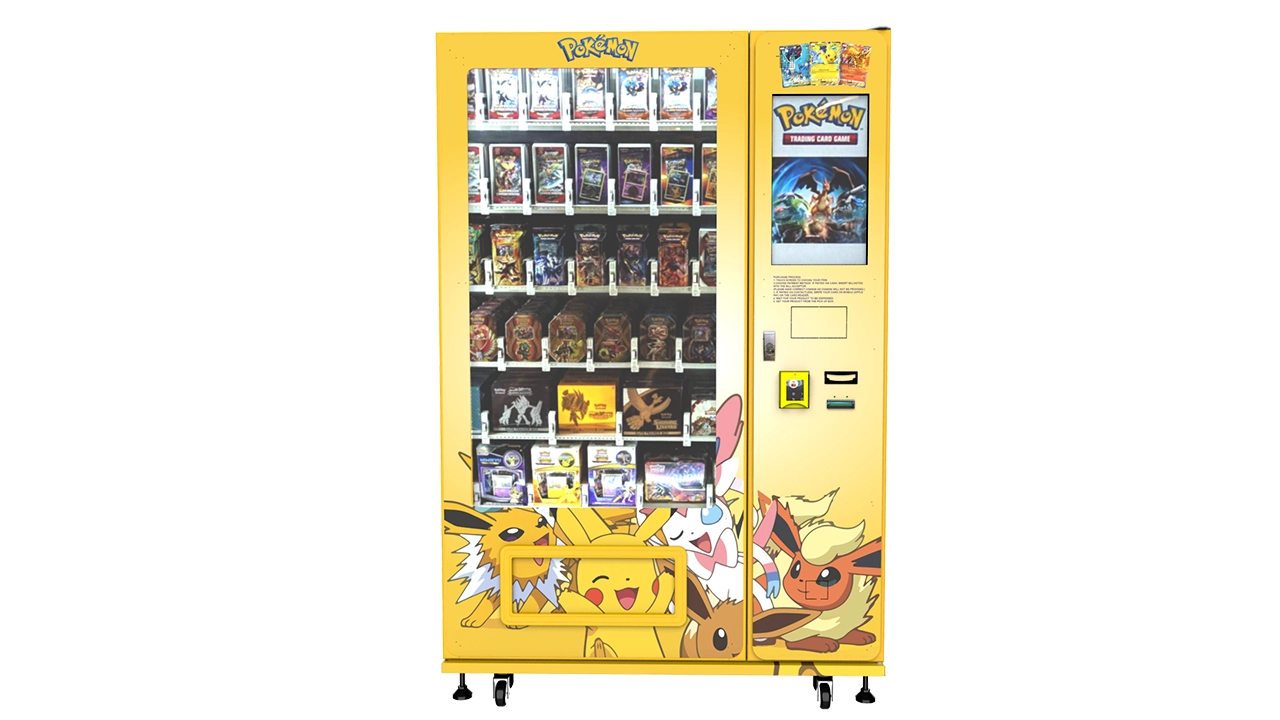
25. What Makes a Secure Trading Card Vending Machine Worth Buying?
The best trading card vending machine is not necessarily the one with the thickest cabinet, the largest screen, or the highest advertised capacity. It is the one that matches the merchandise, installation environment, security requirements, and operating model.
For trading card operators, the most important design decisions usually concern the separation between customer access and inventory, the quality of the cabinet and service door, the reliability of the dispensing mechanism, and the ability to reconcile inventory accurately.
Pack searching prevention should be built into the customer transaction itself. Unsold packs should remain inaccessible until payment has been completed. Product authenticity and condition should be protected separately through reliable sourcing and documented restocking.
Remote management, surveillance, payment security, and controlled service access provide additional layers of protection. However, each feature should have a clear purpose and a verifiable implementation.
Zhongda Smart offers OEM and ODM trading card vending machine configurations that can be discussed around product dimensions, dispensing methods, touchscreen requirements, payment systems, cabinet design, and management functions. For operators planning a new installation, the most useful starting point is to provide actual product samples or package dimensions and a clear list of security requirements.
I would recommend requesting a configuration review before production rather than relying on a generic vending machine specification. A machine designed around the real merchandise and operating process is easier to test, maintain, and manage.
Ultimately, trading card vending machine security is not about making a machine look difficult to break into. It is about protecting every stage of the sale: receiving authentic products, storing them securely, preventing pre-purchase handling, processing payments safely, delivering the correct item, and keeping an accurate record of every unit sold or removed.
Frequently Asked Questions About Trading Card Vending Machine Security
1. Can a trading card vending machine completely prevent pack searching?
A properly designed machine can prevent customers from touching, bending, comparing, or weighing unsold packs before purchasing. The products remain inside a protected compartment until a transaction is completed. However, the machine cannot guarantee that packs were not searched or tampered with before restocking. Reliable sourcing, incoming-product inspection, and documented inventory handling are also necessary.
2. What security features should a trading card vending machine have?
Important features include a reinforced cabinet, protected service door, suitable commercial locking mechanism, secure mounting, an isolated product collection opening, reliable dispensing, and restricted access to internal components. Depending on the installation, operators may also benefit from door sensors, remote alerts, surveillance integration, inventory monitoring, and individual administrator accounts. Confirm which features are included in the actual machine configuration.
3. How do you prevent customers from weighing trading card packs?
The most practical solution is to keep all unsold packs inaccessible behind the locked cabinet. Customers select products through the touchscreen and receive a sealed pack only after payment. This removes the opportunity to handle or weigh several available packs before purchasing. Operators should also maintain reliable supply-chain records to protect product integrity before loading.
4. Are cameras necessary for a trading card vending machine?
Cameras are not always mandatory, but they can be useful for reviewing suspicious activity, investigating inventory discrepancies, and checking incidents involving the cabinet or payment reader. Camera placement should cover relevant areas without recording sensitive payment information. Recording retention, access permissions, and privacy requirements should be established before installation.
5. Can a wall-mounted trading card vending machine be secure?
Yes, provided the machine is installed on a suitable structural wall using appropriate mounting hardware and the cabinet itself has adequate physical protection. Wall strength, machine weight, anchor selection, and installation quality are important. A wall-mounted design saves floor space, but it does not eliminate the need for a secure service door, protected dispensing opening, and inventory controls.
6. How can operators detect inventory theft or dispensing problems?
Compare opening stock, added stock, confirmed transactions, authorized removals, and physical ending inventory. Review delivery records, service-door events, payment transactions, and surveillance footage when discrepancies occur. Repeated shortages may indicate a mechanical problem, incorrect restocking, or unauthorized access. Investigate the available evidence before classifying a discrepancy as theft.
7. Does Zhongda Smart offer customized security configurations?
Zhongda Smart offers OEM and ODM customization for trading card vending machines, including cabinet structure, cargo-lane arrangements, dispensing configurations, payment hardware, touchscreen interfaces, branding, and selected software functions. Security-specific requirements such as additional door sensors, remote tamper alerts, reinforced access points, or other optional hardware should be discussed and confirmed in the project quotation before production.
8. How much should an operator spend on vending machine security?
There is no universal security budget because costs depend on machine construction, inventory value, installation conditions, monitoring requirements, and the consequences of downtime. Start by calculating the value of inventory at risk and identifying the most likely loss scenarios. Compare the cost of each proposed control with the expected reduction in inventory loss, damage, and operating interruptions. Avoid paying for features that cannot be demonstrated or do not address a meaningful risk.
Conclusion
Trading card vending machine security works best when physical protection, controlled dispensing, product provenance, payment security, remote monitoring, and inventory management are designed as one system. A strong cabinet protects the stock, a protected delivery mechanism prevents unauthorized access, and a documented restocking process helps ensure that customers receive genuine, properly handled sealed products. For equipment buyers, the right decision is to specify security requirements before production, test them with actual merchandise, and confirm every important function in writing. This creates a more dependable vending operation while protecting customer trust and long-term business value.
References and Technical Resources
The following sources provide supporting information for the security, payment, equipment, and retail-loss considerations discussed in this guide.
-
National Retail Federation (2026). The Impact of Retail Theft & Violence 2026. The survey reports that participating retailers experienced a 12.4% decrease in shoplifting incidents and an 8.1% decrease in merchandise theft incidents between 2024 and 2025. These are retail survey findings, not trading-card vending machine loss rates.
Read the 2026 Retail Theft & Violence Report -
National Retail Federation (2025). New Study Finds Retailers Continue to Contend with Rising Levels of Theft & Violence. Participating retailers reported an 18% increase in average shoplifting incidents and a 17% increase in threats or acts of violence during theft events in 2024 compared with 2023. The findings illustrate why security planning should account for changing operating conditions.
Read the 2025 NRF Research Summary -
UL Standards & Engagement. UL 751, Vending Machines. Technical reference for the scope and applicable safety requirements of covered payment-accepting vending machines. Buyers should verify the applicability of the standard and the certification status of the exact equipment model.
View UL 751 Standard Information -
PCI Security Standards Council. FAQ 1300: How Does PCI DSS Apply to Payment Terminals? Guidance on the security responsibilities associated with payment terminals that capture payment account information.
Read PCI DSS Payment Terminal Guidance -
U.S. Department of Homeland Security. Protective Measures Guide for Commercial Real Estate. Reference material covering physical security planning, lighting, intrusion detection, surveillance, and the appropriate use of security recordings.
Read the Physical Security Guidance
Disclaimer
This article is provided for general equipment selection, operational planning, and educational purposes. It does not constitute a guarantee that any particular vending machine, lock, camera, payment terminal, or monitoring system will prevent theft, tampering, fraud, or product searching.
Security performance depends on the actual machine configuration, installation quality, merchandise, maintenance, operating procedures, and surrounding environment. Optional features and customization requirements must be confirmed with the equipment manufacturer before ordering.
Retail loss statistics cited in this article describe survey findings across participating retailers. They should not be interpreted as specific loss rates, guaranteed savings, or sales forecasts for trading card vending machines.
Buyers should independently verify applicable electrical, product-safety, payment-security, privacy, accessibility, and installation requirements. Financial calculations are illustrative only and do not guarantee profitability or investment recovery.
Product names and third-party trademarks are used only to identify compatible merchandise categories. Their owners retain all applicable trademark rights. No sponsorship, endorsement, or affiliation is implied.