Are pokemon vending machines legal? In most cases, the vending-machine format itself is not the legal problem. An independent retailer can generally use an automated machine to sell genuine, lawfully obtained trading-card products. The bigger questions are what merchandise goes inside the machine, how the cabinet is branded, what appears on the touchscreen, and whether customers could reasonably believe the machine is officially licensed, sponsored, approved, or operated by the trademark owner. Selling authentic cards and building an unofficial machine that looks like an official branded installation are two very different things. For operators, the safest approach is to separate product resale from brand ownership: source genuine inventory, keep the machine’s identity independent, use third-party trademarks only as necessary to identify products, and obtain permission before reproducing protected logos, character artwork, branded visual systems, or other intellectual property.
The Short Answer: The Machine Can Be Legal Without Being an Official Pokémon Machine
When someone asks are pokemon vending machines legal, I’d separate the question into two parts immediately. First, can genuine Pokémon trading-card products be sold from a self-service kiosk? Second, can an independent operator decorate that kiosk with Pokémon logos, characters, official-looking graphics, or language suggesting a relationship with the brand?
The first question is usually much easier. Trademark law generally does not give a brand owner unlimited control over every later resale of a genuine product that entered commerce through an authorized sale. Courts have repeatedly recognized what is commonly called the first-sale or exhaustion principle: genuine trademarked goods can ordinarily be resold without obtaining fresh permission from the trademark owner for every transaction.[3]
That principle is the reason ordinary retailers can sell thousands of branded products without owning the trademarks printed on those products. The retailer owns its inventory. It does not automatically own the intellectual property printed on the packaging.
The second question requires much more care. Trademark infringement focuses heavily on whether a use is likely to confuse buyers about source, sponsorship, affiliation, or approval.[1] A machine covered in protected logos, recognizable character artwork, official-looking interface graphics, or statements such as “Official Pokémon Card Vending Machine” can send a very different commercial message from a neutral machine that simply lists authentic Pokémon TCG products among its inventory.
That distinction should shape the entire project.
| Scenario | General Risk Level | Why |
|---|---|---|
| Neutral machine selling sealed genuine Pokémon TCG products | Lower | The machine primarily functions as an independent retail channel for authentic goods. |
| Neutral machine using plain-text product names | Lower to moderate | Product identification can be different from using a trademark as the identity of the vending business itself. |
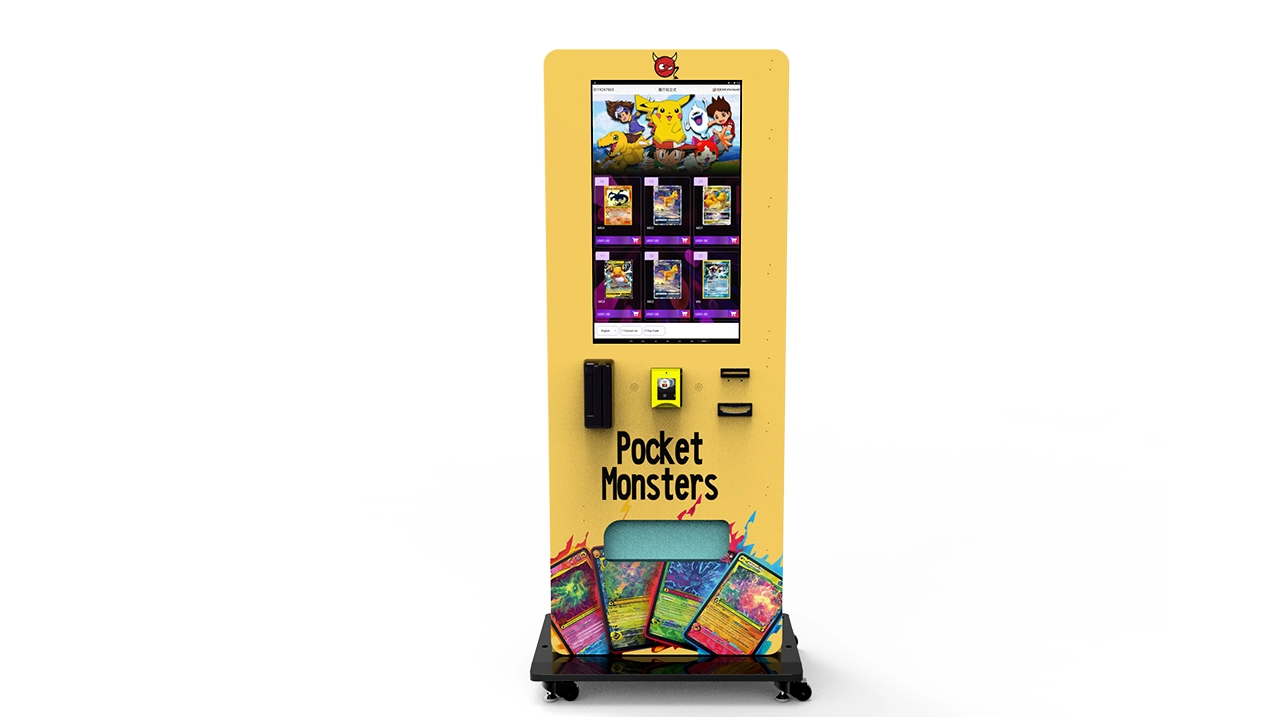
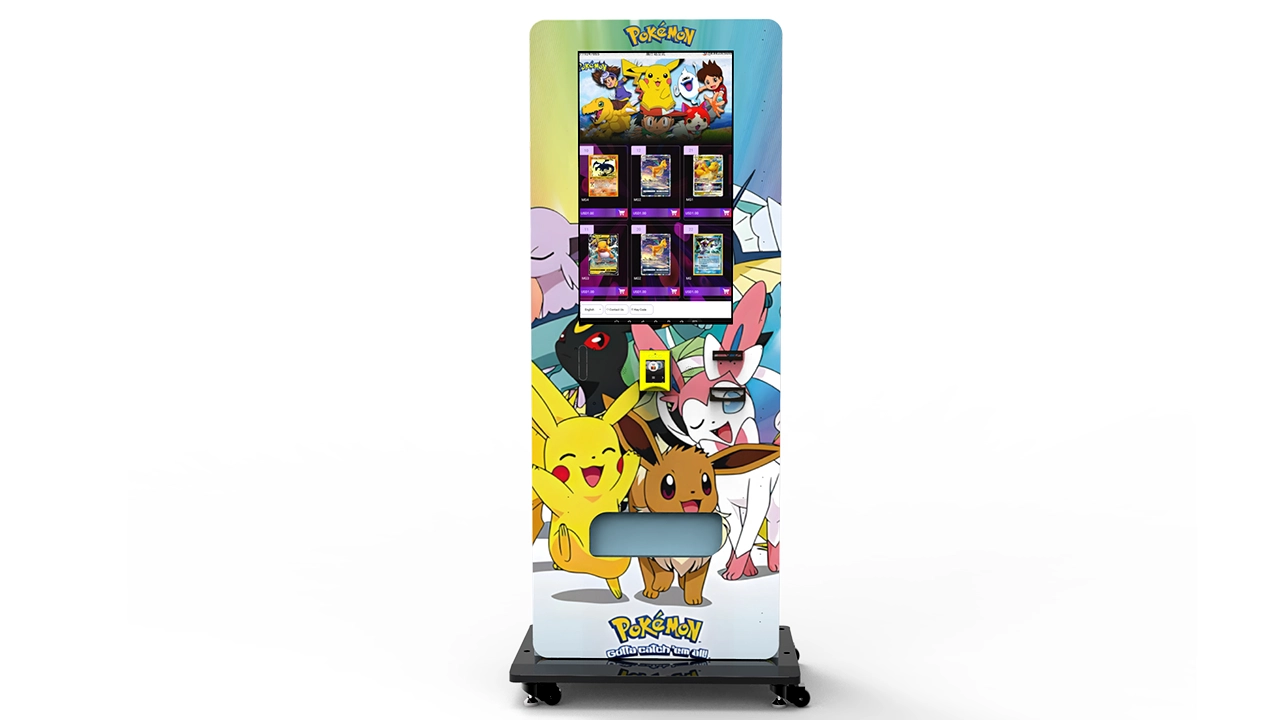
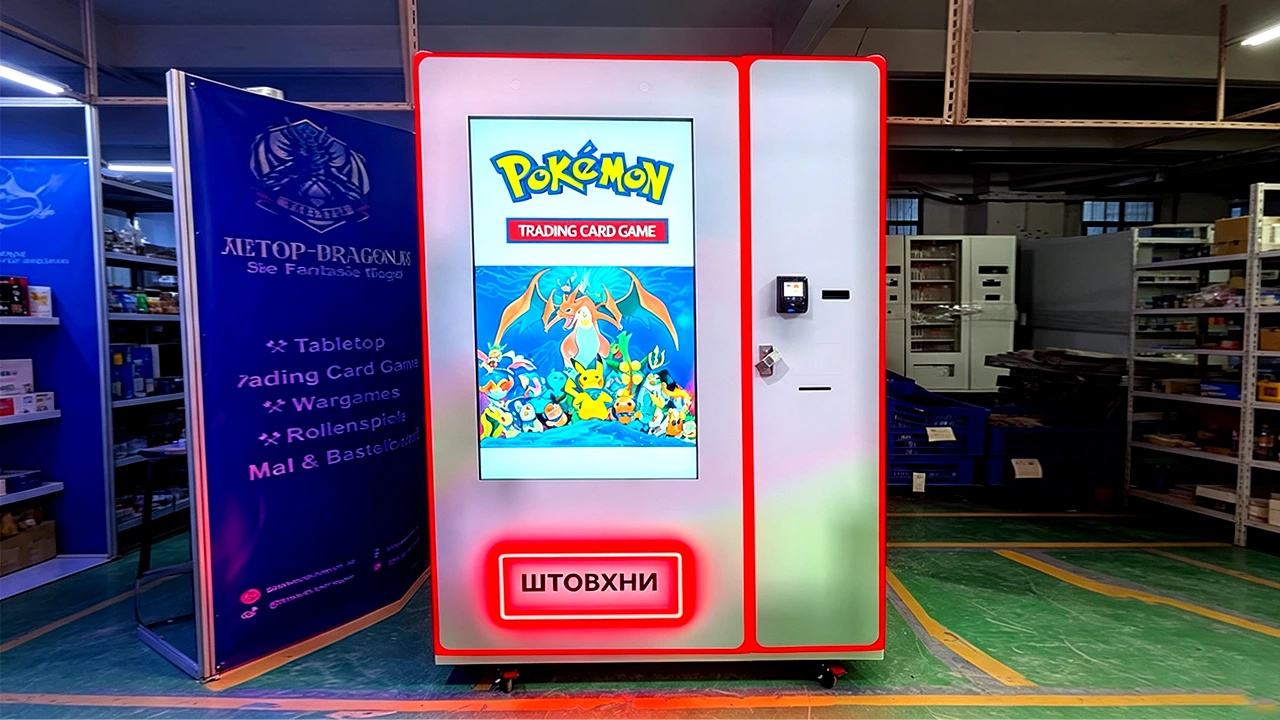
| Machine covered with Pokémon characters and official logos without permission | High | The overall presentation may imply authorization, sponsorship, or affiliation. |
| Machine made to closely imitate an official Pokémon vending installation | High | Similarity in appearance and overall commercial impression can increase confusion risk. |
| Machine selling counterfeit products | Very high | Counterfeit merchandise creates a fundamentally different trademark problem from resale of genuine goods. |
| Licensed branded machine operated under written authorization | Depends on license compliance | The agreement determines which marks, artwork, locations, products, and promotional uses are permitted. |
So if the practical question is simply are pokemon vending machines legal, the answer is not a one-word yes or no. The machine is a retail tool. Legality depends on the inventory, branding, advertising, product representations, commercial impression, customer disclosures, and the rules that apply to the operator.
Five Legal Layers Behind a Pokémon Card Vending Machine Project
A trading card vending machine looks simple from the customer side: choose a product, pay, collect the item. Behind that transaction, however, are several separate legal relationships. Treating all of them as one “Pokémon license” question is where many operators make mistakes.
For this comparison, I’m prioritizing five layers because they create most of the practical risk in an automated card-retail project.
1. The Right to Sell the Physical Inventory
The first issue is whether the operator acquired genuine inventory through a lawful channel. A sealed booster pack, collection box, deck, tin, or other authentic product is a physical item. Once acquired lawfully, the ability to resell that physical item is generally much broader than the ability to reproduce the branding printed on it.
This is why an independent retailer can have genuine branded products sitting on shelves without becoming the owner of the brand itself.
2. The Right to Use Trademarks in Marketing
A trademark identifies commercial source. The United States Patent and Trademark Office explains trademark infringement as unauthorized trademark use that is likely to create confusion, deception, or mistake about the source of goods or services.[1]
For a self-service kiosk, the question is not limited to the name on the receipt. The entire customer experience can matter: cabinet graphics, headers, decals, screen design, product menus, social-media advertising, domain names, promotional posters, payment-screen graphics, loyalty-program names, and claims made by the venue.
3. Copyright in Artwork and Characters
Character illustrations, promotional artwork, interface graphics, photographs, packaging illustrations, and other creative material can involve copyright independently of trademark rights. That means an operator may have a defensible reason to use a product name while still lacking permission to download a character illustration and print it over an entire vending cabinet.
The distinction matters during OEM customization. A machine manufacturer can physically print almost any high-resolution artwork supplied by a buyer. That production capability does not determine whether the buyer has the legal right to use that artwork.
4. False Affiliation or Sponsorship
Section 43(a) of the Lanham Act addresses uses that are likely to cause confusion about affiliation, connection, association, origin, sponsorship, or approval.[2] That is especially relevant when the physical machine itself becomes part of the branding.
A customer can understand “this independent store sells Pokémon cards” while simultaneously being misled by “this is an official Pokémon vending operation.” Those are different impressions.
5. Consumer Protection and Retail Rules
Trademark law is only one layer. A commercial vending operation may also need to consider pricing transparency, refund procedures, payment processing, tax treatment, electrical and accessibility requirements, venue contracts, product-age considerations where relevant, customer-data handling, promotional rules, and local automated-retail requirements.
That is why I’d never treat a trademark disclaimer as a complete compliance plan. It addresses only one piece of a larger commercial operation.
Selling Genuine Pokémon Cards: Why Authentic Inventory Changes the Analysis
The strongest starting point for an independent operator is simple: sell genuine, sealed, accurately represented products obtained through legitimate channels.
In Davidoff & Cie, S.A. v. PLD International Corp., the court explained the general principle that resale of genuine trademarked goods normally does not constitute infringement and discussed trademark exhaustion after an authorized first sale.[3] The doctrine exists because reselling an authentic item usually does not change the actual origin of that item.
Applied to automated retail, a vending machine does not inherently transform an authentic booster pack into an infringing product. It is simply another method of completing the retail transaction.
That answers an important part of are pokemon vending machines legal. A vending machine is not automatically prohibited because authentic Pokémon products happen to be inside it.
What the First-Sale Principle Does Not Give You
The first-sale concept is sometimes stretched far beyond what it actually means. Owning genuine inventory does not automatically grant permission to:
- register the trademark as your own business name;
- turn protected character artwork into full-cabinet advertising;
- claim to be an authorized distributor when you are not;
- describe the machine as “official” without a factual basis;
- copy the appearance of the brand owner’s own retail installation;
- download promotional graphics and use them commercially without considering copyright;
- manufacture imitation branded packaging;
- sell counterfeit or materially altered goods as genuine originals.
A useful mental model is this: you may own the box in your inventory, but you do not acquire the brand’s entire intellectual-property portfolio when you buy that box.
Material Differences Can Matter
The resale analysis becomes less comfortable when the goods reaching the buyer are materially different from the genuine goods originally placed into commerce. Courts discussing the first-sale doctrine have recognized exceptions involving material differences and interference with legitimate quality controls.[3]
For card vending, potential problems can arise when an operator opens factory products, changes packaging, mixes contents, removes identifying information, combines products into unofficial bundles, reseals packs, or creates an altered product while presenting it as though it were factory-issued.
That does not mean every bundle or mystery product is automatically unlawful. It means the operator should stop treating the transaction as a simple resale of an untouched original.
Keep Purchasing Records
I’d recommend maintaining invoices, supplier information, purchase quantities, SKU records, and photographs of incoming cartons for higher-value inventory. Those records are commercially useful even when no dispute exists.
They can help with:
- authenticity questions;
- chargebacks;
- supplier disputes;
- inventory reconciliation;
- insurance claims;
- customer complaints;
- recall or product-tracing issues;
- internal loss prevention.
For premium card products, provenance is part of operating discipline.
Trademark and Branding: Where a Legal Resale Can Become a Risky Presentation
The branding question is where most of the nuance lives. If I were choosing for an independent operator without a direct brand license, I’d choose a machine identity that belongs unmistakably to the operator rather than to the card brand.
This distinction matters because trademark law looks beyond exact word copying. The USPTO notes that marks may be confusingly similar based on appearance, sound, meaning, or overall commercial impression, and that related goods and services can increase confusion concerns.
In practical vending terms, a machine can create an affiliation message without literally saying “licensed.”
A Machine Can Communicate Affiliation Visually
Imagine two machines selling exactly the same genuine booster packs.
Machine A uses the operator’s own business name at the top. The cabinet is designed in the operator’s colors. The touchscreen has a category called “Pokémon TCG” in ordinary text next to several other card categories. Product photos show the actual sealed merchandise. A short disclosure identifies the business operating the machine.
Machine B is covered edge to edge with Pikachu artwork, uses the familiar Pokémon logo as the largest visual element, displays phrases such as “Official Pokémon Card Station,” and copies the layout of a branded machine that customers may already associate with The Pokémon Company.
The physical inventory can be genuine in both machines. The legal risk is not the same.
Plain-Text Product Identification Is Different from Brand Identity
Independent retailers need some way to tell customers what is for sale. A menu entry such as “Pokémon TCG Booster Pack” communicates product identity. Using a famous mark as the dominant name of the vending operation communicates something broader.
Context matters enormously.
Compare these examples:
| Presentation | Likely Customer Message | Editorial Assessment |
|---|---|---|
| “Pokémon TCG Booster Pack — $X.XX” inside a product menu | This is the product offered for sale. | More defensible when truthful and presented neutrally. |
| “CARDHUB — Independent Trading Card Vending” at the top of the cabinet | This machine belongs to CARDHUB. | Strong separation of operator identity and product brand. |
| “Official Pokémon Vending Center” | The machine appears officially authorized. | High risk if the statement is not true. |
| Large Pokémon logo with no visible independent operator identity | The brand appears to be operating the machine. | Higher confusion risk. |
| Operator logo plus a small text category naming the authentic card line | An independent retailer sells branded merchandise. | Cleaner commercial separation. |
Character Artwork Deserves Separate Review
Operators sometimes focus entirely on the word mark and overlook artwork. Characters, illustrations, card art, background graphics, animated assets, and promotional creative can carry separate rights.
A photograph that appears on an official website is not automatically a free commercial asset. A character image found through an image search is not automatically available for printing on a cabinet. A wallpaper downloaded by a designer does not become licensed merely because the designer can open it in Photoshop.
For cabinet production, I’d recommend one of three routes:
- Use the operator’s own original branding and design system.
- Use assets for which the operator has written commercial permission.
- Use a properly documented licensed brand package supplied through the applicable rights holder or authorized program.
From a manufacturing standpoint, this also makes approvals cleaner. The artwork file can be attached to the purchase order, the buyer can confirm its rights, and the factory can manufacture against an approved proof rather than improvising with graphics gathered online.
A Disclaimer Helps, but It Is Not a Magic Shield
Operators sometimes believe that one sentence in tiny print can cure any branding problem. I would not build a project around that assumption.
A disclosure such as “Independent retailer; not affiliated with or endorsed by the trademark owner” may help explain the relationship when it is accurate. But the total commercial impression still matters. If the entire cabinet looks official and the disclaimer is buried at the bottom of a payment screen, the visual message may overwhelm the text.
The stronger approach is to make independence obvious from the beginning rather than trying to repair ambiguity afterward.
That is one of the most useful answers to are pokemon vending machines legal: a neutral retail identity is usually easier to defend than a machine whose success depends on making buyers think it is official.
Think Beyond the Cabinet
The same discipline should apply to every customer touchpoint connected to the machine:
- the name used on the cardholder’s statement;
- the merchant name shown during checkout;
- receipts and refund messages;
- social-media account names;
- venue signage;
- map listings;
- digital advertisements;
- QR-code landing pages;
- loyalty accounts;
- customer-support emails;
- machine fleet dashboards visible to customers;
- domains used to advertise locations.
A cabinet that looks independent can still create trouble if every advertisement calls it an “official Pokémon vending network.” Consistency is safer.
Official Pokémon Vending Machines Exist — and That Makes Clear Branding Even More Important
The Pokémon Company has publicly described its own vending program. Its corporate material identifies two formats: “Pokémon Stands,” which carry merchandise, and “Pokémon Card Stands,” which focus on the trading card game.[4]
That is an important fact for independent operators.
Official branded vending is not merely a hypothetical concept. Customers can encounter machines created within the brand owner’s own retail program. An independent machine that closely imitates that official presentation may therefore create a more concrete source or sponsorship question than a machine using a clearly independent design.
The official corporate article also describes design choices intended to create a distinctive Pokémon experience, including branded customer interactions, specialized packaging, and machine placement strategy.[4] Those details show why I would treat the overall experience—not just the words printed on the cabinet—as commercially significant.
Do Not Confuse “Sells Pokémon Cards” with “Pokémon Machine”
A supermarket can sell a famous soft drink without becoming an official store of the beverage manufacturer. A hobby retailer can sell a licensed board game without becoming the publisher. The same distinction can apply in automated retail.
A better description for an independent installation may be:
- trading card vending machine;
- TCG vending kiosk;
- automated trading card store;
- collectible card vending machine;
- self-service card kiosk.
Then the actual product menu can identify individual brands and SKUs as necessary.
That naming hierarchy puts the operator first and the inventory second.
Why Official Machines Are Useful Benchmarking Without Being a Design Template
The official program is useful evidence that automated card retail can make commercial sense. The Pokémon Company reported that its card-focused vending machines were developed to make booster products more accessible in everyday settings, and its corporate article describes a two-pack offer priced at 330 yen when that article was published.[4]
That is useful retail information. It is not an invitation to reproduce the official cabinet.
If I were choosing a benchmark, I’d study the business principles—visibility, simple purchasing, compact inventory, convenient access, reliable dispensing—while building a completely independent visual identity.
How I’d Design a Lower-Risk Trading Card Vending Machine
A compliant-looking machine starts long before printing the cabinet stickers. Branding should be treated as one line item in the machine specification alongside capacity, cargo lanes, screen size, payment hardware, delivery method, connectivity, and service access.
If I were choosing for an independent TCG operator, I’d start with the operator’s own brand architecture.
Step 1: Give the Vending Business Its Own Name
The name at the top of the machine should tell customers who operates it. A distinct operator name is more useful long term anyway because it can support multiple card categories, sports cards, accessories, collectibles, sealed boxes, and future products.
A machine brand built entirely around someone else’s trademark becomes commercially fragile. Even aside from legal risk, the operator has little brand equity of its own.
Step 2: Use an Original Visual System
Choose a cabinet color palette, typography, icon set, layout, and screen interface that belong to the vending business.
Avoid designing toward “make it look as close to the official brand as possible.” That is the wrong creative brief for an independent project.
Instead, the artwork brief can say:
- operator logo as primary mark;
- original background patterns;
- neutral card-related imagery;
- clear product windows or digital product tiles;
- independent customer-support information;
- plain-language product categories;
- clear pricing;
- no unlicensed character art;
- no claim of official sponsorship.
Step 3: Keep Product Brands Inside the Merchandising Layer
The touchscreen should behave like a store shelf. The top-level interface can carry the operator identity. Individual product tiles can identify the authentic products being sold.
This makes the customer journey intuitive:
- Customer sees the operator’s vending brand.
- Customer opens the card category.
- Customer sees available sealed products.
- Customer selects the genuine product.
- Customer sees exact price and quantity.
- Customer pays the independent retailer.
- The machine dispenses the item.
That structure is commercially cleaner than treating the entire machine as one giant advertisement for the inventory brand.
Step 4: Use Product Photography Carefully
Customers benefit from seeing the actual product they will receive. Operators can photograph their own genuine inventory rather than downloading promotional artwork whenever practical.
A straightforward photograph of the sealed product also reduces merchandising ambiguity. The customer sees the real packaging, quantity, edition, and format.
I’d also avoid editing product photographs in ways that imply contents, pull rates, scarcity, value, or guarantees that the packaging itself does not promise.
Step 5: Put the Operator Identity on the Transaction
The operator name should appear where customers need it most:
- machine header;
- checkout screen;
- receipt;
- refund instructions;
- customer-support screen;
- merchant descriptor where technically available;
- terms and privacy notice;
- service contact label.
This is not merely a legal precaution. It reduces chargeback confusion and makes customer support easier.
Step 6: Approve the Final Artwork Before Production
OEM projects should have a formal artwork-approval stage. The operator should review the full cabinet rendering, screen home page, promotional loops, stickers, side panels, top signage, and any illuminated display area.
Do not review only the front door.
A side-panel character graphic can create the same branding issue as a front-panel graphic. So can a boot animation or looping video on a 32-inch display.
Before releasing production, I’d recommend one signed visual proof showing every branded surface.
Step 7: Preserve an Editable Independent Theme
Connected machines are easier to maintain when branding and product content are separate in the software. The permanent interface theme should belong to the operator; product images and SKU names should live in editable inventory records.
That makes product rotation much easier and reduces the temptation to rebuild the entire interface around one collectible franchise.
Inventory Authenticity: Counterfeit Cards Change Everything
If the machine sells counterfeit goods, the legal analysis moves far away from the safer first-sale scenario.
Trademark protection exists in part to protect consumers from confusion about commercial source and to combat counterfeit goods. The USPTO specifically identifies protection against counterfeiting and fraud as a core function of trademarks.
For an operator asking are pokemon vending machines legal, genuine sourcing therefore belongs near the top of the checklist, not near the bottom.
Build a Supplier File
For every recurring supplier, keep basic records:
- legal business name;
- contact details;
- invoices;
- purchase dates;
- quantities;
- SKU descriptions;
- shipment records;
- payment records;
- photos of suspicious or damaged inventory when relevant.
If a price is dramatically below the normal wholesale or secondary-market range, the low price should trigger more verification rather than automatic enthusiasm.
Inspect Packaging Consistency
Card operators already understand how much collectors care about packaging. Use that knowledge operationally. Look for obvious printing defects, inconsistent seals, incorrect product codes, suspicious materials, poor print registration, altered packaging, or products that do not match known legitimate stock.
The vending machine should not become a way to distance the seller from responsibility for what is being sold. Customers are still buying from the machine operator.
Higher-Value Products Need Better Controls
If a kiosk carries premium sealed boxes or graded collectibles, I’d increase controls proportionally. Higher-value inventory may justify camera coverage, tighter access logs, controlled restocking, item-level inventory reconciliation, and gentler delivery hardware.
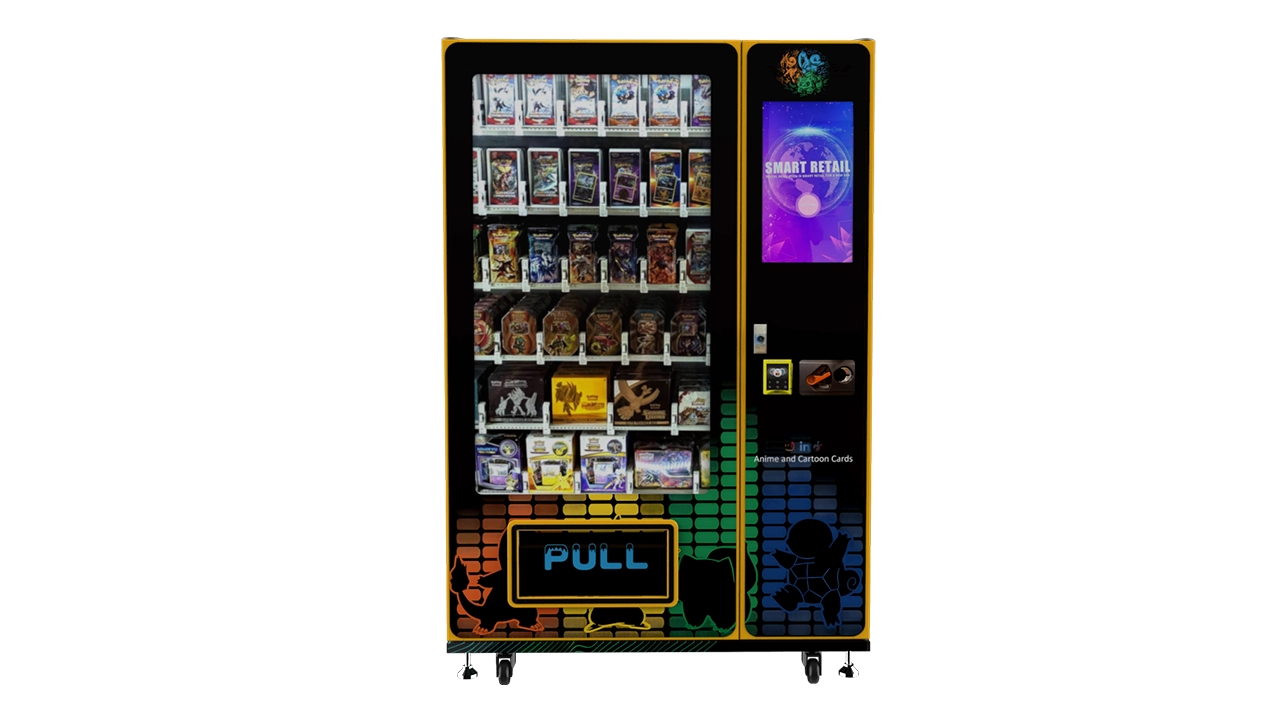
That is one reason elevator-style delivery systems can be useful for condition-sensitive merchandise. Zhongda Smart’s elevator trading card vending machine, for example, uses a lift-style delivery path intended to reduce the impact associated with a long product drop.
Legal compliance and mechanical product care are separate issues, but both affect customer trust.
Mystery Packs, Repacking, and Modified Products Need More Care
Sealed factory products are usually the cleanest starting point because the operator can accurately describe exactly what is being resold.
Once the operator starts opening, repacking, combining, grading, resealing, or creating mystery products, the operator takes on a much larger role in creating the final retail item.
Do Not Present an Operator-Created Pack as Factory-Issued
If the operator creates its own mystery pack, the package and product listing should make that fact clear. The customer should not reasonably believe that the unofficial assortment was created, sealed, guaranteed, or distributed by the original card manufacturer if it was not.
I’d use the operator’s own packaging identity for operator-created products.
Describe the Contents and Odds Truthfully
Mystery products become especially sensitive when marketing uses statements such as:
- “guaranteed hit”;
- “every pack contains premium value”;
- “1 in X chance”;
- “minimum value”;
- “random chase card included”;
- “average value above purchase price.”
Those are factual commercial claims. They should be supported by the actual pack-building process and records.
If 500 mystery packs were made, for example, the operator should be able to explain how the advertised distribution was created and document the inventory placed into the run.
Keep Factory Packaging Intact When Possible
For a first installation, I’d recommend beginning with genuine sealed products rather than building the business model around repacks. That keeps sourcing, product identification, customer expectations, and inventory control simpler.
Once the vending route has proven demand and operating reliability, the operator can obtain appropriate advice before adding more complicated product formats.
Pricing, Disclosures, Payments, and Customer Terms Still Matter
A legally cautious cabinet can still create customer problems if the purchase flow is unclear.
The transaction should tell customers what they are buying, how much it costs, how many units they will receive, and what happens if the machine fails to dispense.
Show the Full Price Before Payment
Customers should not discover mandatory machine fees only after authorizing payment. The displayed price should match the checkout amount unless a clearly disclosed charge legitimately applies.
Have a Failed-Vend Procedure
Trading-card products can be more valuable than traditional snacks. A failed vend therefore deserves a real support process.
The machine should display:
- operator contact information;
- machine identification number;
- instructions for reporting a failed vend;
- the information needed to verify the transaction;
- the applicable refund or replacement process.
Do Not Promise Investment Returns
Collectibles can rise or fall in value. A vending operator should avoid representing random card purchases as guaranteed investments or promising future resale values that cannot be substantiated.
Sell the product for what it is: a trading-card product purchased for collecting, playing, gifting, or personal enjoyment.
Protect Customer Data
If the machine collects email addresses, phone numbers, membership information, loyalty accounts, or other customer data, the operator should understand what is collected, where it is stored, why it is collected, and who can access it.
A cashless self-service kiosk is both a retail device and a connected computer. Security should be treated accordingly.
Choosing and Customizing the Machine Without Creating a Branding Problem
Once the retail model is clear, the next question is hardware. A card vending machine should be configured around the real products, not around a generic snack-vending layout.
Booster packs are thin. Sleeved boosters are thicker. Collection boxes can be rigid and condition-sensitive. Graded slabs have their own dimensions. Premium sealed products may justify a lift mechanism instead of a conventional drop.
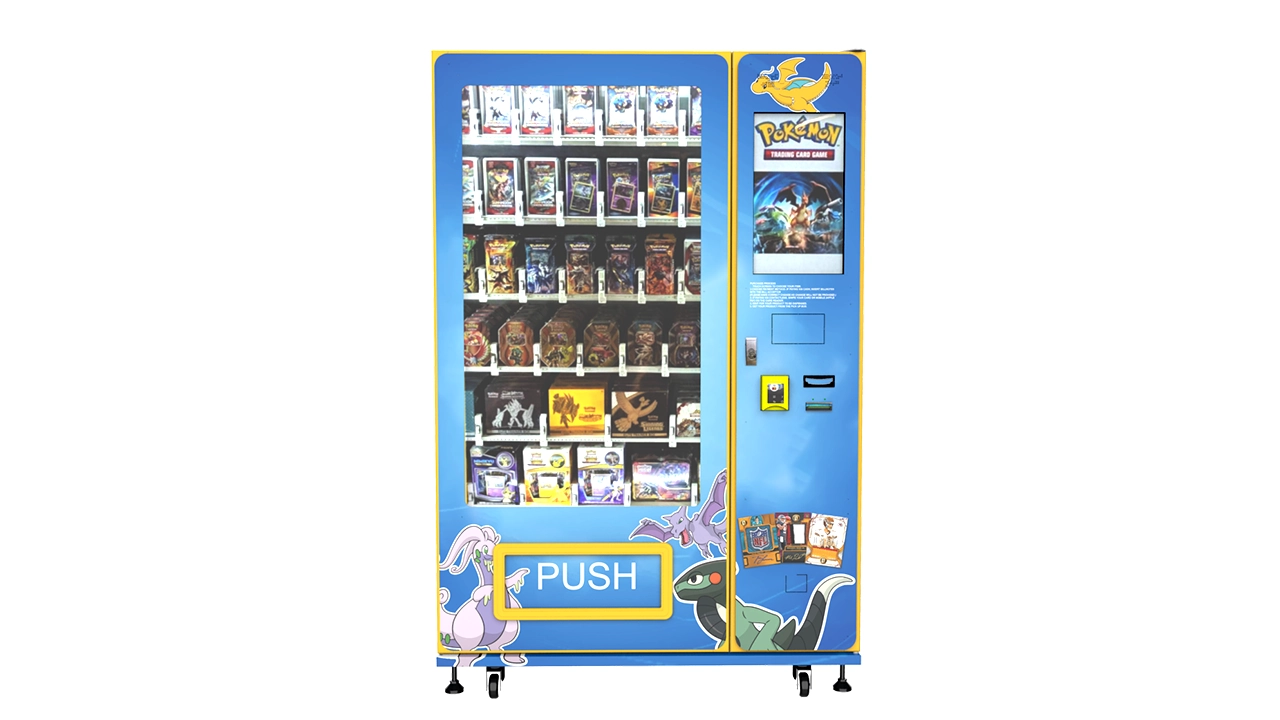
Zhongda Smart manufactures and customizes vending equipment for trading cards and other automated-retail applications. Its current card-machine range can be reviewed on the trading card vending machine collection.
What I’d Send the Manufacturer Before Asking for a Final Quote
The most useful project brief contains measurable information:
- clear photos of every product format;
- package width, height, depth, and weight;
- expected number of SKUs;
- desired inventory per SKU;
- estimated total machine capacity;
- preferred screen size;
- cashless and cash payment requirements;
- network requirements;
- indoor or protected installation plan;
- operator branding files;
- language requirements;
- software and remote-management requirements;
- quantity of machines for the first deployment.
Product Testing Is More Valuable Than Guessing
A lane that works perfectly with one booster format can behave differently with a slippery wrapper, thicker sleeved pack, or compact box.
Representative samples should be tested before finalizing cargo-lane spacing. For a mixed-product installation, test the most important SKUs rather than assuming one channel design fits everything.
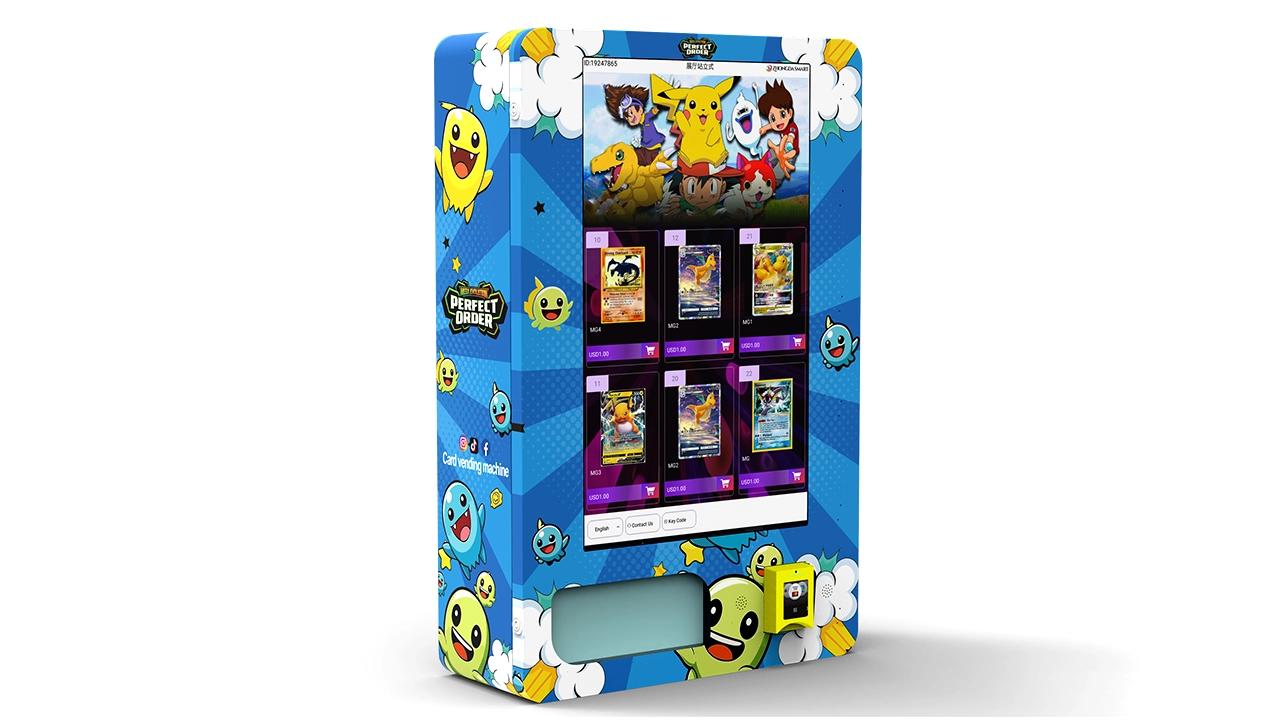
Zhongda Smart’s current 32-inch touchscreen trading card vending machine is published with up to 28 lanes and approximately 375–535 pieces of capacity depending on package dimensions and final configuration. The page lists a reference equipment price of $1,211, while also making clear that payment hardware, customization, software, quantity, and shipping requirements affect the final quote.
Separate OEM Capability from IP Permission
This is one of the most important manufacturing points in the entire guide.
OEM capability means the factory can customize things such as:
- cabinet colors;
- printed graphics;
- operator logos;
- touchscreen interface;
- language;
- cargo configuration;
- payment hardware;
- software functions.
It does not mean every graphic submitted for printing is automatically cleared for commercial use.
If I were choosing the approval process, I’d require the buyer to confirm that it owns or has permission to use all logos, artwork, characters, photographs, trademarks, and other branded assets supplied for the machine.
That is cleaner for everyone involved.
Zhongda Smart as the Hardware Partner, Not the Card Licensor
An operator buying a customized machine from Zhongda Smart is buying vending hardware and related customization. Unless a separate written authorization says otherwise, that hardware purchase should not be presented as a trademark license from the card brand.
This distinction protects the operator’s marketing accuracy and allows the machine to remain flexible. The same hardware can sell multiple genuine card categories instead of being permanently tied to one franchise identity.
Buyers who want more background on the manufacturer can review the Zhongda Smart manufacturing profile, which publishes information about the company’s R&D, OEM/ODM capabilities, facility scale, workforce, and production capacity.
Can a Pokémon Card Vending Machine Make Money?
Legal permission and profitability are separate questions. Even a perfectly compliant machine can lose money in a weak location, and a strong location cannot rescue consistently poor inventory economics.
The business model is simple to describe:
Gross sales − merchandise cost − venue cost − payment fees − restocking cost − machine operating cost − losses − taxes and other expenses = operating contribution.
What matters is not the excitement around the card category. What matters is the arithmetic of each location.
A Simple Illustrative Model
The following example is not a promise, industry average, or forecast. It is a planning model showing how an operator can test assumptions before purchasing equipment.
| Illustrative Variable | Assumption |
|---|---|
| Average transaction | $14.00 |
| Transactions per day | 18 |
| Operating days per 30-day month | 30 |
| Monthly gross sales | $7,560 |
| Merchandise cost assumption | 68% of sales |
| Gross merchandise margin | $2,419.20 |
| Payment processing assumption | 3.2% of sales |
| Payment processing | $241.92 |
| Illustrative venue fee | $650 |
| Restocking/service allowance | $400 |
| Connectivity/software allowance | $90 |
| Damage/refund/shrink allowance | $150 |
| Illustrative operating contribution before other expenses | $887.28 |
This example demonstrates why sales alone can be misleading. A machine doing more than $7,500 in monthly gross sales is not producing $7,500 of profit.
Location Quality Has Outsized Influence
The machine needs an audience with a reason to stop. Good automated-retail locations usually combine visibility, dwell time, convenient access, safe placement, and a customer base that already fits the merchandise.
For trading cards, that may include environments connected with games, collectibles, entertainment, hobbies, family activities, or high repeat traffic.
I’d rather place one machine in a strong, measurable location than five machines selected merely because space was available.
Stock Turn Matters More Than Maximum Capacity
A 500-piece machine is not automatically better than a 120-piece machine. Capacity only creates value when the inventory sells.
Slow-moving product ties up cash. Fast-moving product creates stockouts. The right machine balances:
- number of SKUs;
- units per SKU;
- restock frequency;
- release schedule;
- merchandise cost;
- traffic pattern;
- available space.
For smaller spaces, a wall-mounted configuration may be more rational than a large floor machine. Zhongda Smart publishes a 32-inch wall-mounted card vending model with up to 120 pieces of capacity and a $999 reference equipment price before project-specific options.
Do Not Calculate ROI from the Base Machine Price Alone
The machine itself is only part of the initial investment. A serious budget may include:
- machine hardware;
- payment terminal;
- custom cabinet graphics;
- software options;
- freight;
- import and handling costs where applicable;
- installation;
- venue deposit;
- initial merchandise;
- insurance;
- spare parts;
- working capital.
Assume, for illustration, that the complete launch investment reaches $7,500 and the location produces $900 per month after recurring operating costs but before owner taxes and broader overhead. Simple payback would be approximately 8.3 months. If contribution falls to $300 per month, the same investment takes 25 months.
That sensitivity is why the location test matters more than an optimistic spreadsheet.
Use Remote Data to Improve the Assortment
A connected self-service kiosk should help answer practical questions:
- Which SKUs sell fastest?
- Which price points convert?
- What time of day produces the most sales?
- How many days elapse between restocks?
- Which slots repeatedly stock out?
- Which products sit untouched?
- How often do failed vends occur?
That information can turn automated retail from guesswork into an iterative merchandising process.
The Pokémon Company’s own published scale also shows why the underlying category attracts attention. Its corporate figures report cumulative Pokémon TCG production above 85 billion cards as of the end of March 2026.[5] Large category scale, however, does not guarantee profit for an individual vending location. Operators still need genuine inventory, disciplined purchasing, sensible pricing, and traffic that converts.
Trademark and Branding Risk Matrix for Independent Operators
If the recurring question is are pokemon vending machines legal, the following matrix is a more useful decision tool than a generic yes or no.
| Operator Action | Relative Risk | Practical Direction |
|---|---|---|
| Sell unopened genuine card products | Lower | Keep purchase records and identify products accurately. |
| Use Pokémon in plain text to identify an authentic SKU | Lower to moderate | Keep use proportional to product identification rather than machine branding. |
| Display your own photo of the genuine sealed product | Lower to moderate | Use accurate photography and avoid misleading alterations. |
| Use an independent machine name and logo | Lower | Recommended for operators building their own vending business. |
| Use a large Pokémon logo as the cabinet header | Higher | Obtain appropriate authorization before treating the mark as machine identity. |
| Cover cabinet with character artwork copied online | Higher | Do not assume artwork is commercially reusable. |
| Use “official,” “authorized,” or “licensed” without proof | High | Do not make relationship claims that are not true. |
| Imitate the appearance of an official vending program | High | Create a distinct operator identity and overall visual impression. |
| Sell counterfeit cards or counterfeit sealed products | Very high | Use genuine, traceable inventory. |
| Repack products while suggesting factory origin | High | Clearly identify operator-created bundles or packs. |
| Use licensed artwork under a written agreement | Agreement-dependent | Follow the exact scope, territory, term, product, and usage conditions in the license. |
The Best Question to Ask About Every Design Element
Instead of asking only, “Can I put this graphic here?” ask:
What would an ordinary customer think this graphic means about who owns, operates, sponsors, approves, or licenses this machine?
That question forces the design team to think about commercial impression rather than treating each logo, phrase, animation, and image in isolation.
Do Not Rely on One Detail
A small operator logo does not automatically cure a cabinet dominated by someone else’s marks. A disclaimer does not automatically cure a false “official” claim. Genuine inventory does not automatically legalize copied artwork. A custom machine invoice does not automatically create a trademark license.
Compliance comes from the combination of sourcing, branding, messaging, design, and truthful customer communication.
Pre-Launch Checklist for a Pokémon Card Vending Machine
Before switching on the first machine, I’d work through this checklist with the project team.
Inventory
- Are all branded products genuine?
- Can purchases be supported by invoices or supplier records?
- Are the product names, quantities, and versions accurately described?
- Are factory products still in their intended sealed condition?
Branding
- Does the machine have an independent operator name?
- Is the operator logo visually prominent?
- Are third-party trademarks used mainly for product identification?
- Have character art and promotional graphics been rights-cleared?
- Does any element falsely imply sponsorship, approval, or authorization?
- Could the machine be mistaken for an official branded vending program?
Touchscreen
- Does the home screen identify the operator?
- Are product photographs accurate?
- Are price and quantity clear before payment?
- Are unsupported scarcity or investment claims removed?
- Is customer support easy to find?
Hardware
- Have representative products been vending-tested?
- Are cargo lanes matched to package dimensions?
- Is drop impact appropriate for the merchandise?
- Is the collection bin large enough?
- Is the machine securely installed?
- Are payment and network systems configured correctly?
Operations
- Is there a restocking process?
- Is inventory counted during service?
- Are refunds and failed vends documented?
- Is sales data reviewed by SKU?
- Are payment disputes monitored?
- Does the venue agreement permit the intended merchandise and machine?
Legal Review
- Has applicable trademark use been reviewed?
- Are any licensing claims supported by written authorization?
- Are operator-created mystery products clearly identified?
- Do customer terms reflect the actual transaction?
- Have applicable vending, consumer, tax, accessibility, electrical, privacy, and payment requirements been checked?
When these answers are documented, are pokemon vending machines legal becomes a manageable operating question instead of a vague branding gamble.
Frequently Asked Questions
Are pokemon vending machines legal?
Generally, a vending machine is not unlawful merely because it sells genuine Pokémon cards. The important issues are whether the products are authentic and lawfully obtained, whether the operator follows applicable retail rules, and whether the machine’s branding or advertising creates misleading confusion about sponsorship, affiliation, or approval. A neutral trading card vending machine selling genuine products presents a different situation from an unofficial cabinet designed to look like an official Pokémon installation.
Can I sell genuine Pokémon cards from my own vending machine?
Resale of genuine trademarked products is generally treated differently from manufacturing counterfeit products or falsely presenting yourself as the trademark owner. Trademark first-sale principles commonly allow genuine goods to be resold after an authorized first sale, subject to important exceptions. Keep supplier records, accurately describe the product, and avoid materially altering merchandise while continuing to present it as the factory-issued original.
Can I put the Pokémon logo on the outside of my vending machine?
That is much riskier than simply identifying the genuine products being sold. A large logo on the cabinet can function as branding for the machine itself and may communicate affiliation, sponsorship, or approval. I’d recommend using the operator’s own logo and visual system unless the operator has appropriate permission for broader use of the third-party mark.
Can I call my business a “Pokémon vending machine” business?
Product-description language and business-identity language can create different impressions. If an independent operator uses a third-party trademark as the dominant identity of the vending business, customers may infer an official relationship. A more durable approach is to create an independent vending brand and use product names within the merchandise listings where needed to identify genuine inventory.
Will a “not affiliated” disclaimer make any machine design safe?
No. A truthful disclaimer can be useful, but it should not be treated as permission to create an otherwise misleading presentation. Trademark analysis considers the overall commercial impression. The machine name, logos, artwork, colors, interface, advertising, and claims should already make the operator’s independent identity reasonably clear.
Can I show pictures of Pokémon card products on the touchscreen?
Customers need to know what they are buying, and accurate product presentation is important. I’d favor clear photographs of the actual genuine sealed products held in inventory. Avoid assuming that every promotional illustration, character graphic, banner, or downloadable image found online is available for unrestricted commercial use. Product identification and decorative reproduction of protected artwork are not the same use.
Are mystery packs legal to sell from a trading card vending machine?
Mystery products require more care because the operator may be creating a new product rather than merely reselling an untouched factory item. Packaging and listings should clearly identify operator-created packs, and any claims about guaranteed contents, odds, minimum value, or distribution should be truthful and supportable. Applicable rules can also vary by jurisdiction and promotion structure, so obtain specific advice before building a major business around randomized repacks.
What should I give a vending machine manufacturer before ordering a customized card machine?
Send product photos, exact package dimensions, approximate weights, SKU count, desired capacity, preferred payment methods, software requirements, network requirements, installation conditions, quantity, and operator-owned branding files. If third-party logos or artwork are supplied, confirm that you have the necessary rights to use them. Zhongda Smart can configure the hardware, cabinet, interface, payment setup, cargo lanes, and related features around an approved project brief.
Final Take: Sell the Product Without Pretending to Own the Brand
The most practical answer to are pokemon vending machines legal is that automated retail and trademark licensing are separate questions.
An operator can build a legitimate trading-card vending business around genuine merchandise without turning the machine into an imitation official store. That separation is not a weakness. In my view, it is the stronger long-term business model.
Create an independent retail brand. Buy authentic inventory. Keep sourcing records. Use third-party names only as reasonably necessary to identify genuine products. Be cautious with logos, characters, artwork, and official-looking visual systems. Avoid unsupported claims of authorization. Make the operator identity clear during the entire transaction. Test every product against the actual vending mechanism before deployment.
On the equipment side, choose the cabinet according to merchandise dimensions, value, capacity, location, payment requirements, and desired delivery method. Zhongda Smart can manufacture and configure the vending hardware around those requirements, while the operator remains responsible for making sure the branding assets and merchandise strategy are properly authorized.
If a project genuinely requires a fully themed Pokémon-branded cabinet, treat that as a licensing question before treating it as an artwork question. Getting that sequence right can prevent an expensive cabinet from becoming an expensive branding problem.
Sources
- United States Patent and Trademark Office, “About Trademark Infringement.” Official source.
- 15 U.S.C. § 1125, false designations of origin, false descriptions, and related confusion concerning affiliation, sponsorship, or approval. Official statutory text.
- Davidoff & Cie, S.A. v. PLD International Corp., 263 F.3d 1297, discussing resale of genuine trademarked products, first sale, and the material-difference exception. Case text.
- The Pokémon Company, “Pokémon Vending Machines: Providing Merch and Blending in With Daily Life,” describing Pokémon Stands and Pokémon Card Stands. Official corporate source.
- The Pokémon Company, “Pokémon in Figures,” corporate production figures updated through the end of March 2026. Official corporate figures.
Important Disclaimer
This article provides general educational and commercial-planning information and is not legal advice. Trademark, copyright, consumer-protection, vending, payment, tax, privacy, licensing, advertising, and other requirements can vary according to the facts and applicable jurisdiction. The legality of a specific cabinet design, product assortment, advertisement, mystery-pack program, or trademark use should be reviewed by qualified counsel familiar with the actual project before deployment. Pokémon and related trademarks, characters, artwork, and other intellectual property belong to their respective rights holders. Zhongda Smart is referenced here as a manufacturer of customizable vending hardware; a machine purchase does not by itself create or imply a license, sponsorship, authorization, or endorsement by any third-party card brand.