The Best Locations for Trading Card Vending Machines are places where collector interest, repeat foot traffic, comfortable dwell time, strong visibility, and reliable security overlap. I’d rank dedicated card and game stores first for buyer intent, followed by busy shopping malls, arcades and family entertainment centers, selected transport hubs, event venues, college-area retail environments, and high-volume general retail sites. Raw foot traffic alone is not enough. A machine placed in front of 20,000 people who are rushing past it can perform worse than one seen by 1,000 people who already buy trading cards. The strongest location gives customers a reason to stop, enough time to browse, confidence that products are authentic, and a frictionless way to pay. That combination matters far more than simply finding the busiest building available.
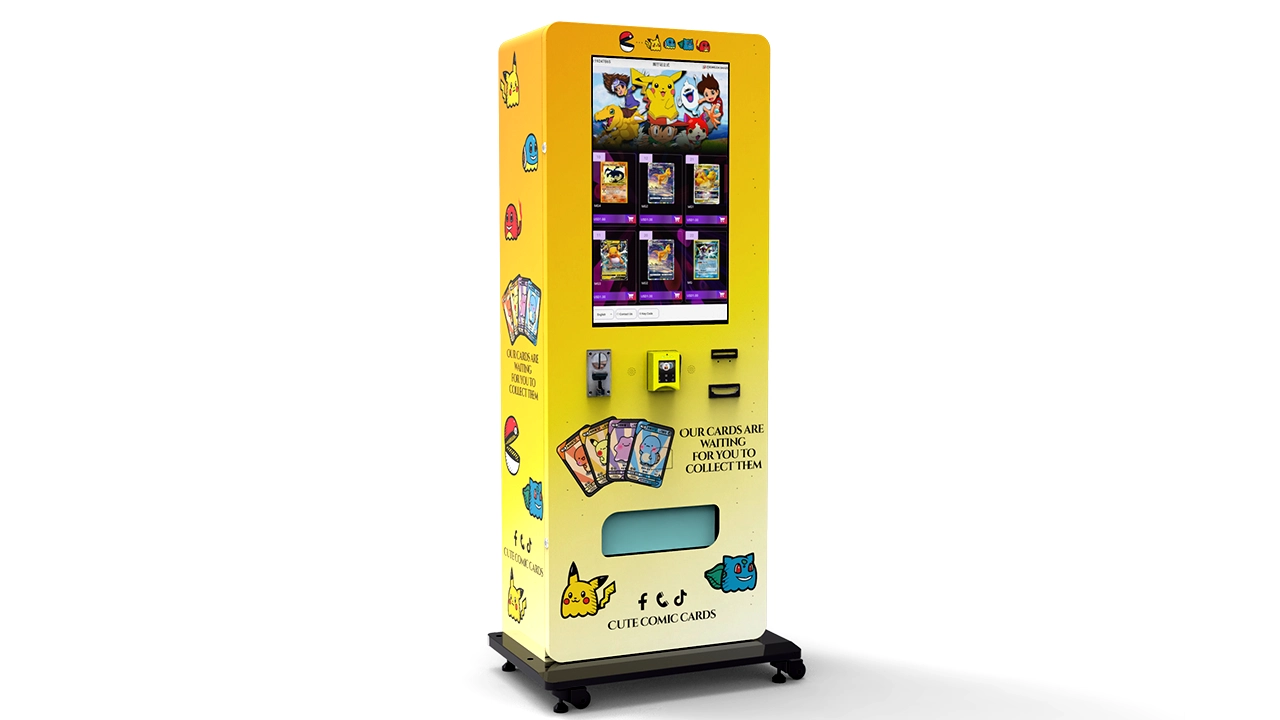
My Ranking of the Best Locations for Trading Card Vending Machines
For this comparison, I’m fic, dwell time, visibility, security, and placement economics. Each matters, but they do not deserve equal weight. Buyer intent has the greatest influence because trading cards are a category-driven purchase rather than an everyday necessity. A person already thinking about games, collectibles, entertainment, or gifts is much easier to convert than a random passerby.
The table below is an editorial placement model rather than a promise of sales. Scores are designed to help operators compare otherwise very different locations before signing a lease or revenue-share agreement.
| Location Type | Buyer Intent | Repeat Traffic | Dwell Time | Security | Overall Placement Score | My View |
|---|---|---|---|---|---|---|
| Trading card and game stores | Excellent | Excellent | Excellent | Excellent | 91/100 | Best overall fit |
| Shopping malls | Very Good | Excellent | Excellent | Very Good | 86/100 | Best balance of scale and visibility |
| Arcades and family entertainment centers | Very Good | Very Good | Excellent | Very Good | 82/100 | Strong impulse-purchase environment |
| Stadiums and entertainment venues | Good | Moderate | Very Good | Very Good | 77/100 | High upside when events match the audience |
| Airports and major transport terminals | Moderate | Excellent | Very Good | Excellent | 76/100 | High traffic but expensive placement |
| College-area retail and student centers | Good | Excellent | Very Good | Good | 74/100 | Strong repeat exposure |
| Supermarkets and large general retailers | Moderate | Excellent | Moderate | Very Good | 72/100 | Works best near complementary categories |
| Comic and hobby stores | Excellent | Good | Very Good | Excellent | 72/100 | High intent but often lower volume |
| Movie theaters | Moderate | Good | Excellent | Very Good | 68/100 | Useful for impulse and gift purchases |
| Temporary conventions and events | Excellent | Low | Excellent | Variable | 66/100 | Excellent short-term demand, weak continuity |
I would not treat those scores as fixed. A poorly positioned machine inside an excellent mall may underperform a perfectly positioned machine inside a smaller game store. The specific ten square feet around the machine often matter almost as much as the building around it.
1. Trading Card and Game Stores: My First Choice
If I were choosing one environment with the highest probability of attracting qualified buyers, I’d start with a trading card or game store. Customers have already crossed the biggest barrier: they deliberately entered a place associated with cards, tabletop games, collectibles, tournaments, accessories, or related hobbies. You are not trying to create interest from nothing.
A vending machine can serve several useful roles inside this type of store. It can extend sales when the counter is busy, merchandise fast-moving sealed products without taking additional employee time, provide access during extended lobby hours, and create a dedicated area for lower-priced impulse purchases. It can also separate routine transactions from higher-touch purchases that deserve staff attention.
Placement inside the store still matters. I’d choose a position visible from the entrance but not obstructing the doorway. A waiting area near tournament tables can be particularly interesting because players repeatedly see the display during breaks. Another useful spot is beside sleeves, deck boxes, binders, or other accessories, where a card purchase feels like a natural continuation of the shopping trip.
The strongest game-store installations also avoid competing directly with the host. If the store makes most of its margin from specific booster products, filling the machine with the identical assortment at identical hours may give the owner little reason to provide floor space. A better plan can involve complementary SKUs, after-hours access, exclusive bundles, promotional products, or a commercial arrangement that gives the host a meaningful share of revenue.
I’d also clarify inventory responsibility before installation. Decide who selects products, who controls pricing, who handles customer issues, and how quickly sold-out selections will be replenished. A machine surrounded by serious card buyers will expose weak inventory planning quickly.
For a more location-specific configuration, the trading card vending machine game store solution provides a useful reference point when thinking about the relationship between equipment size, product selection, and store layout.
Why Game Stores Convert Better Than Generic Foot Traffic
Imagine two sites. Site A has 12,000 daily visitors, but perhaps only 0.3% are actively interested in trading cards during that visit. Site B has 900 visitors, but a large percentage entered because they buy, play, trade, or collect cards. Site B can be far more commercially attractive even though the raw traffic number looks small.
That distinction is why I would always ask for relevant traffic rather than simply total traffic. Count people passing the proposed machine position. Then observe how many stop at nearby gaming, toy, entertainment, or collectible displays. Those behaviors are more useful than a building-wide visitor estimate.
2. Shopping Malls: Best for Scale and Discovery
Shopping malls are among the Best Locations for Trading Card Vending Machines when the operator wants a larger audience without giving up too much dwell time. Visitors usually expect retail displays, are comfortable browsing, and may encounter the machine multiple times during one visit. Parents, collectors, teenagers, casual players, and gift buyers can all pass through the same commercial environment.
Malls also create something that specialized stores cannot always provide: discovery. Some buyers will already know exactly what they want, while others stop because an illuminated machine displaying colorful packs and boxes catches their attention. That second group can create meaningful incremental sales if the machine is easy to understand from several feet away.
The Pokémon Company itself describes a directly managed card shop located inside a with organized competitive play helping attract both experienced and newer customers. That example does not prove that every mall placement will work, but it shows why retail, entertainment, accessibility, and community activity can reinforce one another in the trading card category.[1]
Within a mall, I’d favor intersections between entertainment and retail rather than simply the busiest corridor. Positions near game stores, cinemas, toy retailers, food areas, arcades, family attractions, or entrances serving repeat local visitors usually make more sense than a corridor dominated by unrelated luxury purchases.
The shopping mall trading card vending machine solution is also worth reviewing when planning for a public-facing installation where appearance, touchscreen presentation, security, and efficient replenishment all matter.
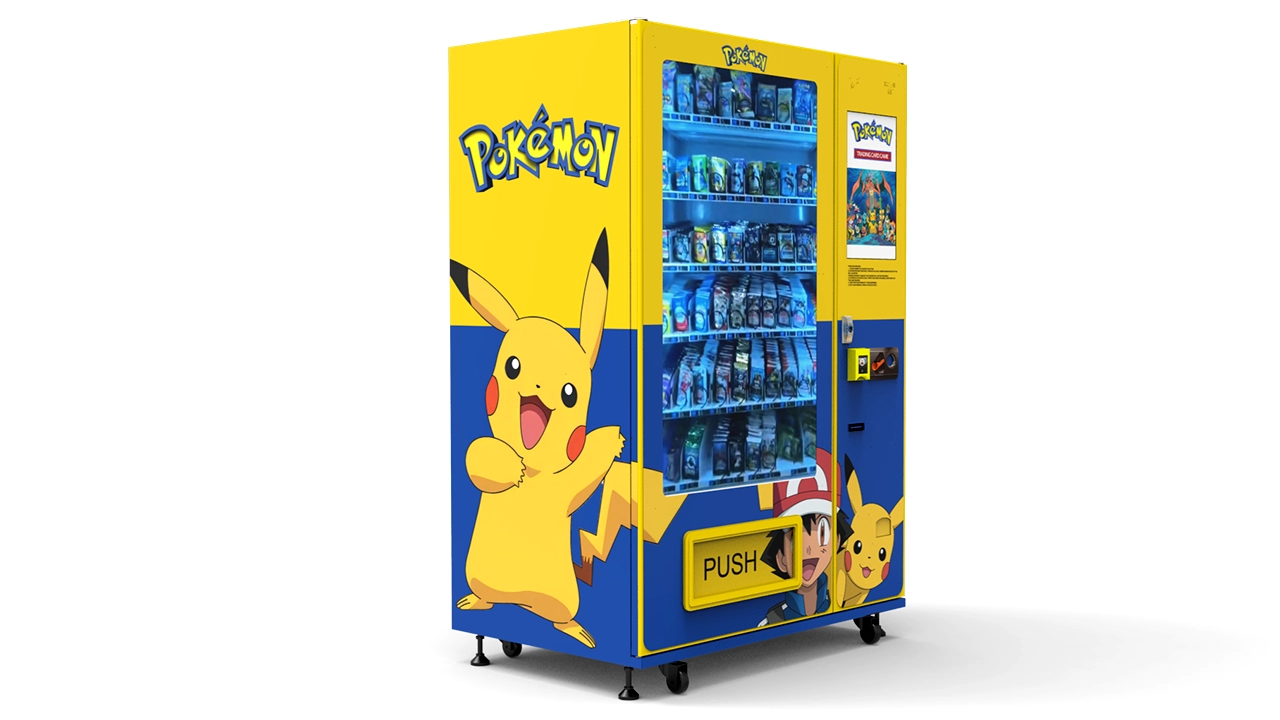
Where I Would Position the Machine Inside a Mall
I’d look for a position where pedestrians naturally slow down. Escalator exits, cinema waiting zones, food areas, entertainment corridors, and junctions can create better interaction than a fast-moving entrance passage. I would avoid narrow paths where anyone stopping to browse immediately feels that they are blocking other people.
Visibility should be tested from several approach angles. A machine may appear prominent on a floor plan but become almost invisible behind a column, promotional display, planter, temporary kiosk, or queue. Before accepting the site, stand approximately 20, 40, and 60 feet away in each major direction and check how much of the machine can actually be seen.
Mall economics also require discipline. Premium retail space can turn an attractive sales number into a weak investment. I’d model the site using conservative sales rather than optimistic traffic projections and compare fixed rent with percentage-of-sales structures before committing.
3. Arcades and Family Entertainment Centers
Arcades are a natural match because the customer is already in an entertainment mindset. That matters. A trading card purchase can feel like part of the experience rather than an unrelated retail interruption. Younger customers may be attracted by the reveal and collection aspect, while older collectors may already understand the products displayed.
These locations often produce valuable dwell time. Customers are not simply walking from an entrance to an exit. They wait for friends, move between games, take breaks, eat, and repeatedly circulate through the same space. A card vending machine positioned along that circulation path can receive multiple impressions from the same customer during one visit.
I’d particularly like a location close to redemption counters, prize areas, party zones, or the transition between arcade games and food service. Those areas already involve decisions about spending discretionary money. A machine should not interfere with lines, however, and the screen should remain visible when the venue is crowded.
Product mix should match the environment. A large assortment of highly technical niche products may overwhelm casual customers. I would use recognizable sealed products, clear price tiers, simple product names, and strong visual merchandising. Mystery-style products require particular care because the customer must understand exactly what is being purchased and what is not guaranteed.
4. Airports and High-Volume Transport Terminals
Transport hubs can be excellent but difficult locations for trading card vending machines. They offer huge traffic, controlled indoor environments, security infrastructure, and long periods when customers are waiting rather than moving. They also tend to have demanding commercial terms, operational restrictions, access procedures, and higher expectations for machine reliability.
Airports are particularly interesting because dwell time can be substantial. Airports Council International reported estimated passenger traffic of about 9.8 billion in 2025, up 3.7% from 2024, illustrating the enormous volume moving through airport infrastructure.[2] That scale does not mean a machine should be placed anywhere inside a terminal. The exact passenger flow and commercial zone remain decisive.
I’d prefer post-screening retail areas where passengers have already completed the most stressful part of the journey and have time to browse. Family waiting areas, gates serving longer dwell periods, retail clusters, and entertainment-oriented zones can be stronger than check-in halls where customers are focused on luggage, documents, and deadlines.
Product selection should also account for portability. Compact booster packs, small boxed products, sleeves, and gift-friendly items are easier for travelers to carry than bulky inventory. Protective packaging becomes more important because customers may place purchases directly into backpacks or luggage.
The biggest mistake would be confusing enormous traffic with guaranteed profitability. A concession fee, revenue share, access cost, service restriction, or requirement for premium hardware can dramatically increase the break-even point. I would calculate that threshold before getting emotionally attached to the prestige of the location.
5. Stadiums, Arenas, and Entertainment Venues
Stadiums and arenas move higher in my ranking when the audience overlaps with gaming, collectibles, youth entertainment, or fan merchandise. They are especially interesting when collectible culture is already part of the event experience. People arrive prepared to spend on discretionary merchandise and often have waiting periods before the event begins.
The weakness is frequency. A machine inside an event venue may see tremendous activity on event days and almost none between them. Operators should evaluate monthly calendar density rather than maximum building capacity. Forty thousand seats mean little if the machine is accessible only a few days each month.
I’d ask for the previous twelve months of event counts, average attendance, public opening hours, and the precise number of days when the proposed machine area is accessible. I would then model sales per active day rather than dividing revenue assumptions evenly across 30 days.
Security can be excellent in professionally managed venues, but service access may be difficult. Restocking might only be permitted during narrow windows. Machines therefore benefit from remote inventory monitoring and enough capacity to survive demand spikes without selling out halfway through a major event.
6. College-Area Retail and Student Centers
Student-oriented environments can give a trading card vending machine something extremely valuable: repeated exposure to the same audience. A person may walk past the machine several times per week. Even when the first exposure does not convert, familiarity can reduce purchase hesitation later.
I’d favor mixed-use student environments with food, recreation, gaming clubs, social spaces, convenience retail, or extended opening hours. A quiet academic hallway can have heavy traffic but weak commercial intent. A student center where people relax and spend discretionary money is a different proposition.
Calendar patterns require attention. Sales may change sharply during holidays, examination periods, and long breaks. Before agreeing to a fixed annual rent, I would calculate revenue using active-term weeks rather than assuming fifty-two identical weeks.
Lower-priced products can be important here. Offering only premium boxes can reduce purchase frequency. A good assortment might include entry-level products, mid-priced packs or bundles, and a smaller number of premium selections so that the machine serves both spontaneous purchases and committed collectors.
7. Supermarkets and Large General Retail Stores
Large retail stores offer excellent repeat traffic but less concentrated trading card intent. Placement is therefore crucial. A machine hidden near unrelated household products will need to create demand almost entirely on its own. A machine near toys, electronics, games, customer service, or another compatible category has a much stronger chance.
Another advantage is trust. Customers are already comfortable making purchases inside the store and may perceive an unattended machine inside a recognized retail environment as more credible than a stand-alone unit in an isolated space.
I’d also evaluate queue behavior. Entrances can seem attractive because every customer passes them, yet people are often moving quickly. Exit areas provide traffic too, but customers may already be carrying bags and thinking about leaving. A position where customers naturally browse can outperform both.
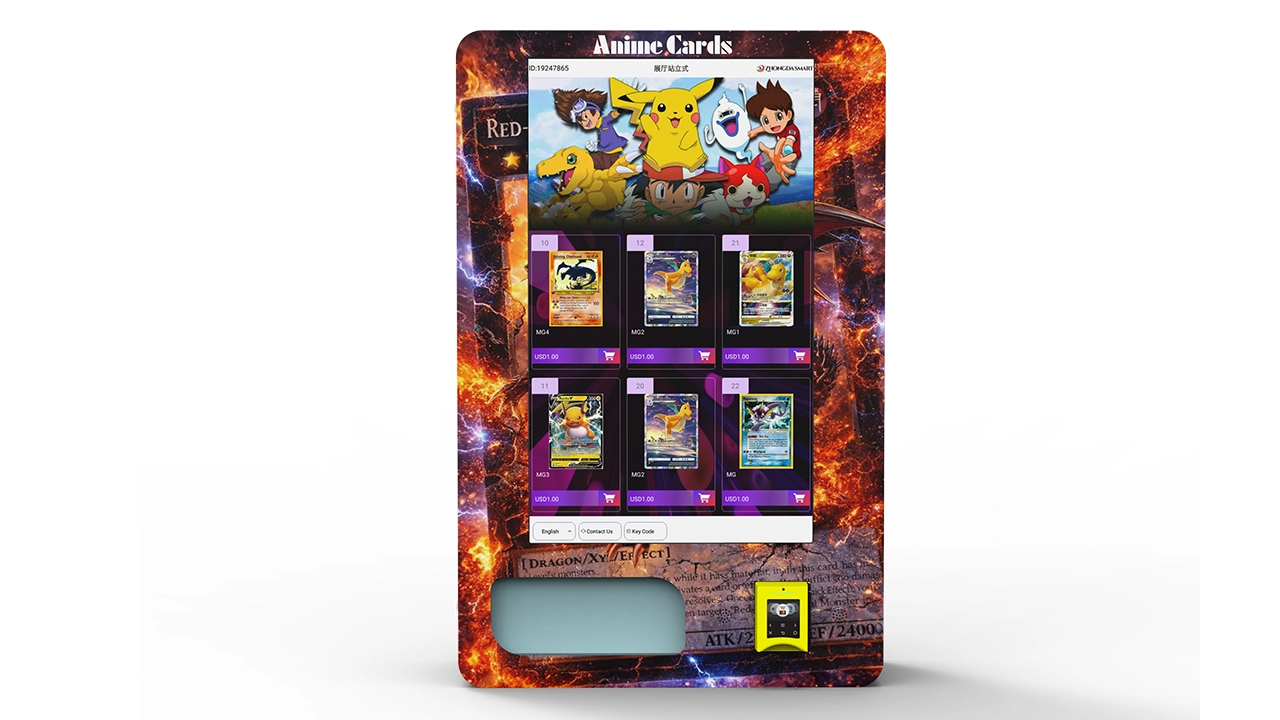
Store management may prefer a compact footprint. In that situation, a wall-mounted trading card vending machine can be worth considering when floor space is limited and the product assortment does not require the capacity of a full-size cabinet.
8. Comic Shops and Hobby Stores
Comic and hobby stores have strong audience overlap with collecting culture even when trading cards are not the primary business. I like these locations because customer intent is usually far better than generic retail traffic, and staff members understand collectible products well enough to answer basic customer questions.
The challenge is volume. A small specialty shop may have excellent conversion but insufficient traffic to support an expensive machine. This is where the difference between percentage-based host compensation and high fixed rent becomes important.
A compact machine with carefully selected inventory can work better than maximizing capacity. If daily demand is modest, loading hundreds of high-value products into the cabinet unnecessarily increases inventory tied up at the location.
9. Movie Theaters
Movie theaters have two useful characteristics: waiting time and entertainment-oriented spending. Customers arrive before a screening, wait for friends, buy concessions, and sometimes spend additional time in the lobby afterward. That gives an eye-catching card vending machine more opportunity than a simple traffic count might suggest.
I’d favor theaters with strong family, animation, fantasy, gaming, or franchise-oriented programming rather than assuming all cinema traffic is equally relevant. Demand may fluctuate substantially with the release calendar.
A major advantage is that the machine can operate without adding another staffed sales point. The main concern is whether the venue already has exclusive merchandise agreements that restrict third-party products. Contract review should happen before equipment is shipped.
10. Conventions, Tournaments, and Temporary Events
Few environments can match the customer intent of a trading card tournament or collector convention. Almost everyone entering is relevant. For short-term sales, these may be among the Best Locations for Trading Card Vending Machines.
I rank them lower for permanent placement because they are temporary by definition. Moving a heavy vending machine repeatedly adds transportation, setup, payment connectivity, insurance, and labor considerations. A machine designed for permanent retail operation is not automatically the best event machine.
For recurring events at the same venue, however, the model becomes more attractive. If equipment can remain securely stored between events, the operator gains high-intent traffic without repeated long-distance movement.
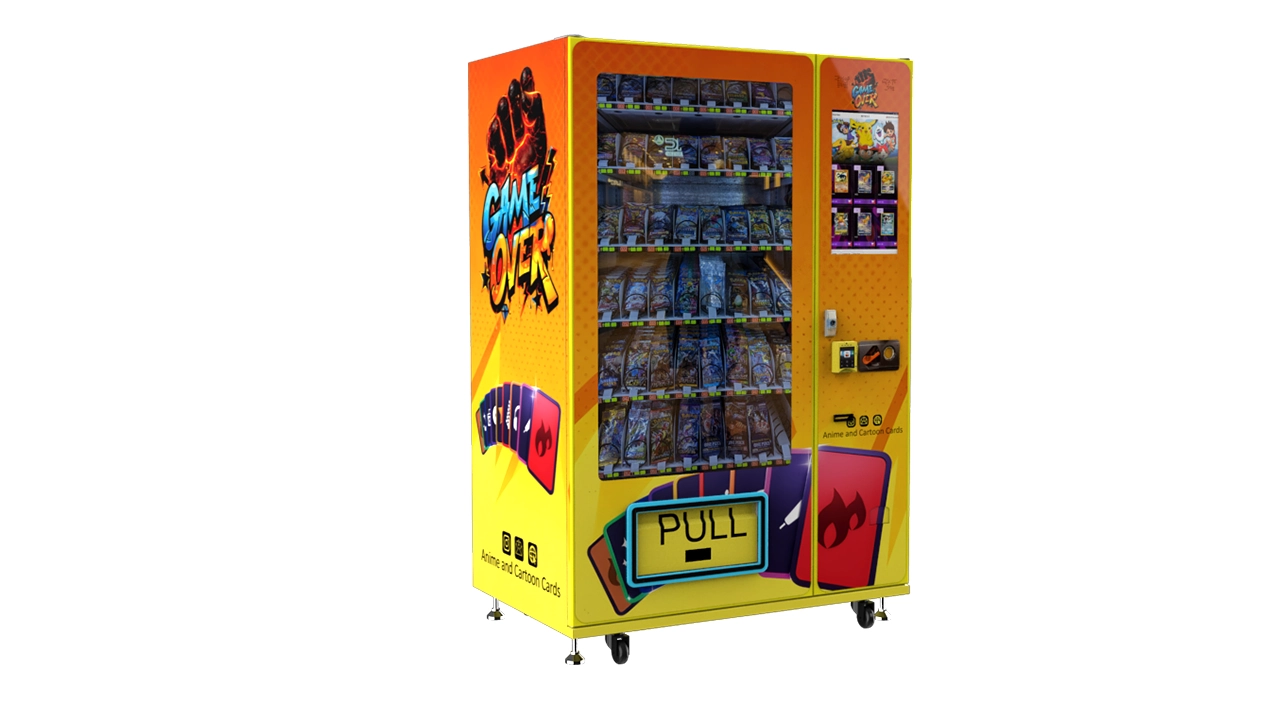
Foot Traffic Is Only the Starting Point
A common mistake in vending machine placement is asking, “How many people come here?” before asking, “Who are those people, where do they walk, and what are they doing when they pass this exact position?”
Suppose a building claims 15,000 visitors per day. If only 20% use the corridor containing your machine, the relevant flow is closer to 3,000. If most of those people are rushing toward an exit, usable traffic is smaller again. If another site has only 2,000 total visitors but 1,400 pass directly through an entertainment zone and regularly stop there, the smaller building may be superior.
I would measure traffic at the proposed machine position in blocks rather than accepting a single daily number. Morning, afternoon, evening, weekday, and weekend patterns can be very different.
| Measurement | What to Record | Why It Matters |
|---|---|---|
| Passersby | People crossing a visible line in front of the site | Measures real exposure |
| Stop rate | People pausing nearby | Indicates usable dwell behavior |
| Relevant audience | Observed interaction with games, toys, collectibles, entertainment, or adjacent stores | Better indicator than generic traffic |
| Peak concentration | Traffic by hour | Helps size inventory capacity |
| Repeat behavior | Frequency of returning customers | Supports recurring sales |
| Queue interference | Whether buyers block another business | Affects host satisfaction |
Dwell Time Can Be More Valuable Than Traffic
A card vending transaction takes longer than buying a bottled drink. The customer may compare sets, inspect images, check pack quantities, evaluate prices, and decide whether to buy one item or several. That makes dwell time particularly important.
I’d rather place a touchscreen machine where people comfortably spend several minutes than directly in a passage where everyone feels pressure to keep moving. Waiting areas, entertainment lobbies, game-store tournament spaces, food zones, and some transport areas naturally provide that time.
A touchscreen trading card vending machine is especially appropriate when the operator wants to show multiple products, images, prices, or category pages without covering the cabinet in printed labels. The interface should still be faste purchase process complicated.
Visibility: The Machine Must Sell Before Anyone Touches It
An unattended retail machine has no salesperson calling customers over. The cabinet, lighting, screen, product photography, and physical position must perform that job.
I’d evaluate visibility at three distances. From farther away, customers should understand that the machine sells trading cards. At medium distance, they should recognize the type of products available. At close range, pricing and purchasing instructions should become obvious.
Do not assume that a bright screen automatically solves visibility. Reflections from windows, overhead lighting, polished floors, or nearby digital displays can weaken readability. Check the location during the brightest and darkest operating periods.
A Simple Five-Second Test
Stand where normal pedestrian traffic first sees the machine and look at it for five seconds. Then ask three questions:
-
Can I immediately tell what this machine sells?
-
Can I see at least one product that gives me a reason to approach?
-
Can I tell that purchasing should be simple and secure?
If the answer to any of those is no, improve the presentation before blaming the location.
Payment Capability Has Become a Placement Requirement
Trading card purchases can be meaningfully higher in value than traditional snack vending transactions. I would therefore treat modern cashless payment as a basic requirement rather than an optional upgrade for most commercial placements.
The NAMA Foundation’s 2022–2023 industry census estimated that about 75% of 2.89 million vending machines accepted cashless payments. Among cashless-enabled machines, 94% offered standard debit or credit card payments and 88% offered contactless payment. The same report notes that operators associated cashless adoption with higher transaction averages.[3]
Those figures are not specific to trading card machines, but the lesson is relevant. A customer standing in front of a $15, $30, or $60 collectible product should not be required to find exact cash. Card payment, mobile wallet support where available, clear payment status, and immediate confirmation reduce unnecessary friction.
Connectivity is part of the same decision. Before approving a location, test the actual machine position rather than assuming that a strong cellular signal at the front door means reliable connectivity in a basement, concrete corridor, or enclosed retail unit.
Security Matters More as Product Value Rises
A machine filled with collectible products can hold far more inventory value than its size suggests. I would therefore evaluate security before discussing decoration or advertising.
Indoor placement is generally easier to control. Look for existing camera coverage, nearby staff, controlled opening hours, adequate lighting, and a position that does not create hidden access to the sides or rear of the cabinet. The machine should be installed according to the manufacturer’s anchoring and stability requirements.
Product delivery is another part of security. Trading cards and sealed boxes should arrive without crushed corners, torn wrapping, or unnecessary drops. If higher-value boxed products are part of the assortment, I’d consider a controlled-delivery design. An elevator trading card vending machine can be useful when reducing the product’s fall distance is important.
Security also means transaction accountability. Remote sales logs, inventory records, payment reconciliation, door-open records, and fault alerts make it much easier to distinguish a genuine mechanical issue from an inventory discrepancy.
How Much Space Does a Good Location Need?
Operators sometimes negotiate a building first and think about the exact footprint later. I would reverse that process. Measure the usable width, depth, height, door swing, service clearance, electrical access, and pedestrian clearance before agreeing to anything.
The machine should not interfere with emergency routes, accessible paths, store entrances, seating, or queues. Local building, accessibility, electrical, fire, and commercial requirements should be checked for every installation.
Remember that the service footprint can be larger than the operating footprint. A machine may fit perfectly against a wall while closed but become impossible to refill because the door cannot fully open.
Choosing the Right Machine for the Location
The best site and the best machine should be chosen together. I would not automatically put the largest cabinet in the location with the most people. Equipment should match available floor space, expected transaction volume, product dimensions, service frequency, presentation needs, and security requirements.
ach I’d Consider| Location Situation | Main Reason | |
|---|---|---|
| Small specialty retailer | Compact or wall-mounted machine | Preserves valuable floor space |
| Large public retail environment | Full-size touchscreen model | Strong visual presentation and broader catalog |
| Higher-value boxed inventory | Elevator delivery system | > |
| High-volume entertainment site | High-capacity machine with remote monitoring | Reduces stockouts during peaks |
| Premium commercial property | Customized exterior and integrated td>Better alignment with host standards |
Zhongda Smart manufactures and customizes vending equipment for operators that need different cabinet dimensions, touchscreen configurations, payment hardware integration, dispensing mechanisms, branding, and inventory layouts. If I were specifying a machine for a particular placement, I’d start with the actual product dimensions and sales pattern rather than choosing a standard cabinet first and trying to force it into the location afterward.
Product Mix Changes What Counts as a Good Location
A location suitable for low-priced booster packs is not automatically ideal for expensive sealed boxes. The price ladder influences browsing time, payment requirements, customer confidence, security, and expected transaction frequency.
I’d divide inventory into three practical tiers. Entry-level products encourage impulse purchases. Mid-range products capture customers who came prepared to spend. Premium products increase potential revenue per transaction but may sell less frequently and tie up more capital.
| Product Tier | Illustrative Selling Price | Best Customer Behavior | Location Characteristic |
|---|---|---|---|
| Entry | $5–$15 | Impulse purchase | High visibility and broad traffic |
| Mid-range | $15–$50 | Planned or semi-planned purchase | Relevant audience and good dwell time |
| Premium | $50+ | Deliberate collector purchase | High trust, security, and clear product information |
These ranges are examples for planning, not market-price claims. Actual pricing must reflect the specific product, sourcing cost, authorized distribution terms, taxes, payment fees, and market conditions.
Calculate Break-Even Transactions Before Signing the Location
One of the most useful calculations is also one of the simplest. Estimate how much gross contribution remains from an average sale after the product cost and transaction-related costs, then calculate how many transactions are required to cover the location’s fixed monthly burden.
A simplified formula is:
Break-even transactions per day = Monthly fixed location costs ÷ Gross contribution per transaction ÷ Active selling days
Suppose the combined monthly location rent, service allocation, connectivity, and other fixed placement costs equal $900. If the average transaction contributes $4.75 after product cost and variable transaction expense, the location would require roughly 6.3 transactions per day over 30 selling days just to cover those modeled fixed costs.
If fixed monthly costs rise to $1,300 and contribution per transaction is $5.25, the threshold becomes roughly 8.3 daily transactions. That difference is important. A premium address may produce more sales while still producing less profit.
I would run at least three versions of this calculation: conservative, expected, and strong. The lease should still make sense under the conservative case.
A Better Location Profitability Model
For a more complete comparison, I’d use the following structure:
Monthly operating contribution = Sales revenue − product cost − payment fees − host commission or rent − replenishment cost − connectivity − maintenance allowance − shrink and refund allowance
Do not evaluate a site only by revenue. Two machines each selling $6,000 per month can have very different results if one pays a 10% host commission and can be serviced alongside other machines, while the other pays expensive fixed rent and requires a two-hour dedicated service trip.
Example Location Comparison
| Metric | Location A | Location B |
|---|---|---|
| Illustrative monthly sales | $7,500 | $6,200 |
| Illustrative gross margin before site costs | 30% | 30% |
| Gross margin dollars | $2,250 | $1,860 |
| Location cost | $1,100 fixed | 10% of sales |
| Location cost dollars | $1,100 | $620 |
| Contribution before other operating expenses | $1,150 | $1,240 |
Location B generates less revenue in this example but leaves more contribution before other operating expenses. That is why I’d never rank a placement using sales volume alone.
Fixed Rent vs. Revenue Share
Both structures can work. The right choice depends on traffic certainty and bargaining power.
Fixed Monthly Rent
Fixed rent is attractive when a location has proven demand. Once sales rise above the break-even level, the host does not automatically take a larger share. The risk is that the operator absorbs nearly all downside if traffic weakens.
Percentage of Revenue
Revenue sharing reduces fixed downside because the site cost falls when sales fall. It can also align the interests of the host and operator. The disadvantage is that a successful machine continues paying more as revenue increases.
Hybrid Agreement
Some properties prefer a minimum payment plus a smaller sales percentage. I would model the effective occupancy percentage at several revenue levels before accepting this structure.
Trial Placement
For an unproven site, I like a defined trial period with clear performance checkpoints. A 60- or 90-day pilot can produce more useful information than hours of arguing about theoretical traffic.
Measure Conversion, Not Just Sales
A location doing $4,000 per month might be excellent or disappointing depending on how many qualified customers see the machine. I’d monitor a small set of repeatable metrics:
-
Transactions per day
-
Revenue per day
-
Average transaction value
-
Units per transaction
-
Gross contribution per transaction
-
Stockout frequency
-
Product-level sell-through
-
Refund or failed-vend rate
-
Payment failure rate
-
Service visits per month
-
Sales per service hour
-
Sales per square foot of occupied space
If the machine supports anonymous interaction analytics without collecting unnecessary personal information, product views and abandoned selections can also help identify merchandising problems. Data collection should always follow applicable privacy requirements and the host’s policies.
Watch Inventory Turnover Closely
Trading card inventory can be expensive, and tying too much stock to slow locations quietly reduces return on capital. I’d rather refill a productive machine regularly than use an oversized cabinet simply to avoid service visits.
For each SKU, track how many days of inventory remain at current sales velocity. Fast-moving products deserve additional capacity. Slow products should lose space even if they look attractive inside the cabinet.
New releases create another challenge. Demand can spike quickly, so remote inventory visibility is especially useful. A machine that sells out of the product everyone wants while remaining full of slow items is technically stocked but commercially understocked.
The Exact Ten Feet Around the Machine Matter
When evaluating the Best Locations for Trading Card Vending Machines, operators often think at building level: “mall,” “airport,” “arcade,” or “game store.” I would go one level deeper.
The ten feet surrounding the machine determine whether customers can see it, approach it, stand comfortably, complete payment, collect their product, and leave without blocking traffic.
I’d reject a technically busy spot if customers must stand with their backs exposed to heavy pedestrian traffic or if a queue forms directly across another tenant’s entrance. Comfort affects conversion.
Power, Connectivity, and Service Access
Before installation, confirm electrical requirements with the machine manufacturer and property manager. Do not rely on a visible outlet until its availability, circuit capacity, and permitted use have been confirmed.
For payment and remote management, test connectivity where the machine will actually stand. Buildings can contain signal dead zones created by reinforced walls, underground floors, utility rooms, elevators, or architectural materials.
Service access is equally important. Ask when technicians may enter, where vehicles can park during restocking, whether loading docks require appointments, whether identification is required, and whether carts can travel through public areas.
Five extra minutes of service time does not sound important until it happens hundreds of times across a machine network.
Do Not Ignore the Host’s Incentives
The best vending machine placement is a partnership. Property owners care about more than your sales. They may care about customer experience, appearance, floor space, complaints, staff workload, cleanliness, insurance, and whether the machine fits their tenant mix.
When presenting a proposal, I’d explain the operational plan as clearly as the commercial offer:
-
What the machine sells
-
How large it is
-
How it will look
-
How customers pay
-
How frequently it is serviced
-
Who handles refunds
-
How quickly faults are addressed
-
Who carries relevant insurance
-
What compensation the host receives
-
How either party can end the arrangement
A clear proposal reduces uncertainty, and reduced uncertainty makes approval easier.
How I Would Inspect a Potential Site
If I were evaluating a location in person, I would not begin by discussing monthly rent. I’d first spend time observing how people actually use the space.
I’d visit during at least one normal period and one peak period. I would watch where people enter, which direction they naturally face, where they slow down, where children and families gather, how queues form, and whether nearby displays already compete for attention.
Then I would stand at the proposed position and check:
-
Visibility from each approach path
-
Comfortable stopping space
-
Lighting and screen reflections
-
Power availability
-
Network connectivity
-
Camera visibility
-
Nearby staff presence
-
Service-door clearance
-
Restocking route
-
Environmental exposure
-
Noise level for audible prompts
-
Accessibility of controls
Only after passing those checks would I negotiate commercial terms.
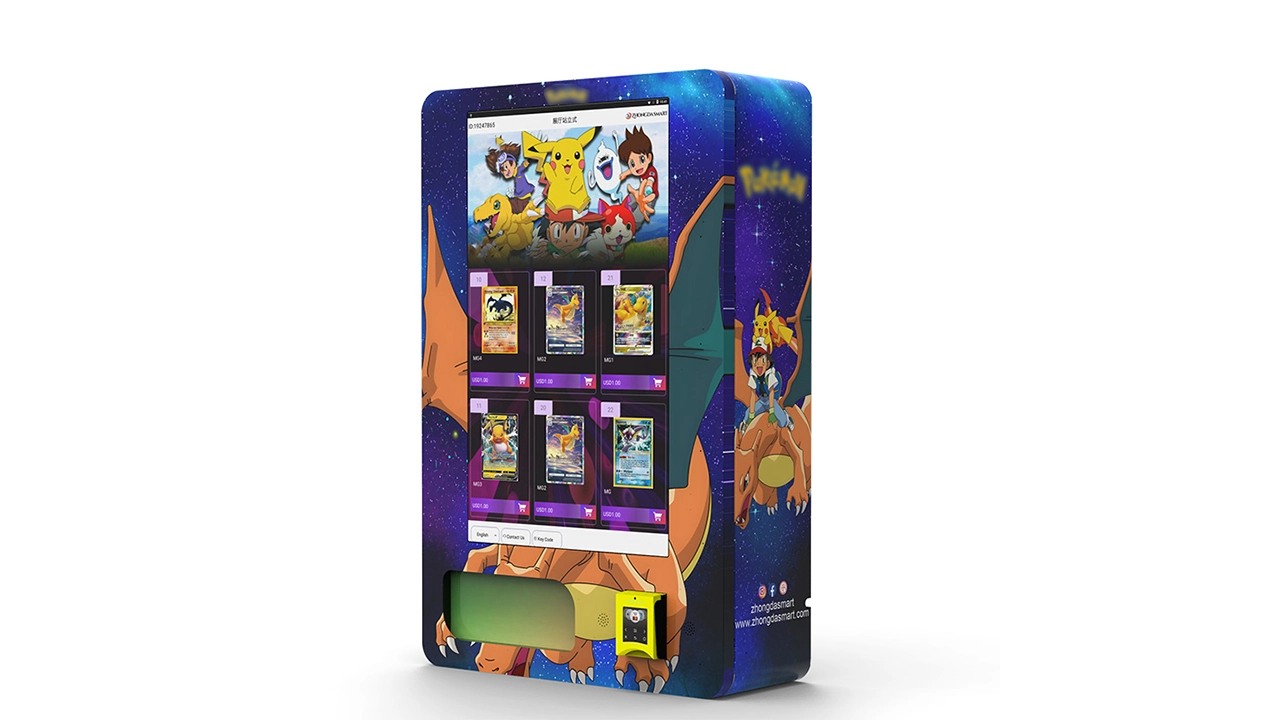
A Practical Location Scoring System
When comparing several candidate sites, I’d score each one using the same fr
| Factor | Suggested Weight | What a High Score Means |
|---|---|---|
| Relevant customer intent | 30% | Large share of visitors are likely card buyers |
| Dwell time | 20% | Customers can comfortably browse and purchase |
| Visibility | 15% | Machine is clearly visible from main circulation paths |
| Security | 15% | Supervised, illuminated, controlled environment |
| Repeat traffic | 10% | Same buyers return frequently |
| Placement economics | 10% | Rent or revenue share leaves adequate contribution |
Score each factor from 1 to 10, multiply by the weighting, and compare the total. More importantly, record why you assigned each score. That makes it easier to revisit the decision after real sales data becomes available.
What Makes Me Reject a Location
Some locations look impressive during the first conversation but contain warning signs. I’d be cautious when I see several of the following at once:
-
High fixed rent with no verifiable position-level traffic data
-
Machine hidden behind temporary kiosks or columns
-
Customers cannot stop without blocking circulation
-
Poor cellular connectivity with no alternative connection
-
No practical restocking access
-
High-value inventory in an unsupervised area
-
Host requires long contracts before allowing a trial
-
Property manager cannot clearly explain operating hours
-
Electrical supply is uncertain
-
Sales restrictions conflict with the intended products
-
Host expects the operator to handle unrelated customer-service duties
-
No clear process for refunds or damaged products
A bad agreement can make a good location unprofitable. Walking away is sometimes the best placement decision.
Where I Would Put the First Machine
For a new operator with one machine, I’d favor predictability over prestige. A specialized game or card store with a cooperative owner and a clearly relevant audience gives better learning conditions than an expensive high-traffic property with complex operating rules.
The first machine teaches you which products sell, how often replenishment is required, which payment methods customers prefer, how many support requests occur, and how much time servicing actually takes. Those lessons become valuable when negotiating the second and third placements.
Once the operating process is stable, I would test broader environments such as malls, entertainment centers, and larger mixed-traffic properties.
Where I Would Put a Small Network of Machines
For multiple machines, route efficiency starts changing the location ranking. Five excellent machines spread several hours apart can be less attractive operationally than five slightly lower-revenue machines clustered close enough to restock in one service loop.
I’d map candidate locations and calculate total service time, not just driving distance. Parking, loading access, building entry, elevators, security procedures, and walking time can turn a short geographic distance into a slow route.
Remote monitoring becomes increasingly important as the network grows. The goal is to service machines because the data says they need service, not because a fixed calendar says someone should drive over and look.
How Often Should You Reevaluate a Location?
A placement should not become permanent simply because the machine was difficult to install. I’d review new sites more frequently during the first three months and then move to a regular performance cycle.
| Period | What I’d Review |
|---|---|
| First 7 days | Payment reliability, dispensing faults, customer confusion, immediate stockouts |
| 30 days | Daily transactions, average sale, SKU performance, service frequency |
| 60–90 days | Repeat demand, host economics, product mix, true labor requirement |
| Quarterly | Profit contribution, seasonal effects, location ranking |
| Annually | Lease terms, equipment condition, route fit, replacement opportunities |
A location that does not meet expectations is not automatically a failure. Sometimes moving the machine twenty feet, improving product signage, changing inventory, or adjusting the screen layout can materially improve results. I’d test inexpensive corrections before removing the equipment entirely.
Seasonality Can Change the Ranking
Trading card sales do not remain constant throughout the year. Gift-buying periods, product launches, tournament schedules, school calendars, entertainment releases, and collector activity can all change demand.
A mall may become dramatically stronger during peak shopping periods. A student-focused site may weaken during long breaks. A stadium can depend almost entirely on its event calendar. A card shop may experience bursts around important releases or tournaments.
That is another reason I prefer flexible location agreements during the testing phase. A single strong month should not justify a long lease, and a single weak month should not automatically condemn a site.
Location Data Should Influence Machine Design
One of the advantages of working with a vending machine manufacturer that supports customization is that location research can guide the equipment specification instead of merely guiding where a finished machine is placed.
For a narrow specialty shop, footprint may matter most. For a mall, exterior presentation and touchscreen visibility may deserve more attention. For a transport terminal, remote monitoring, payment reliability, robust construction, and high inventory capacity may move higher on the priority list. For premium products, delivery control may become a defining requirement.
I’d cments, and then finalize machine configuration. That sequence reduces expensive compromises.
Trading Card Vending Machine Location Checklist
Before approving a placement, I’d want a clear answer to every item below.
-
Audience: Does the location consistently attract people who buy games, collectibles, entertainment products, or gifts?
-
Traffic: Has traffic been measured at the exact machine position?
-
Dwell: Can a customer comfortably browse for 30–90 seconds?
-
Visibility: Can the machine be seen from normal approach paths?
-
Space: Is there enough room for operation and service access?
-
Power: Is suitable electrical service approved?
-
Connectivity: Has payment connectivity been tested at the installation point?
-
Security: Is the machine in a supervised or camera-covered environment?
-
Environment: Is temperature, moisture, dust, and direct sunlight acceptable for the equipment and products?
-
Payment: Are convenient cashless payment methods available?
-
Inventory: Can the machine hold enough fast-moving stock between service visits?
-
Restocking: Can technicians reach the machine efficiently?
-
Host terms: Are rent, revenue share, contract duration, insurance, and termination rights clearly documented?
-
Product rights: Are products sourced legitimately and sold in accordance with applicable distribution and intellectual-property requirements?
-
Customer support: Is there a visible and reliable process for refunds or failed transactions?
-
Accessibility: Does the installation satisfy applicable accessibility requirements?
-
Performance: Is there a defined 30-, 60-, or 90-day review point?
Final Ranking: Which Location Would I Choose?
My ranking of the Best Locations for Trading Card Vending Machines starts with trading card and game stores because buyer intent is difficult to beat. Shopping malls come next because they combine large audiences with browsing behavior and discovery. Arcades and entertainment centers are particularly attractive for impulse purchases and repeated exposure.
Airports and transport terminals offer exceptional traffic and dwell time, but I would only pursue them after carefully modeling concession costs and operating restrictions. Stadiums and event venues can be highly productive when the audience fits the product, while student environments and large retail stores can build dependable repeat traffic when the machine occupies the right internal position.
The central principle is simple: do not buy traffic; buy qualified opportunities to purchase. A person needs to notice the machine, care about the products, have time to browse, trust the transaction, and be able to pay easily. If one of those pieces is missing, an impressive location can quickly become an expensive storage space.
I’d therefore rank locations using measured traffic, customer relevance, dwell time, security, payment reliability, host economics, and service efficiency before discussing prestige or total visitor counts. Then I would launch with a defined test period, track product-level performance, and move underperforming equipment when the data no longer supports the placement.
Frequently Asked Questions
What is the best place to put a trading card vending machine?
I’d rank dedicated trading card and game stores first because the concentration of qualified buyers is difficult to match. Shopping malls, arcades, entertainment centers, selected transport terminals, and event venues can also work extremely well. The exact position inside the building remains critical.
Are shopping malls good locations for trading card vending machines?
Yes. Malls combine high traffic, long dwell time, retail-oriented customer behavior, and opportunities for product discovery. I would prioritize locations near entertainment, toys, games, cinemas, family attractions, or other complementary categories rather than choosing a corridor solely because its traffic count is high.
How much foot traffic does a trading card vending machine need?
There is no universal minimum. Relevant traffic matters more than total traffic. Start by measuring actual pedestrians at the proposed position and then compare transactions against exposure. A lower-traffic game store can outperform a much busier generic location if a larger percentage of visitors are interested in trading cards.
Can a trading card vending machine be profitable?
It can be, but profitability depends on product margin, sales volume, machine cost, rent or host commission, payment fees, service labor, inventory carrying cost, maintenance, refunds, and other operating expenses. Calculate break-even transactions for each location rather than relying on general revenue estimates.
Should a trading card vending machine accept cards and mobile payments?
I would strongly favor cashless capability. The NAMA industry census reported widespread card and contactless acceptance across modern vending equipment, and trading card transactions can have higher values than traditional snack purchases. Removing payment friction becomes increasingly important as the average transaction rises.
What products should be sold in a trading card vending machine?
The assortment should match the customer and machine. Common categories can include sealed booster products, small boxes, decks, sleeves, and other appropriately packaged accessories. I’d use a mix of entry, mid-range, and premium price points while tracking sell-through for every selection. Products should be legitimately sourced and represented accurately.
How should I test a new vending machine location?
Use a defined trial period where possible. Record daily transactions, revenue, average transaction size, stockouts, payment failures, service time, product-level sales, refunds, and location cost. Review the site after roughly 30, 60, and 90 days and compare its contribution with alternative placements.
What type of trading card vending machine is best?
There is no single best configuration. A compact wall-mounted unit may suit a small retailer, a touchscreen cabinet may work better in a large public environment, and an elevator delivery system can be useful for products that benefit from controlled handling. If I were choosing equipment, I’d define the location requirements and inventory dimensions before finalizing the machine.
Sources and Reference Notes
-
The Pokémon Company, Trading Card Game. Used for context on card-shop environments, organized play, and the relationship between retail placement and trading card activity.https://corporate.pokemon.co.jp/en/business/cardgame/
-
Airports Council International, Busiest Airports in the World. Reports estimated 2025 passenger traffic of approximately 9.8 billion and a 3.7% increase from 2024.https://aci.aero/resources/busiest-airports-in-the-world/
-
NAMA Foundation and Technomic, 2022–2023 Industry Census. Used for vending-machine payment adoption figures and broader unattended retail operating context.https://namanow.org/wp-content/uploads/NAMA-Census-FINAL.pdf
Disclaimer
This guide provides general commercial planning information and editorial recommendations for evaluating trading card vending machine locations. Revenue examples, scores, price ranges, break-even calculations, and financial scenarios are illustrative and are not guarantees of sales, profitability, investment returns, or future performance. Actual results depend on location traffic, product mix, acquisition cost, equipment configuration, payment fees, rent, revenue-sharing terms, taxes, maintenance, inventory availability, customer demand, and other operating factors. Operators should verify applicable property rules, electrical requirements, accessibility standards, insurance requirements, tax obligations, product-distribution rules, intellectual-property requirements, and other relevant regulations before installing or operating equipment. Brand names and trademarks belong to their respective owners, and references to third-party products or brands do not imply affiliation or endorsement.