Pokémon Center does not publish a fixed day or time for restocking sold-out products. Its own support guidance says Customer Support does not have information about when—or whether—an individual out-of-stock item will return. Pokémon Center separately says that new products are generally introduced every week, but that is not the same thing as a weekly restock of sold-out merchandise.
If you are trying to figure out when does Pokemon Center restock, the useful clues are the status of the exact product you want, official product announcements, newsletter communications, Early Access invitations, purchase restrictions shown on the product page, and the type of merchandise you are waiting for. The same rule applies to official Pokémon vending machines: there is no published fixed restocking schedule.
Pokémon Center Restocks at a Glance
| Question | Current Answer |
|---|---|
| Does Pokémon Center have a fixed restock day? | No published universal restock day. |
| Does Pokémon Center have a fixed restock time? | No published universal restock hour. |
| Will every sold-out item eventually return? | No guarantee. Pokémon Center says Support does not know when or if individual products will be restocked. |
| Are new products added regularly? | Yes. Pokémon Center says new products are generally introduced every week. |
| Does “new products every week” mean old products restock weekly? | No. New-product launches and replenishment of sold-out products are separate events. |
| Do official Pokémon vending machines have a fixed restock schedule? | No. Pokémon Center says machine restocking depends on product stock levels and the inventory needs of each machine. |
| Can Early Access guarantee a product? | No. Early Access inventory remains limited and available while supplies last. |
When Does Pokémon Center Restock?
The most accurate answer is also the simplest: Pokémon Center does not provide a universal restock schedule for sold-out items.
Pokémon Center Support states that it does not have information about when or if an out-of-stock item will be restocked. The support page directs customers toward Pokémon Center itself and official Pokémon communications for announcements about upcoming products.
That official answer is important because a lot of restock advice online sounds much more precise than the source material actually allows. You may see claims that Pokémon Center “usually restocks on Tuesday,” that stock appears at a particular hour, or that checking overnight guarantees earlier access. Those observations can describe what somebody happened to see. They do not amount to an official schedule.
If one product appeared at 10:00 a.m. on one day and another came back at a similar time a week later, it is tempting to turn two observations into a rule. Retail inventory rarely works that neatly. Different products can have different allocations, release dates, purchase limits, and demand levels.
The better question is not, “What is the secret restock hour?” It is, “What information tells me that the specific product I want may be available again?”
That distinction saves a lot of unnecessary refreshing.
If you are waiting for one particular plush, Elite Trainer Box, booster bundle, figure, apparel size, collection box, or exclusive item, keep track of that exact listing. General activity elsewhere on Pokémon Center does not necessarily predict what will happen to your product.
Pokémon Center's published restock guidance was last updated on May 9, 2025. As of this article's September 1, 2026 review, the guidance still does not provide a fixed replenishment day or hour.
Official source: Pokémon Center Support — How often does Pokémon Center restock items?
Is There a Best Day or Time to Check Pokémon Center?
There is no officially confirmed best weekday or universal time of day for Pokémon Center restocks.
That does not mean product pages never change in recognizable patterns. It means the patterns are observations rather than commitments.
For a collector, that difference matters. An observation can help you decide when to take another look. A published schedule would let you plan around a known event. Pokémon Center provides the former through ordinary storefront activity, not the latter through an official timetable.
It is reasonable to check more frequently when an expected product launch is approaching or when Pokémon has just announced related merchandise. It is much less useful to refresh dozens of sold-out listings every few minutes because somebody once saw stock appear at a particular time.
A product can also sell through quickly. If you check after the fact, the page may look exactly as it did before the inventory became available. That can make a short availability window seem invisible to anyone who was not watching at the time.
None of that proves that Pokémon Center uses one hidden restock clock.
For a product you genuinely want, a practical routine is enough:
- Save the exact product page.
- Keep your account information current.
- Follow official product announcements.
- Subscribe to official email communications if you want them.
- Check more often around relevant releases rather than refreshing constantly.
- Read the current product page before buying because limits and availability can change.
This is less dramatic than a “best restock time” trick, but it is based on what Pokémon Center actually publishes.
There is also a practical benefit: you spend less time trying to predict something the retailer has not promised to make predictable.
New Pokémon Center Products and Restocks Are Not the Same Thing
This is the part that causes the most confusion.
Pokémon Center Support says that it generally introduces new products every week. That statement is current official guidance, last updated November 11, 2025.
It does not say that sold-out merchandise is replenished every week.
A weekly stream of new merchandise and a weekly refill of old merchandise are two different things.
Consider a simple example. Pokémon Center could add ten new products during a week while a sold-out item you bookmarked remains unavailable. The store has received new merchandise, but your item has not been restocked.
The reverse can also happen. A previously sold-out item may return without being treated as a major new-product launch.
Keeping those events separate makes Pokémon Center much easier to follow.
A New Release
A product appears for sale for the first time. It might be tied to a new collection, TCG expansion, character line, seasonal campaign, collaboration, or another launch.
A Restock
A product that was previously available and then sold out becomes available again.
A Preorder
A product is offered for purchase before its stated release or fulfillment date. Preorders have their own terms and should not be treated as ordinary in-stock merchandise.
Early Access
Selected customers receive an opportunity to purchase specified merchandise before broader availability. Early Access does not guarantee that inventory will remain available.
A Brief Reappearance
Sometimes a product may become purchasable again for a short period and then disappear. From the buyer's perspective, it was available. From the outside, however, you generally cannot know how much inventory was involved or why the quantity changed unless Pokémon Center provides that information.
That last point is worth remembering. A product returning for five minutes does not prove that a scheduled full restock occurred. It only proves that purchasable inventory was available during that period.
If your goal is to answer when does Pokemon Center restock, watching new-product activity can still be useful because it tells you the storefront is active. Just do not turn Pokémon Center's “new products every week” statement into a promise that every sold-out SKU receives weekly inventory.
Official source: Pokémon Center Support — How often are new products added to Pokémon Center?
What a Product Becoming Available Again Actually Tells You
If a sold-out product returns, the only fact you can confirm from the storefront is that sellable inventory became available.
You usually cannot see the size of the allocation. You cannot tell whether the product will stay available for ten minutes or ten days. You cannot tell whether another quantity will arrive later. And unless the retailer says so, you cannot reliably determine the operational reason behind a brief return.
This is where collectors sometimes read too much into a product page.
A long availability period does not necessarily mean enormous inventory. Demand may simply be lower than expected.
A fast sellout does not prove that only a tiny number existed. A large allocation can disappear quickly when a very large audience wants the same thing.
A second restock does not promise a third.
A product remaining listed after selling out does not guarantee that it is coming back.
Likewise, “sold out” and “discontinued” are not synonyms. Sold out describes what you can buy now. Discontinued describes a longer-term product decision.
Those distinctions are especially useful with collectibles because scarcity itself affects buyer behavior. Once people believe an item is difficult to obtain, demand can become more concentrated. The product may receive far more attention on its next appearance than it did during its original launch.
The safest way to read a product page is literally. If it is available, evaluate the current offer. If it is unavailable, future availability is uncertain unless Pokémon publishes something more specific.
That approach may feel conservative, but it prevents a common mistake: turning an uncertain future restock into a certainty and making a buying decision around it.
How Pokémon TCG Restocks Behave
Pokémon Trading Card Game products deserve special attention because demand can be heavily concentrated around certain releases and formats.
A single expansion can appear across booster packs, booster bundles, Elite Trainer Boxes, collection products, promotional products, and other sealed configurations. Those products do not necessarily share the same availability.
You might see an Elite Trainer Box sell out while another product from the same expansion remains available. That does not mean the entire set is out of stock. It means that particular SKU has different demand, inventory, or both.
Before chasing a restock, decide what you actually want.
If You Mainly Want Packs
If your goal is opening packs from a particular expansion, you may have more than one legitimate product format to choose from. One configuration selling out does not automatically prevent you from buying packs through another available product.
Compare the number of packs, included promotional items, total price, and whether the packaging itself matters to you.
If You Want a Specific Sealed Product
The strategy changes if the sealed configuration itself is the collectible.
A Pokémon Center-exclusive package, special promotional card, particular box design, or limited product configuration may not have a meaningful substitute. In that situation, monitoring the exact product page makes more sense than watching the entire TCG category.
If You Are Buying for a Promo
Check exactly how the promotional item is provided. Do not assume that another product from the same set includes the same promo, stamp, packaging, or bonus.
If You Are Buying Around Launch Day
Launch demand can be unusually intense. A quick sellout tells you that demand exceeded available inventory at that moment. It does not by itself reveal total production, future supply, or long-term market value.
This matters because collectors sometimes react to a launch-day sellout by immediately paying a much higher secondary-market price.
That decision may occasionally work out, but scarcity pressure is not a valuation method.
A better approach is to decide in advance:
- How much you want the specific product.
- Whether another configuration would satisfy the same goal.
- The normal retail price.
- The highest total price you would be comfortable paying elsewhere.
- The price at which you would rather wait or skip the product.
Having those numbers before a sellout is useful because the emotional pressure changes after the product becomes difficult to find.
Purchase Limits Do Not Reveal Total Inventory
When a product page displays a purchase limit, follow the current limit shown by Pokémon Center.
Do not use that limit to guess how much inventory exists.
A restrictive limit could be used on a large allocation because demand is expected to be extremely high. A less restrictive limit could appear on a lower-demand item. Without internal inventory data, the number allowed per order does not let you calculate the total quantity available.
It can, however, influence how quickly inventory is distributed among buyers.
Restock Speed Is Not the Same as Long-Term Rarity
This is another point worth separating.
A product selling out in minutes can feel extraordinarily rare. Sometimes scarcity is real. Other times demand is simply concentrated at launch and more supply appears later.
The storefront alone cannot tell you which outcome will happen next.
If you are collecting for enjoyment, the simplest rule is still useful: buy products you genuinely want at a price you can justify without depending on a future resale value.
Pokémon Center Restocks Can Look Different by Product Type
There is another reason a universal restock rule is unreliable: Pokémon Center sells many different kinds of merchandise.
A plush line does not necessarily follow the same inventory cycle as apparel. Apparel does not behave exactly like trading cards. Seasonal merchandise can have a different commercial life from an evergreen character product.
Pokémon Plush
Some plush products stay relevant for long periods. Others are tied to a particular collection or release.
If a popular plush has returned before, that is evidence that it was restocked before. It is not a promise that it will continue returning indefinitely.
For a specific plush, save the exact product page rather than relying on searches for the character name. New variants can appear while an older version remains unavailable.
Apparel
Apparel adds another layer because inventory exists at the size or variant level.
A shirt can technically remain “in stock” while the size you need is unavailable. Later, one size may return without every size being replenished.
Check the actual size selector rather than treating the parent listing as the complete inventory picture.
Figures and Display Collectibles
For figures, statues, display items, and other decorative collectibles, the exact edition matters. A related design appearing later is not necessarily a replacement for the item you originally wanted.
If you collect sealed or display-condition merchandise, read the current policies carefully before ordering. Packaging can matter differently to a display collector than it does to someone buying an item primarily to use.
Seasonal Merchandise
Seasonal items are harder to predict because their natural selling window can be shorter.
A holiday product selling out early in its season could return. It could also be replaced by another seasonal assortment later. Unless Pokémon Center announces additional availability, neither outcome should be assumed.
Pokémon TCG Products
Trading card products can see the most visible restock pressure because many customers are watching the same product simultaneously.
A short availability window is therefore not unusual for a highly anticipated item. If you missed it, that does not tell you whether the product will or will not return. It only tells you that the most recent available inventory was exhausted before you completed a purchase.
Preorders
Preorders should be treated separately from normal stock.
If a preorder sells through, another allocation may or may not appear. Check the specific preorder terms and official product information instead of applying rules from an ordinary in-stock product.
Product type is one reason broad claims such as “Pokémon Center always restocks every X days” are not particularly useful. The question is too broad for the variety of merchandise involved.
Pokémon Center Newsletter and Early Access
Official communications are worth using because they come directly from Pokémon rather than from somebody trying to infer inventory behavior from a storefront.
Pokémon Center says customers can subscribe to marketing communications for information that may include news, offers, promotions, events, and product-related updates.
That does not turn the newsletter into a guaranteed restock alarm for every sold-out item. It is simply one of the official channels worth having available.
What Early Access Actually Does
Pokémon Center's current Early Access program gives selected customers an opportunity to purchase certain popular products before broader release.
The program is selective. Being subscribed to the newsletter does not guarantee an invitation. Meeting whatever eligibility criteria Pokémon Center uses does not guarantee participation. Receiving Early Access once does not guarantee that you will receive it again.
Pokémon Center also states that creating multiple subscriptions or using different email addresses does not improve the likelihood of being invited and can cause an invitation to be voided.
If selected, the customer receives a unique invitation link.
The current official FAQ describes that invitation as unique and single-use. It is not designed to be transferred to another person.
There is another important limitation: Early Access does not guarantee inventory.
The products involved are still available while supplies last. An invitation gives you an opportunity to shop within the program's conditions; it does not reserve a unit automatically.
Pokémon Center recommends using one device and one browser when using an Early Access invitation because opening the unique link across multiple browsers or devices may affect the ability to complete the order.
For anyone trying to catch popular merchandise, Early Access is useful when you receive it. It should not become the entire strategy because selection itself is not guaranteed.
The Pokémon Center Early Access FAQ was last updated July 21, 2026, making it one of the more recent official sources relevant to high-demand product availability.
Official source: Pokémon Center Support — Pokémon Center: Early Access FAQ
When Do Pokémon Vending Machines Restock?
Official Pokémon vending machines have their own inventory system, so their restocks should not be confused with Pokémon Center's online store.
Pokémon Center describes its automated retail machines as vending machines stocked with Pokémon Trading Card Game products such as Elite Trainer Boxes and booster packs.
The official vending machine FAQ answers the restock question directly:
There is no set schedule for restocking the machines.
Pokémon Center says machine replenishment is handled according to factors that include stock levels for particular products and the inventory needs of the individual machine.
It also says customers cannot be alerted in advance when a machine restock has happened or is about to happen.
That makes reports such as “this machine usually gets stocked every Thursday morning” useful only as local observations. They are not an official guarantee, and the next service visit does not have to follow the same pattern.
The official guidance also asks customers not to question store employees or vending machine merchandisers about restock timing or inventory.
If the product you want is unavailable from a Pokémon automated retail machine, checking again later is reasonable. Expecting an exact public replenishment hour is not.
Can You Buy an Official Pokémon Vending Machine?
Pokémon Center also addresses this directly.
The official machines are owned and operated by The Pokémon Company International, and the current support information says there are no plans to sell them.
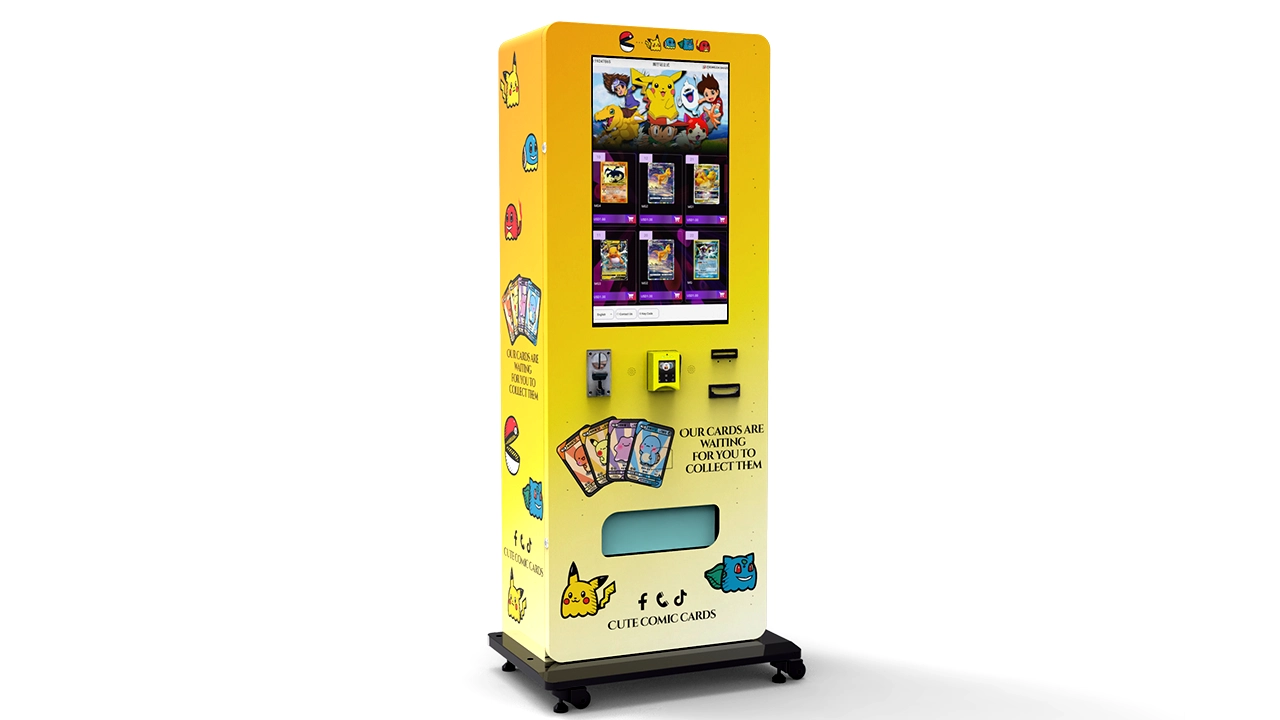
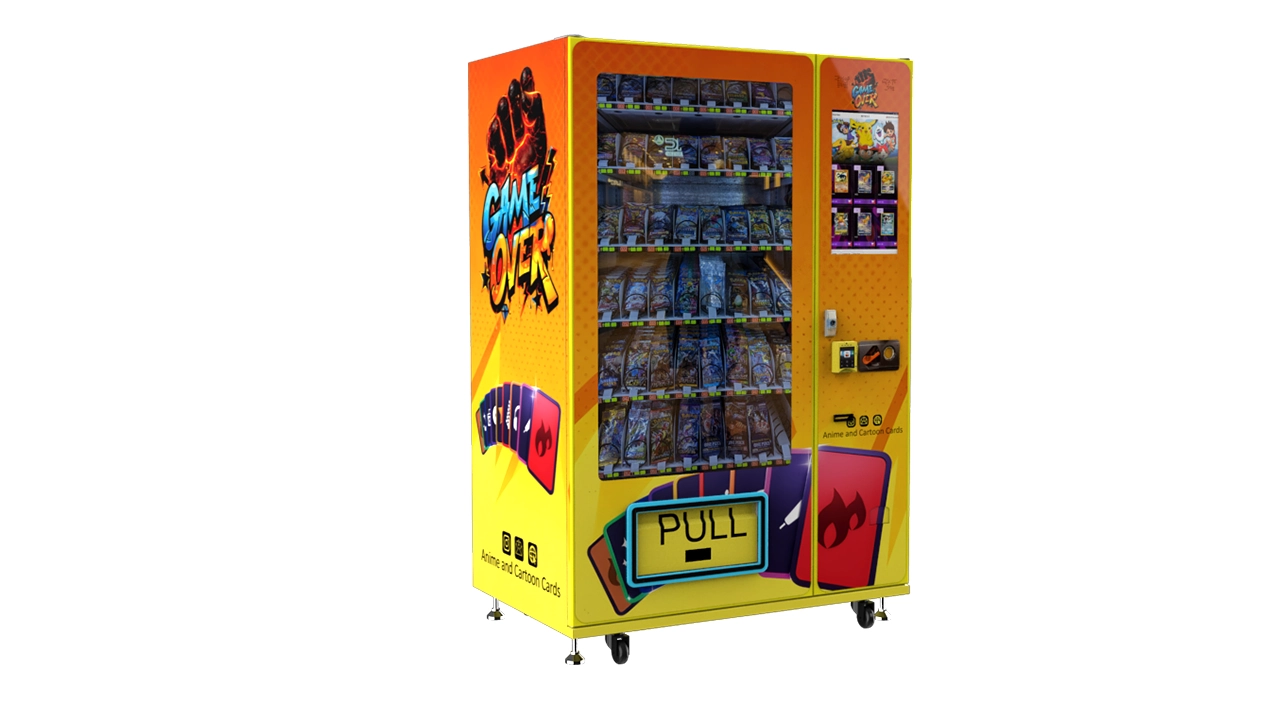
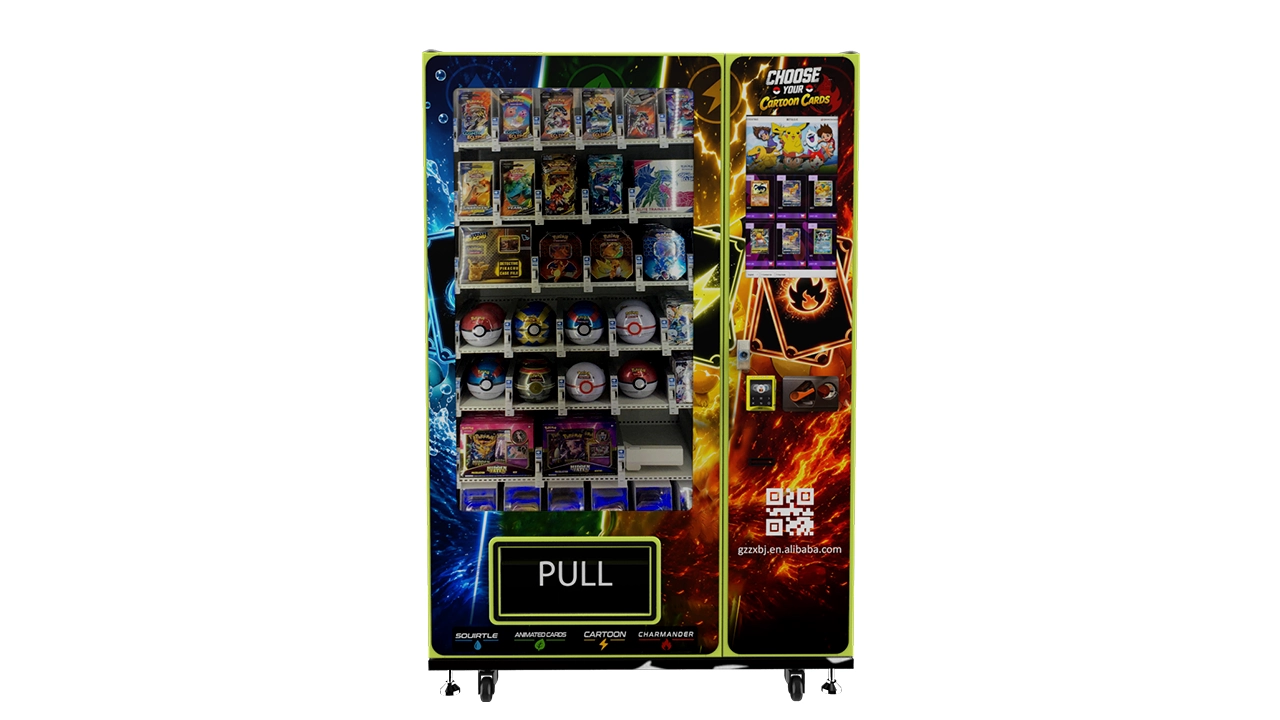
That is different from the wider market for independently owned trading card vending machines. Retailers can purchase automated retail equipment designed to sell legitimately sourced TCG products, but an independently operated machine is not an official Pokémon automated retail machine and should not be presented as one.
Official source: Pokémon Center Support — Pokémon Automated Retail Vending Machines
What to Watch Instead of a Supposed Pokémon Center Restock Clock
If there is no public fixed schedule, the best restock strategy is to pay attention to information that can actually change your decision.
1. The Exact Product Page
If one SKU matters to you, keep that page.
Category pages are useful when you are browsing. They are less precise when you are waiting for one specific product, size, edition, or box.
A saved product page also reduces the chance of confusing an updated version with the exact item you originally wanted.
2. Official Pokémon Announcements
Announcements are especially helpful before new launches. They give you time to understand the product and decide whether you want it before availability becomes the main thing everybody is talking about.
Knowing what you want before a high-demand release is a real advantage because you do not have to make every decision during checkout.
3. Newsletter Communications
Email does not guarantee an alert for every restock, but it is an official communication channel and can surface product news that casual checking may miss.
4. Early Access Invitations
If you receive one, read the invitation carefully and use the exact email/account conditions required by Pokémon Center.
Do not assume an Early Access invitation reserves merchandise. Inventory remains limited.
5. Current Purchase Conditions
Read what the product page currently says.
A purchase limit, preorder status, availability message, or other condition should be judged from the live listing rather than remembered from another product.
6. The Exact Product Variant
This matters most with apparel and merchandise that has multiple sizes or options.
The product can be available while the variant you need remains sold out.
7. Your Own Price Ceiling
This may sound unrelated to restocks, but it is one of the most useful things to decide before a product disappears.
Write down what you are willing to pay.
Suppose a product has a normal retail price of $50. It sells out and secondary listings immediately rise well above that amount. If you did not decide what the product was worth to you beforehand, the missed purchase can make a much higher price feel reasonable simply because it is the only option currently visible.
Your budget should not change just because the Add to Cart button disappeared.
8. Alternatives That Actually Meet the Same Goal
A substitute only makes sense if it gives you what you wanted from the original product.
If you mainly wanted booster packs, another sealed configuration might be useful.
If you wanted a particular exclusive box for a sealed collection, another product containing similar packs is not the same thing.
Being clear about the goal makes it easier to decide whether to wait.
9. How Much Time You Are Spending
There is a point where chasing a restock costs more attention than the product deserves.
Checking a saved page periodically is reasonable. Rearranging your entire day around an unconfirmed restock rumor usually is not.
The lack of a fixed Pokémon Center schedule means no amount of refreshing can turn uncertainty into a guarantee.
What Restock Patterns Can—and Can’t—Tell You
Patterns are not useless. They simply need to be treated as patterns.
If you repeatedly notice activity around a certain product line, that can justify checking more frequently. If a product has returned multiple times, another return may feel more plausible than it would for an item that has never reappeared.
The problem begins when observations are rewritten as rules.
“New products are generally introduced every week” does not mean “every sold-out product restocks weekly.”
“This product returned before” does not mean “this product will return again.”
“The item sold out in ten minutes” does not prove that the total supply was tiny.
“The product page still exists” does not guarantee another shipment.
“A few units became available” does not prove there was a large scheduled replenishment.
“A machine was restocked on the same weekday twice” does not create an official vending machine schedule.
These distinctions sound obvious when written down. They become much harder to remember when a popular product is selling out in real time.
The strongest information remains the information Pokémon Center publishes directly.
What to Do When a Pokémon Center Item Is Sold Out
A sold-out page does not give you enough information to predict the future, but it does give you enough information to make a sensible next move.
If You Definitely Want the Exact Item
Keep the exact listing bookmarked and continue checking it at a frequency that makes sense for how important the item is to you.
Follow relevant official announcements. Keep your account ready. Know your maximum price before considering another seller.
Most importantly, accept that another Pokémon Center restock is possible but not guaranteed.
If You Mainly Want What Is Inside the Product
Look at other legitimate configurations.
This is particularly useful with trading cards. If the contents you value are available through another product at a reasonable cost, waiting for one specific box may not be necessary.
If You Only Want the Product Because It Sold Out
That is a good reason to stop for a moment before buying elsewhere.
Scarcity has a way of turning a product that was “maybe interesting” yesterday into something that suddenly feels essential today.
Ask yourself whether you would still want it if it were sitting comfortably in stock.
If the answer is no, missing the restock may have saved you money.
If the Secondary-Market Price Is Much Higher
Compare that price with your original valuation, not with the fear that the product may never come back.
You do not know whether it will restock. The seller does not know that either unless there is official information available.
A higher price is a market offer, not proof about future Pokémon Center inventory.
If You Saw a Restock but Missed Checkout
A brief reappearance is useful information because it proves stock became available again at least once.
It still does not guarantee another opportunity.
Keep the page if you still want the product, but avoid turning the missed checkout into a reason to overspend.
If the Product Never Comes Back
This is an unavoidable part of collecting.
Not every item will remain available long enough for everyone who wants it. Not every sold-out product will receive another publicly visible allocation.
A collection does not become incomplete because one product was unavailable at the right price.
There will always be another release.
A Simple Restock Routine That Does Not Take Over Your Day
If you want a repeatable process, use one that requires very little maintenance.
Before a Release
- Read the official product information.
- Decide whether you genuinely want the product.
- Know the expected retail price.
- Check your account and checkout information.
- Decide your maximum acceptable price.
When It Is Available
- Confirm that you are on the correct official listing.
- Read the current purchase conditions.
- Choose only the quantity you actually intend to purchase.
- Complete the normal checkout process.
- Keep your order confirmation.
After It Sells Out
- Save the exact product page.
- Watch official announcements rather than rumor alone.
- Keep Early Access and newsletter communications enabled if you want them.
- Consider legitimate alternatives.
- Do not assume either a guaranteed restock or permanent disappearance.
When You Hear a Restock Rumor
Check the product itself.
If there is an official announcement, use it.
If there is no official announcement and the item remains unavailable, treat the report as an observation rather than a promise.
That is usually all the verification you need.
A Note for Trading Card Retailers
Official Pokémon automated retail machines and independently owned trading card vending machines are separate things.
Pokémon Center's current support information says its official machines are owned and operated by The Pokémon Company International and are not offered for sale. Retailers who want their own unattended card-sales channel therefore need independent vending equipment and their own legitimate merchandise supply.
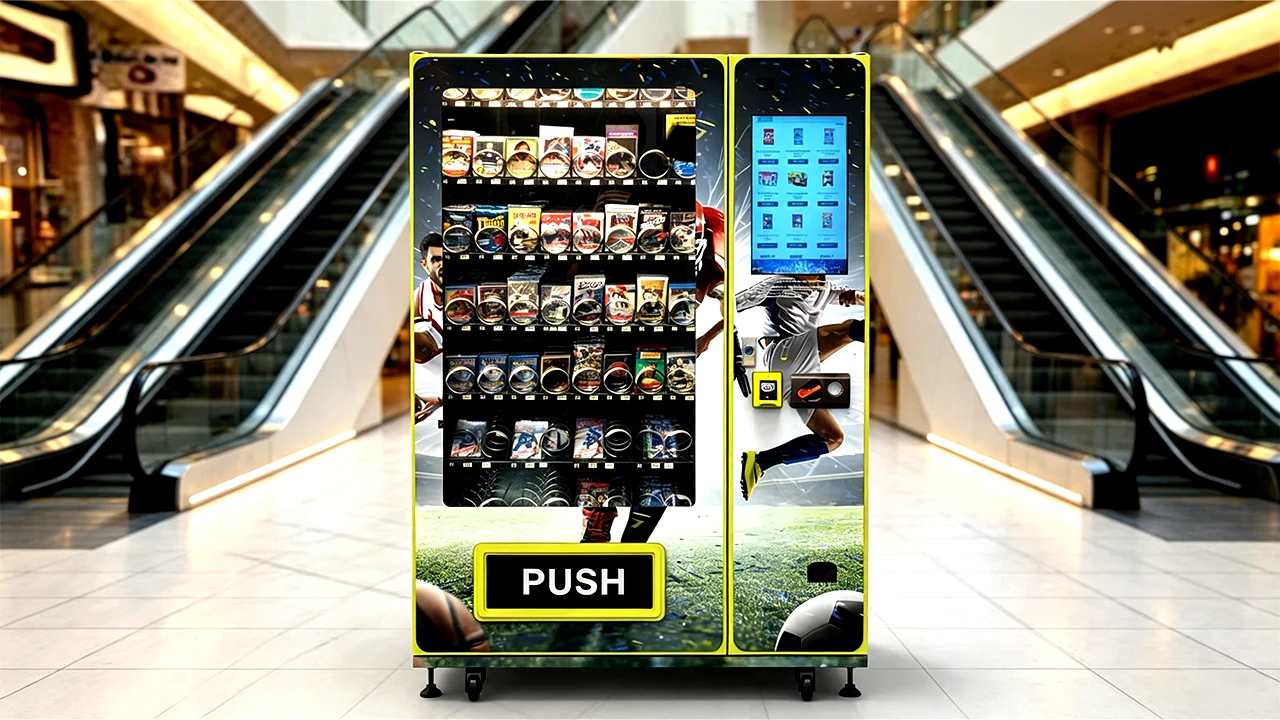
Zhongda Smart manufactures independent trading card vending machines for operators selling sealed TCG products, sports cards, card boxes, booster packs, and compatible collectibles. Machine configurations can include adjustable cargo channels, touchscreen ordering, cashless payment hardware, remote inventory management, and elevator or controlled-delivery options.
The distinction matters: a Zhongda Smart machine is an independent retail system. It is not an official Pokémon vending machine, and third-party trademarks or artwork should only be used where the operator has the appropriate rights.
Retailers comparing equipment can start with Zhongda Smart's trading card vending machine range. The technical guide on how trading card vending machines work explains the relationship between payment authorization, inventory control, product lanes, dispensing, and delivery confirmation.
For machine selection, the 2026 trading card vending machine comparison covers current published configurations, while the card shop vending machine guide focuses on fitting automated retail into an existing hobby or card-store environment.
From a manufacturer-side perspective, the most important machine specification is not the size of the touchscreen. It is whether the planned merchandise can be stored, separated, dispensed, delivered, and tracked reliably. Thin booster packs and rigid sealed boxes behave very differently inside a vending system, so the real selling package should be matched to the delivery mechanism before a machine layout is finalized.
Frequently Asked Questions
What day does Pokémon Center restock?
Pokémon Center does not publish one universal weekday for restocking sold-out merchandise. Pokémon Center Support says it does not have information about when or if individual out-of-stock products will be restocked. New products are generally introduced every week, but new releases should not be confused with replenishment of existing sold-out items.
What time does Pokémon Center restock online?
There is no officially published universal restock hour. Products can become available at different times, and a time observed during a previous restock should not be treated as a guaranteed schedule for another product or another day.
How often does Pokémon Center restock Pokémon cards?
There is no fixed public schedule covering every Pokémon TCG product. A sold-out Elite Trainer Box, booster bundle, collection box, or other TCG product may return, but Pokémon Center does not promise a specific replenishment date for individual out-of-stock items.
Does Pokémon Center restock sold-out items?
Some sold-out items do return, but another restock is not guaranteed. Pokémon Center's official support guidance says Customer Support does not know when or whether an individual out-of-stock product will be replenished.
How do I know when Pokémon Center restocks?
Keep the exact product page saved and watch official Pokémon Center announcements and email communications. If you receive a valid Early Access invitation, follow the instructions in the invitation. Pokémon Center does not provide a universal alert system that guarantees notification for every individual restock.
Does Pokémon Center add new products every week?
Pokémon Center Support says new products are generally introduced every week. That refers to new merchandise being added and does not mean every previously sold-out product is restocked weekly.
Does Pokémon Center Early Access guarantee that I can buy the product?
No. Pokémon Center states that Early Access does not guarantee availability. Inventory is limited and products remain available while supplies last. Eligibility for an invitation is also not guaranteed.
When do Pokémon vending machines restock?
Pokémon Center says its official automated retail vending machines do not have a set restocking schedule. Restocking is handled according to factors including product stock levels and the inventory needs of the individual machine. Advance restock alerts are not provided.
Can I buy an official Pokémon vending machine?
Pokémon Center says its automated retail machines are owned and operated by The Pokémon Company International and that there are currently no plans to sell them. Independent retailers can purchase general trading card vending equipment from manufacturers such as Zhongda Smart, but those machines are separate from the official Pokémon automated retail program.
So, When Does Pokémon Center Restock?
If you came here looking for a specific hour, there is no verified universal one.
Pokémon Center does not publish a fixed restock day or time for sold-out products. Its support team says it does not have information about when—or if—an individual out-of-stock item will return.
Pokémon Center does say that new products are generally introduced every week. Keep those two facts separate. Weekly new-product activity does not create a weekly restock promise for existing merchandise.
The same caution applies to Pokémon's official automated retail machines. Pokémon Center states that those machines have no set restocking schedule and that replenishment depends on product stock levels and individual machine inventory needs.
For popular products, the useful strategy is straightforward: save the exact listing, keep official communications available, understand Early Access without treating it as a reservation, read current purchase conditions, and decide what the product is worth to you before scarcity changes the way you look at the price.
You will still miss some products. Everyone does.
What you avoid is spending hours chasing a restock schedule that Pokémon Center itself does not publish.
Official Sources
The factual statements about Pokémon Center policies in this article were checked against official Pokémon Center Support materials. No third-party retailer was used as the authority for Pokémon Center's restock policy.
-
Pokémon Center Support — How often does Pokémon Center restock items?
Official guidance stating that Customer Support does not have information about when or if individual out-of-stock items will be restocked.
View official Pokémon Center Support source -
Pokémon Center Support — How often are new products added to Pokémon Center?
Official guidance stating that new products are generally introduced every week.
View official Pokémon Center Support source -
Pokémon Center Support — Pokémon Automated Retail Vending Machine FAQ
Official information confirming that the machines do not have a set public restocking schedule and explaining official machine ownership and operation.
View official Pokémon Automated Retail information -
Pokémon Center Support — Pokémon Center: Early Access FAQ
Official information covering eligibility, unique invitations, availability, and Early Access conditions.
View official Early Access FAQ
Editorial Note
This article was prepared by the Zhongda Smart editorial team with a focus on trading card retail and automated retail equipment. Statements describing Pokémon Center inventory policies, Early Access, and official Pokémon vending machines are based on the official Pokémon Center Support sources listed above. Commentary about independent trading card vending equipment reflects Zhongda Smart's manufacturing and product-configuration perspective and is kept separate from descriptions of The Pokémon Company International's official automated retail program.
Disclaimer
Product availability, purchase limits, preorder terms, Early Access conditions, restock practices, and other Pokémon Center policies can change without notice. Always check the current Pokémon Center product page and official support information before making a purchase decision.
Pokémon, Pokémon Center, Pokémon Trading Card Game, related character names, logos, artwork, and other associated trademarks are the property of their respective rights holders. Zhongda Smart is an independent vending machine manufacturer. References to Pokémon products are descriptive and do not imply sponsorship, endorsement, authorization, partnership, or affiliation with The Pokémon Company International, Nintendo, Creatures Inc., GAME FREAK inc., or Pokémon Center.
This article is provided for informational purposes only and does not guarantee future product availability, a particular restock time, or the ability to purchase any specific item.