A growing trading card market does not make every Pokémon vending machine location profitable. Most weak locations come back to four problems: the wrong demand, the wrong inventory, poor conversion, or operating costs that consume too much of the margin. A machine can sit in front of thousands of people, generate respectable sales, and still be a bad location once merchandise cost, venue compensation, payment fees, stockouts and service trips are included.
That distinction matters because automated card retail is easy to misread from the outside. A busy screen, a new release and a line of curious shoppers can make a location look successful. The real test happens after the launch attention fades. Do the right customers keep coming back? Are the products they want still available? Does the machine convert browsing into completed transactions? And after every direct cost is paid, is enough money left to justify keeping the equipment there?
The broader category gives operators a legitimate reason to pay attention. Grand View Research estimates the global trading card market at about $32.1 billion in 2026, up from $30.0 billion in 2025, and projects it to reach approximately $54.0 billion by 2033. Physical cards represented 71.2% of the market in 2025, while offline channels accounted for 58.6% of sales. The separate trading card games market is also substantial, with Pokémon Trading Card Game representing a reported 36.0% share of that market in 2025.
Those are strong category signals. They are not a guarantee for an individual vending location.
From Zhongda Smart's factory-side perspective, that is the most useful place to start. A trading card vending machine should be treated as a compact retail point with its own unit economics, inventory constraints and service requirements. The machine is only one part of the system.
The Market Is Growing. Your Location Still Has to Work.
Trading cards are not a tiny niche trying to prove that demand exists. Current market estimates describe a large physical collectibles business with active players, collectors, gift buyers and fans buying through both online and offline channels.
Source: Grand View Research, Trading Cards Market Size, Share & Trends Analysis Report, 2026–2033.
The danger is turning those category numbers into a location assumption.
A national or global market can expand while a particular machine loses money. Restaurants fail during periods when restaurant spending grows. Retail stores close in categories that continue to expand. E-commerce brands disappear from markets that are still gaining customers. Automated card retail is no different.
Market growth answers one question: is there meaningful demand in the category?
A vending location has to answer a much narrower one: can this exact point convert enough relevant customers, at a workable margin, often enough to justify the capital and operating effort?
That is why a “hot market” is useful context but a weak location strategy.
A busy location is not automatically a vending location. The machine needs relevant traffic, not just traffic.
Pokémon's own automated retail program also illustrates something important about vending operations. The official Pokémon Center support information addresses product availability, sold-out products, machine issues and customer support for automated retail. In other words, even a professionally managed vending network has to deal with the ordinary realities of inventory, uptime and customer service.
Independent operators have the same operational problems, usually with fewer resources. The equipment therefore has to earn its place rather than rely on category excitement.
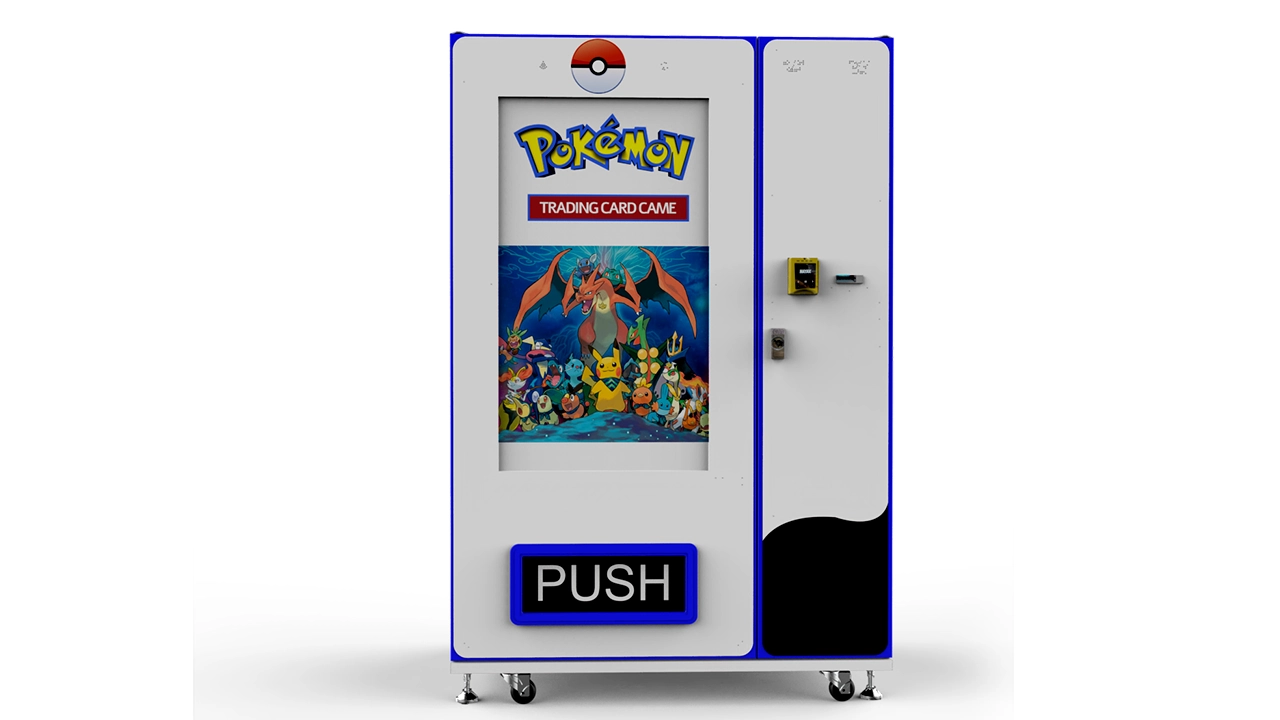
The Four Ways a Trading Card Vending Location Usually Fails
Many location problems look different at first. One machine appears quiet. Another gets plenty of browsing but few purchases. A third sells well but constantly needs restocking. Another produces impressive revenue while barely generating cash.
It helps to stop treating these as unrelated problems.
For location planning, Zhongda Smart separates most underperformance into four practical categories: demand failure, inventory failure, conversion failure and operating-cost failure. This is not an industry certification or a universal accounting standard. It is a practical way to diagnose what is actually wrong before blaming the location itself.
Too few relevant buyers see or approach the machine. The venue may be busy, but the audience does not overlap strongly enough with the merchandise.
Customers are present, but the products they want are repeatedly unavailable, poorly allocated or tied up in slow-moving SKUs.
Customers stop and browse, but pricing, payment, trust, interface design or product presentation prevents enough transactions from closing.
The machine sells, but rent, revenue share, servicing, payment costs or inefficient route logistics consume too much of the merchandise margin.
This distinction changes what an operator should do next.
A demand failure may justify moving the machine. An inventory failure may require a different SKU allocation. Conversion failure could be solved through payment, merchandising or pricing changes. An operating-cost failure may call for a new venue agreement or a better service route rather than more traffic.
Without that diagnosis, operators often make expensive changes to the wrong variable.
A common example is discounting. Sales are weak, so prices are reduced. But if the real problem is that few likely collectors ever see the machine, a lower price does not create the missing audience.
The opposite happens with relocation. The machine underperforms, so it gets moved. But if priority SKUs were sold out for much of the month or card payment was unreliable, the old location may never have received a fair test.
| Failure Pattern | What You Usually See | What It Often Means | First Move |
|---|---|---|---|
| Low interaction | Few people stop or browse | Demand or visibility problem | Review traffic relevance and exact placement |
| Strong browsing, weak sales | Customers approach but do not complete purchases | Conversion problem | Audit price, payment, trust and interface |
| Fast sellers repeatedly empty | Machine still looks stocked while sales slow | Inventory allocation problem | Increase priority SKU depth |
| Good sales, weak cash contribution | Revenue looks healthy but little remains | Cost or margin problem | Rebuild unit economics |
| Frequent service visits | Machine sells but staff time rises | Capacity or route problem | Rework capacity or service schedule |
| Repeat vend/payment issues | Refunds and support requests increase | Machine configuration problem | Fix hardware, software or integration first |
Why Foot Traffic Is One of the Most Misleading Metrics
“High foot traffic” sounds persuasive in a location pitch because it gives both sides a big number to discuss. But foot traffic can be one of the least useful numbers when it is separated from customer intent.
Imagine a machine placed in a corridor that 10,000 people cross every day. Most are moving quickly. Few are there to shop for collectibles. The machine is visible for only several seconds, and stopping creates a small bottleneck.
Now compare that with a venue receiving 2,800 visitors a day. The audience is smaller, but many people are already spending time around games, entertainment, gifts or hobby products. They stay longer and expect to browse.
The second location can easily outperform the first.
The point is not that low traffic is good. The point is that raw traffic needs context.
An Illustrative A/B Location Comparison
This example is illustrative. It is a planning model, not a reported Zhongda Smart customer case and not a promise of vending performance.
| Metric | Location A: Busy General Traffic | Location B: Smaller Relevant Audience |
|---|---|---|
| Daily passing traffic | 10,000 | 2,800 |
| Illustrative purchase rate | 0.16% | 0.75% |
| Transactions/day | 16 | 21 |
| Average transaction | $18 | $20 |
| Estimated daily sales | $288 | $420 |
| Illustrative venue share | 18% | 10% |
Location A has more than three times the pedestrian count, yet Location B produces more transactions and faces a lighter venue burden under these assumptions.
What happened?
Location B did not create more people. It created a stronger overlap between people present and people likely to buy.
This is why relevant traffic deserves more attention than raw traffic.
The exact environment matters as well. Customers buying sealed card products may spend longer at a touchscreen than someone buying a bottled drink. They may compare sets, inspect product images, check prices, discuss the purchase with someone nearby or decide whether a larger sealed product is worth the extra money.
Dwell time therefore has commercial value.
A machine positioned where shoppers have room to stop can outperform one positioned along a faster pathway, even when the second location looks better on a floor plan.
Watch the Approach, Not Just the Address
Operators also need to distinguish a good venue from a good spot inside that venue.
The machine can be in the correct building and still sit twenty feet away from the natural customer path.
Columns, entrances, escalators, queue direction, lighting and the angle of approach change what people actually notice. A machine facing sideways to traffic may technically be visible while receiving very little useful attention.
This is one reason site photographs and floor plans are useful before installation. It is also why moving a machine within the same property should be tested before assuming the entire venue is wrong.
Count the people who can realistically become buyers. Raw pedestrian volume is only the starting number.
A Busy Machine Can Still Be a Bad Business
Revenue gets attention because it is easy to understand. A machine sold $8,000 this month. Another sold $12,000. The second sounds better.
It may not be.
The stronger location is the one that leaves enough contribution after the direct costs required to generate those sales.
This is where trading card vending can become less forgiving than it looks.
Merchandise cost is usually substantial. A high-value sealed product can tie up far more working capital than a conventional vending item. Venue compensation may be structured as fixed rent, a percentage of sales or a hybrid. Card processing consumes another portion. Restocking consumes labor and transportation. Slow stock keeps cash trapped inside the cabinet.
Every one of those costs can be reasonable on its own while the combination becomes unattractive.
Revenue Share Should Be Tested Against Merchandise Margin
Suppose a product sells for $20 and costs $13.
The gross merchandise margin is $7.
If a venue receives 15% of sales, another $3 disappears immediately. Payment processing and servicing still have to be paid. The machine also has to recover its equipment cost and absorb occasional support incidents.
The same venue percentage is much easier to support when merchandise margin is stronger.
That is why an attractive location agreement cannot be judged without product economics.
It also explains why two operators can place similar machines in similar venues and report very different results. Their supply costs, payment arrangements and service routes may have little in common.
For a more detailed model, Zhongda Smart's guide to trading card vending machine profitability breaks the business down by merchandise margin, transaction volume, venue cost, servicing and payback.
The Cost of a Service Trip Is Easy to Underestimate
Restocking is not just the time spent putting products into cargo lanes.
A service visit may include driving, parking, building access, loading, inventory counting, machine cleaning, price updates, troubleshooting and communication with the venue.
One visit may be inexpensive. Frequent visits compound quickly.
Consider two sites producing similar operating contribution before servicing. One sits fifteen minutes from other machines and can be restocked as part of a route. The other requires an isolated trip across town, restricted loading hours and paid parking.
The second machine needs to earn more simply to justify the inconvenience.
This is why route density starts to matter as soon as an operator moves beyond one or two machines.
Revenue does not decide whether a location works. Contribution after inventory, venue and service costs does.
Not Sure Whether Your Location and Machine Plan Match?
Send Zhongda Smart your intended product sizes, approximate SKU count, target capacity, payment requirements and expected service interval. The useful question is not simply “Which machine is biggest?” It is which configuration fits the way the location will actually be operated.
Discuss Your Location & Machine Setup → View Trading Card Vending MachinesThe Machine Can Look Full and Still Be Effectively Sold Out
This is one of the most important differences between physical fill and commercial availability.
Imagine a vending machine with forty product positions. Ten of the strongest products sell quickly. Thirty slower products remain.
The cabinet still looks full.
But to a customer who came for those fast sellers, the machine is already out of stock.
That is why measuring how full the machine looks is a weak inventory metric.
A more useful question is whether the products responsible for most transactions are available when customers arrive.
Pokémon Center's own automated retail support information tells customers that an item displayed in a machine can be sold out and that specific restocking timing is not publicly guaranteed. That is a useful operational reminder: availability changes the customer experience even when the machine itself remains active.
Priority SKU Availability Matters More Than Cabinet Fill
Every assortment eventually develops winners and losers.
Some products attract attention. Some produce reliable routine sales. Some deliver good margin but turn slowly. Others looked promising at launch and then barely move.
Inventory capacity should not remain evenly divided once those patterns become clear.
If one SKU sells ten units every day and another sells one unit every week, giving them equal physical depth guarantees one outcome: the first product will stock out too often while the second consumes space and cash.
The better response is to let sales history change the machine.
Fast sellers deserve deeper capacity. Weak products need less. New products can start with a small allocation until demand proves otherwise.
This is also where remote sales and inventory management become valuable.
The operator should ideally know what sold before arriving at the machine. That information changes restocking from a blind routine into an inventory decision.
A useful operating view includes:
- units sold by SKU;
- current stock by SKU;
- days since the last sale;
- sell-through after each replenishment;
- gross margin dollars by product;
- stockout frequency on priority items;
- time between replenishment visits.
The purpose is not to create a complicated dashboard. It is to stop slow merchandise from receiving the same treatment as products that actually drive the location.
Measure availability by the products customers want, not by how full the cabinet looks.
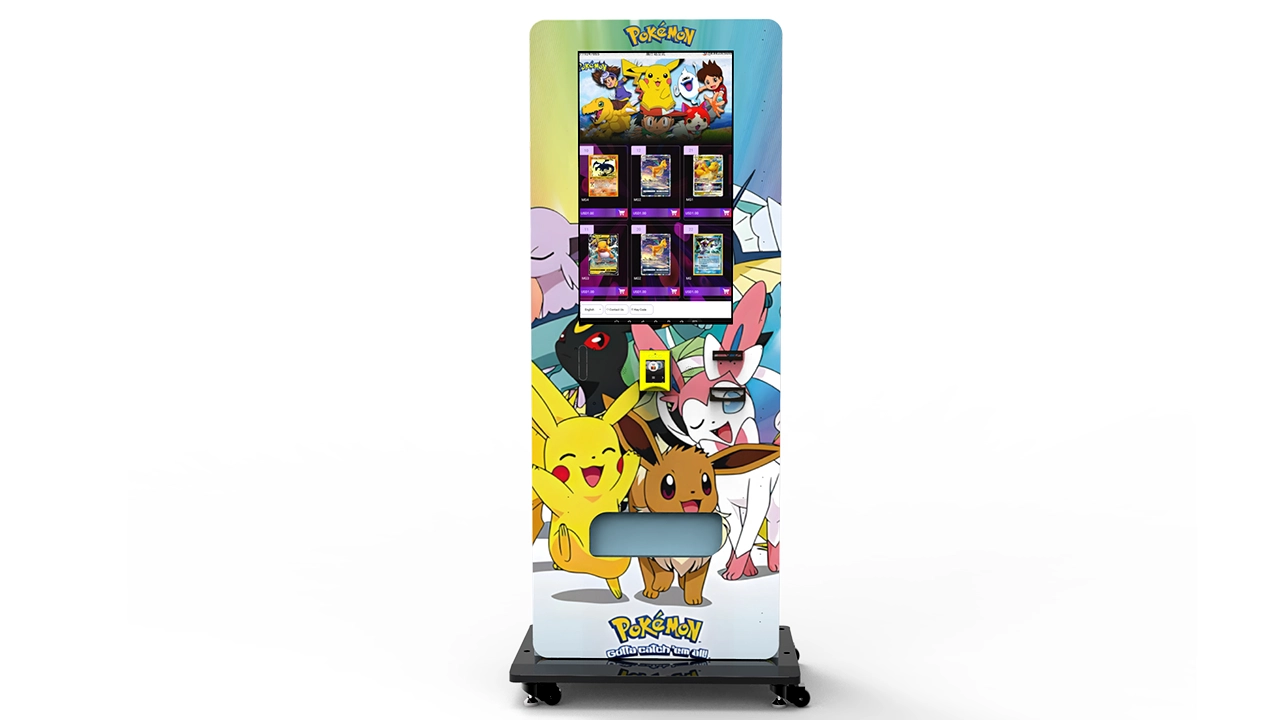
Product Mix, Pricing and Checkout Decide What Traffic Converts
Once relevant shoppers reach the machine, another question begins: what percentage actually buy?
This is where some apparently promising locations lose momentum.
The machine receives attention. People approach. They browse. But too few transactions reach payment confirmation.
Price is often blamed first because it is visible. Sometimes that diagnosis is correct. Trading card buyers can be highly aware of current retail pricing, especially for recognizable sealed products. If the vending price feels disconnected from alternatives available nearby or online, convenience may not be enough to close the gap.
But price is only one source of conversion friction.
The customer may not find a desirable product. The product image may be unclear. The screen may require too many steps. Payment methods may not match local habits. A terminal may appear unreliable. The machine may not explain what happens if a vend fails. Premium products may be displayed in a way that does not inspire confidence.
A discount solves none of those problems.
Product Mix Should Give the Customer a Reason to Choose
A trading card vending machine generally benefits from a price ladder rather than a cabinet filled at one price point.
Entry-price products give casual buyers a low-friction first purchase. Core sellers create repeat transactions. Selected premium products raise average order value when the location can support them.
The exact assortment depends on legal sourcing, product availability and the audience. The underlying retail principle is broader: every product should earn the inventory space it receives.
A high-margin product that sells twice a month may contribute less than a lower-margin product that sells every day.
That is why product decisions should consider both margin and turnover.
Price Is Usually the Fourth Question, Not the First
Before reducing price, check whether:
the right shoppers can see the machine, desirable merchandise is available, the product presentation is clear, and checkout works smoothly.
If those conditions are healthy and customers still browse without buying, pricing deserves a closer look.
This order matters because lowering prices in a weak location can make the numbers worse. If traffic is poor and venue cost is high, a discount reduces margin without fixing the root problem.
Trust Is Part of Conversion
Unattended retail asks a customer to trust equipment rather than a cashier.
That trust is built through small things: clear prices, recognizable payment hardware, responsive screens, clean product images, predictable dispensing and visible support information.
Pokémon Center maintains a dedicated support path for official automated retail problems. Independent operators should learn from that. A customer needs to know what to do if payment completes but the product does not vend.
The support contact should not be hidden in tiny text or require a long search.
Reliable after-sales planning also matters on the operator side. Zhongda Smart publishes its current after-sales service and warranty information for buyers evaluating maintenance and support before deployment.
Sometimes the “Bad Location” Is Actually a Machine Configuration Problem
This is where a vending machine manufacturer can add something that a generic market article often misses.
A location problem can begin before the machine is manufactured.
If the equipment is configured around an attractive specification sheet instead of the intended merchandise and service plan, the operator may spend months blaming the venue for problems that were built into the installation.
Product Dimensions Should Be Known Before Cargo Channels Are Finalized
Trading card products do not come in one standard shape.
A thin sealed pack, a blister package and a larger sealed box create different requirements for cargo width, depth and dispensing.
A machine ordered without representative package dimensions may technically have enough “lanes” while using those lanes inefficiently.
This is why Zhongda Smart recommends sending actual package measurements before production whenever the intended assortment is known.
Maximum published capacity is useful for comparison, but usable capacity depends on what is being sold.
The Delivery Method Has to Respect the Product
Collectible merchandise can be sensitive to packaging condition.
A dented or crushed sealed box may still contain the same cards, yet the customer may not consider it equivalent to a clean retail package.
For lower-value compact items, a properly configured conventional delivery system may be entirely appropriate. Higher-value or larger products may justify a controlled delivery method such as an elevator configuration.
The point is not that one delivery mechanism is universally better. It is that the merchandise should influence the machine architecture.
Zhongda Smart's overview of how trading card vending machines work explains how selection, payment, cargo channels, dispensing and remote management fit together.
Capacity Should Follow the Service Interval
This is an important planning rule.
Suppose a proven location sells a priority SKU quickly, but the machine holds only enough of that product for two days. The operator services the location twice a week.
The machine can spend a large part of every service cycle sold out.
The location may look weak in monthly revenue reports even though the actual problem is insufficient inventory depth.
Now reverse the scenario. A new test site gets a very large machine filled with expensive inventory. Sales develop slowly. The operator has tied up far more working capital than the location can efficiently turn.
Neither extreme is ideal.
Capacity should be planned around SKU velocity and the practical restocking interval, not around the largest machine available.
Payment Hardware Is Not an Accessory
The payment setup belongs in the location plan from the beginning.
A machine can have excellent merchandise and still lose transactions if the expected payment method is missing, slow or unreliable.
Payment requirements also affect connectivity, certification and integration decisions. Those details should be confirmed before final production rather than treated as something to “add later.”
Remote Management Changes Service Economics
For one machine nearby, operators can inspect inventory manually.
That approach becomes inefficient at scale.
When remote sales and inventory data are available, route planning can start with a reason for the visit. A machine can be serviced because priority inventory is low or a specific issue needs attention rather than because “Tuesday is the day we check everything.”
That operational change can matter more than a flashy front-end feature.
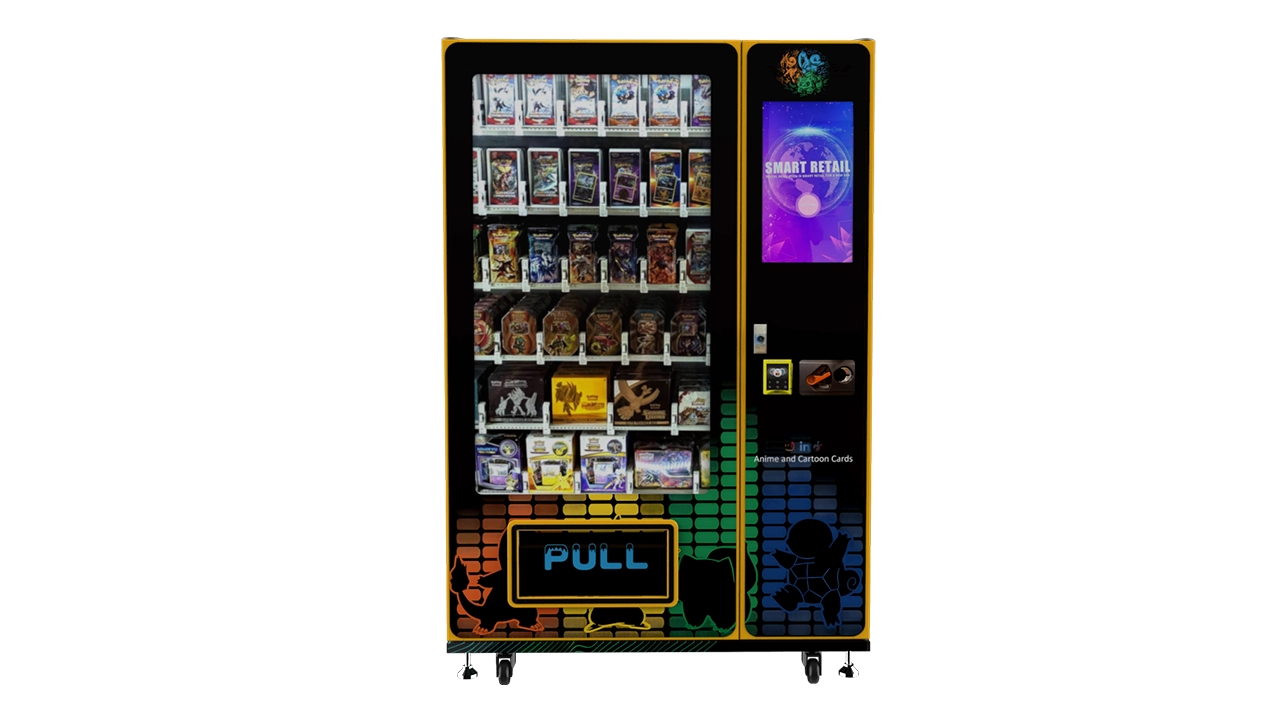
Placement, Security and Route Economics
A good venue can still contain bad positions.
A machine hidden behind a structural column, outside the natural customer path or beside a queue that blocks access may receive only a fraction of the traffic promised by the venue.
The best position is not always the place with the most people standing nearby. The customer needs enough room and enough time to use the machine comfortably.
Twenty Feet Can Change a Location
Moving the same machine from a side corridor to a direct line of sight can change approach behavior without changing the building, merchandise, price or equipment.
Before abandoning an otherwise promising venue, test whether:
- the machine faces the natural direction of traffic;
- the screen can be seen before the customer passes it;
- lighting makes the cabinet look active and trustworthy;
- customers have room to stand and browse;
- nearby queues or fixtures block access;
- the machine is not visually lost beside larger signage.
This is one of the few areas where physical observation is difficult to replace with spreadsheets.
Security Is Also a Conversion Issue
Collectible products can carry higher unit values than conventional vending items. That makes cabinet security, surveillance and location safety important.
But security affects buyers too.
Customers are less likely to spend time at a machine if the surrounding area feels uncomfortable, poorly lit or difficult to use without blocking other people.
Trust and physical security overlap.
Route Economics Become More Important as the Network Grows
The best new site for a ten-machine network may not be the highest-revenue site available.
A slightly smaller location close to three existing machines may create better network economics than a stronger isolated location requiring a dedicated trip.
That is because route density changes the cost per service visit.
As the network grows, I would rank locations using at least two views:
location contribution and network contribution.
The first asks whether the site is profitable on its own. The second asks whether the site strengthens or weakens the wider operating route.
This distinction becomes particularly important when stock must be replenished frequently around product releases.
The Zhongda Smart Location Scorecard
Location selection should not depend on one impressive number.
A simple weighted scorecard is useful because it forces different sites to be judged using the same questions.
The weights below are not universal. A high-value inventory model may give security more weight. A very small operator may give service distance more weight. An expensive premium venue may give location economics more weight.
The purpose is consistency.
| Location Factor | Suggested Weight | What to Review |
|---|---|---|
| Relevant buyer traffic | 20% | How strongly the venue audience overlaps with collectors, players, gift buyers or entertainment shoppers |
| Visibility and approach | 10% | Line of sight, walking direction, lighting and whether customers notice the machine before passing it |
| Dwell time | 10% | Whether shoppers naturally have enough time and space to browse |
| Venue economics | 20% | Fixed rent, revenue share, minimum guarantees, utilities and other location charges |
| Merchandise fit | 10% | Whether the audience and location support the planned price ladder and product mix |
| Security | 10% | Lighting, surveillance, cabinet risk and comfort during unattended purchases |
| Service access | 10% | Travel time, parking, unloading, permitted service hours and route compatibility |
| Payment/connectivity fit | 5% | Stable communication and practical local payment support |
| Expansion value | 5% | Whether the site strengthens a wider vending route or strategic venue relationship |
How to Use the Scorecard
Score each factor from 1 to 10, multiply by the weight and compare the final results.
More importantly, look at why a location received its score.
A site with excellent traffic and terrible economics should not hide behind a high average. Neither should a low-security site carrying valuable inventory.
Some weaknesses are manageable. Others should be treated as deal breakers before the equipment is installed.
Add a Break-Even Check Before Signing
A scorecard measures location quality. It does not replace financial modeling.
The second step is calculating the transaction volume required to cover direct costs.
Suppose the average transaction produces $6.50 of contribution after merchandise cost, payment and variable venue share, while fixed monthly machine-related expenses total $975.
The rough monthly break-even volume is:
That example is deliberately simple, but it converts an abstract question into a measurable requirement.
Can the location reasonably support five transactions a day?
If the base case requires twenty-five daily purchases simply to survive, the location deserves much harder scrutiny.
Fix It or Move It?
A vending machine has one important advantage over a conventional store: it can move.
That does not mean every weak month should trigger relocation. Moving equipment also costs money and can erase useful learning from the original site.
The better approach is to fix the variables that can be tested quickly, then decide whether the underlying demand is still too weak.
Start With Uptime
Make sure the machine was actually available for sale.
Payment outages, network problems, touchscreen errors and vend failures distort every other metric. Do not diagnose the location from a month in which the equipment did not operate normally.
Then Check Priority Product Availability
If the strongest SKUs were missing for long periods, reported sales understate what the location could have produced.
Restock the winning products correctly before deciding demand is absent.
Then Look at Conversion
If people approach but do not buy, inspect product mix, pricing, payment and trust before moving the machine.
Changing the exact position inside the venue can also be worthwhile when visibility is weak.
Then Rebuild the Economics
A location can have healthy demand and still be commercially unattractive because the venue agreement consumes too much margin.
If sales evidence is strong, renegotiating rent or revenue share may create more value than relocation.
Finally, Decide Whether Demand Is Strong Enough
Once uptime, inventory, conversion and cost have received a fair test, persistent low transaction volume becomes much more informative.
At that point, relocation may be the correct use of the asset.
Fix inventory, visibility, payment and uptime problems before blaming the venue. Move the machine when the demand remains weak after the controllable problems are removed.
Choosing the Machine After You Understand the Location
Machine selection becomes easier when the operating model is already clear.
A pilot site and a proven high-volume site should not automatically receive the same configuration.
A lower-volume test may justify a lower initial equipment investment. A proven location may need deeper inventory capacity to reduce service frequency. A mixed assortment may need adjustable cargo channels. Larger or more condition-sensitive sealed products may benefit from controlled delivery.
The best configuration is not necessarily the most expensive one.
It is the configuration that supports the sales pattern without creating unnecessary service or inventory cost.
Zhongda Smart currently publishes several trading card vending machine configurations, including touchscreen floor-standing, wall-mounted and elevator-delivery models. Published product specifications include different lane counts, capacities, connectivity options and OEM/ODM choices.
Those specifications are useful starting points. They should not replace a product-level review.
Before production, a buyer should be able to answer:
- What exact products will be sold?
- What are the package dimensions?
- Which SKUs are expected to move fastest?
- How often can the machine realistically be serviced?
- Which payment hardware is required?
- Is remote sales and inventory management needed?
- Are larger sealed products part of the assortment?
- What branding can legally be used on the machine?
Those answers are more useful than asking for the maximum theoretical capacity before anyone knows what is going into the cabinet.
Building a Trading Card Vending Route?
Tell us what you plan to sell, the package dimensions, the capacity you want and how customers need to pay. Zhongda Smart can recommend a machine layout around the merchandise and service plan instead of forcing the products into a generic vending configuration.
Get a Machine Recommendation →Independent Machines and Pokémon Branding: Keep the Difference Clear
The Pokémon Company International operates an official automated retail program. Its Pokémon Center support page states that those vending machines are owned and operated by The Pokémon Company International and are not currently offered for outside purchase.
An independent operator buying a commercial trading card vending machine is therefore building a separate retail operation.
Buying vending equipment does not create an affiliation with Pokémon, provide an official Pokémon vending machine, grant access to official inventory or automatically provide rights to use protected characters, artwork or logos on the cabinet.
This distinction matters both commercially and legally.
Operators should use branding and product imagery they have the right to use and avoid language that suggests official sponsorship, authorization or affiliation where none exists.
It is also important when comparing performance. An official vending network may have different inventory access, brand recognition, site agreements, traffic data and operating resources. Its visible success does not prove that an independent machine placed nearby will produce the same economics.
The independent business still has to work on its own numbers.
What a Healthy Trading Card Vending Location Usually Looks Like
Strong locations are often less dramatic than people expect.
The machine is visible without obstructing traffic. Customers understand what it sells. The most important products are usually available. Pricing feels reasonable for the convenience. Payment works predictably. The machine dispenses without damaging merchandise. Support is clear. Restocking happens before priority items disappear for long stretches.
Most importantly, the site produces enough operating contribution to justify the inventory and service effort.
That description is not glamorous.
It is retail discipline.
The market can supply interest. A product release can create excitement. A touchscreen can attract attention. None of those replaces the operating fundamentals that keep a location healthy after the first month.
This is why some Pokémon vending machine locations fail during a period when trading cards are growing.
The category can be right while the location is wrong.
The location can be right while the inventory is wrong.
The inventory can be right while checkout is wrong.
And sales can be strong while the economics are still wrong.
Understanding which problem you actually have is far more useful than asking whether trading card vending machines “work” in general.
Frequently Asked Questions
Why do some Pokémon vending machine locations fail even when Pokémon cards are popular?
Popularity at the category level does not guarantee enough profitable transactions at one vending location. A weak site usually suffers from poor buyer relevance, stockouts, conversion friction or operating costs that consume too much margin. Raw foot traffic by itself is not enough.
What is the best location for a trading card vending machine?
A strong location usually combines relevant buyer traffic, clear visibility, enough dwell time to browse, practical payment access, reasonable venue costs, security and efficient restocking access. A smaller hobby-oriented audience can be more valuable than a much larger stream of unrelated traffic.
How much does a trading card vending machine location need to sell to be profitable?
There is no universal sales number because profitability depends on merchandise margin, venue fees, payment costs, servicing, equipment investment and inventory turnover. A better method is to calculate contribution per completed transaction, identify fixed monthly costs and determine the transaction volume required to cover them.
Is fixed rent or revenue share better for a vending machine location?
Neither structure is automatically better. Fixed rent becomes cheaper as sales rise but can be painful in a weak month. Revenue share reduces some downside risk but can consume a large portion of gross margin at high volume. Compare both structures using realistic monthly sales and merchandise margins before signing.
How often should a trading card vending machine be restocked?
Restocking frequency should be based on SKU velocity and machine capacity rather than a fixed industry rule. Priority products should ideally remain available until the next economical service visit. Remote inventory data can help operators schedule visits around actual stock needs.
What should I do if popular trading card products keep selling out?
Increase inventory depth for proven fast sellers, reduce space allocated to slow-moving products and review whether the current machine capacity matches the service interval. A machine that looks full can still lose significant sales if the products responsible for most transactions remain unavailable.
Can a vending machine dispense booster boxes and other sealed card products without damage?
It can when the product dimensions and delivery method are matched correctly. Larger or condition-sensitive products may require different cargo channels or a controlled delivery system. Buyers should provide package dimensions before production rather than relying only on a published maximum capacity figure.
When should an underperforming trading card vending machine be relocated?
Relocation makes more sense after uptime, inventory availability, payment, pricing and exact in-venue placement have been tested. If relevant demand remains weak after those controllable issues are corrected and the machine still cannot meet the required contribution target, moving the asset may be the better decision.
Can an independent vending machine use Pokémon branding?
Purchasing commercial vending equipment does not automatically provide rights to Pokémon characters, logos, artwork or official branding. Operators should use intellectual property they own or are authorized to use and should not imply official affiliation or sponsorship when none exists.
Sources and Editorial Notes
-
Grand View Research — Trading Cards Market Size, Share & Trends Analysis Report, 2026–2033.
Used for the 2025 and 2026 global trading card market estimates, projected 2033 market size, 2026–2033 CAGR, physical-card share and offline-channel share.
View source -
Grand View Research — Trading Card Games Market Size and Share Report, 2026–2033.
Used for context regarding the size of the trading card games category and the reported Pokémon Trading Card Game share in 2025.
View source -
Pokémon Center Support — Pokémon Automated Retail Vending Machine FAQ.
Used for factual information regarding The Pokémon Company International's official automated retail machines, product availability, support and machine ownership.
View source