A trading card vending machine can be a strong unattended retail format when the machine is matched to the cards, packaging, payment habits, replenishment plan, and expected transaction volume. The best machine is not simply the model with the largest screen or the highest stated capacity. It is the one that dispenses your actual products consistently, protects collectible inventory, makes payment easy, gives you useful sales data, and can be serviced without turning every small fault into a costly visit. This Trading Card Vending Machine Buying Guide explains how I would compare machine types, dispensing systems, capacity, payments, remote management, security, purchase cost, operating economics, manufacturer support, testing, and long-term maintenance before committing capital to a machine or a larger rollout.
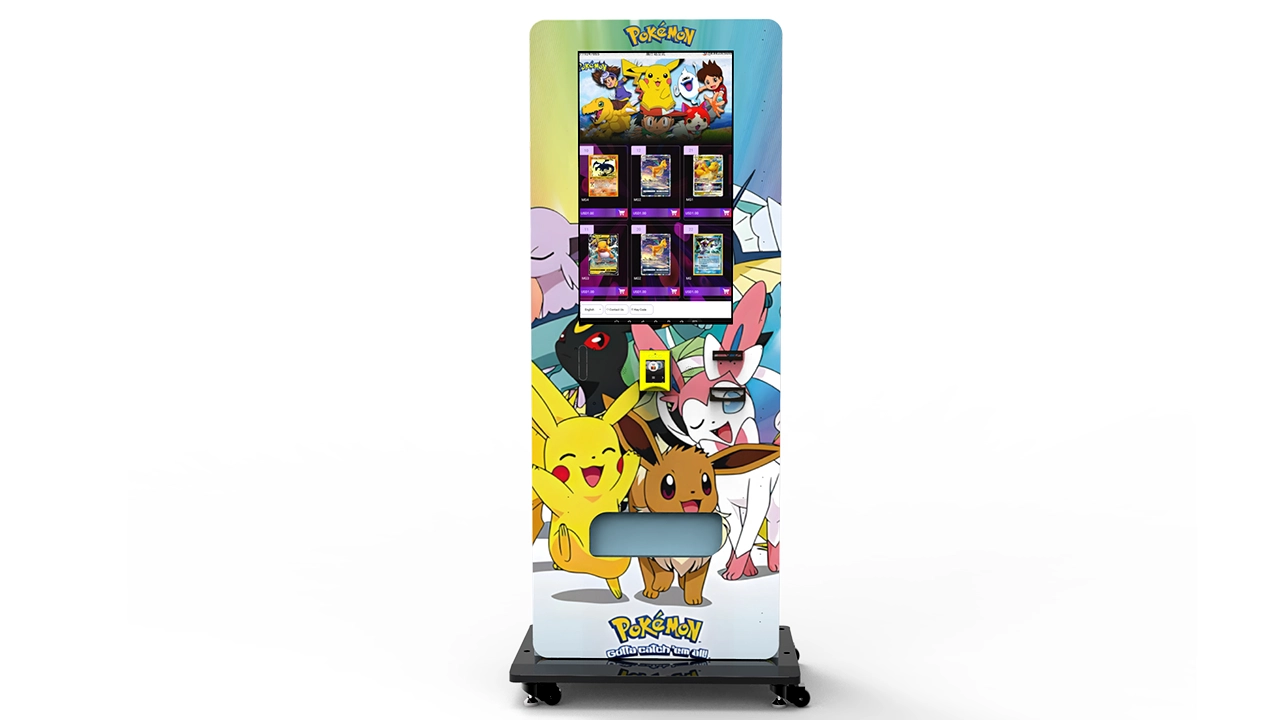
What Makes a Trading Card Vending Machine Different?
A trading card vending machine is a self-service kiosk designed to sell collevery transaction. Depending on its internal configuration, it may dispense sealed booster packs, sleeved packs, blister products, boxed card products, graded slabs, mystery packs, team packs, sports cards, collectible card game products, or combinations of these items.
That sounds similar to ordinary vending, but card merchandise creates a different mechanical problem. A beverage can is rigid and predictable. A trading card pack can be thin, flexible, slippery, lightweight, or easily bent. A slab is rigid but valuable and vulnerable to scratches. A booster box takes much more space than a single pack. Premium products may justify a gentler elevator-delivery system while inexpensive packs may work efficiently in properly configured channels.
For this comparison, I’m prioritizing four things above everything else: dispensing reliability, product protection, payment reliability, and operator control. Capacity matters, but usable capacity matters more than a large number printed on a specification sheet.
The Machine Has to Match the Merchandise
Before comparing touchscreen sizes or cabinet designs, write down the exact products you intend to sell. Record the package width, height, depth, weight, retail price, packaging rigidity, and expected sales velocity for each SKU.
A machine designed around sealed booster packs may not automatically be suitable for graded cards. A machine optimized for boxes may waste space if most sales come from small packs. A narrow wall-mounted model can be attractive where floor space is limited, but its reduced internal volume can increase refill frequency.
This is why I would never buy a card vending machine based only on photographs. Product samples should be part of the engineering discussion.
| Product Type | Main Mechanical Concern | Preferred Dispensing Approach | Buying Priority |
|---|---|---|---|
| Single sealed packs | Thin packaging, slipping, double-vending | Adjusted channel, pusher, belt, or carefully sized spiral | High vend accuracy |
| Blister packs | Irregular dimensions | Adjustable channel or conveyor | Flexible lane sizing |
| Small card boxes | Different box depths | Wide channel, conveyor, or elevator | Adjustability |
| Premium sealed products | Product value and packaging damage | Elevator delivery | Gentle handling |
| Graded slabs | Scratching, impact, theft risk | Protected elevator or locker-style delivery | Security and controlled movement |
| Mystery packs | Variable packaging | Standardized outer package plus adjustable lane | Consistent package geometry |
Why Card Vending Has Become an Interesting Retail Format
Collectible cards have one characteristic that works particularly well with automated retail: buyers often know exactly what category or release they want before approaching the machine. The machine does not need to replace the full experience of a staffed hobby store. It can provide immediate access to a carefully selected inventory of popular products.
Recent marketplace activity also shows that collectible-card interest remains substantial. eBay reported that users searched for Pokémon more than 360 times per minute during 2025. That figure should not be interpreted as a vending-machine sales forecast, but it is useful evidence that major card franchises continue to generate high levels of shopper attention.[1]
Unattended retail is also becoming increasingly technology-driven. NAMA's 2022–2023 Industry Census reported that traditional vending revenue increased by an average of 13% per year from 2020 through 2023, even while the number of vending operators declined by 4%. The same report specifically points to contactless payment technology as one tool operators can use to support per-machine revenue.[2]
Those numbers do not prove that every trading card vending machine will make money. They support a narrower conclusion: customers are comfortable buying through unattended systems, cashless technology matters, and collectible-card demand can be strong enough to justify testing a specialized retail format.
Start With Product Geometry Before Choosing a Machine
Product geometry is one of the most important parts of this Trading Card Vending Machine Buying Guide because many preventable vending problems begin with a mismatch between merchandise and delivery hardware.
Measure actual production inventory, not only dimensions copied from an online listing. Flexible packaging changes shape. Cardboard tabs may protrude. A blister can bow outward. Shrink wrap can increase friction. Two boxes that appear identical on paper can behave differently once placed inside a dispensing lane.
Record Six Measurements for Every Important SKU
-
Width: Include protruding packaging and sealing edges.
-
Height: Measure the complete retail package.
-
Depth: Pay attention to products that are thicker on one side.
-
Weight: Light packs and heavy boxes behave differently during dispensing.
-
Surface friction: Glossy film, cardboard, and rigid plastic slide differently.
-
Retail value: Higher-value inventory may justify a more protective delivery system.
A useful rule is to send representative samples to the manufacturer before finalizing channel dimensions. For high-volume programs, I’d send more than one sample of each key SKU because package tolerances can vary between production runs.
The goal is not merely to fit the product into the machine. The goal is to achieve repeatable dispensing after the machine has been filled, partially emptied, refilled, transported, and operated hundreds or thousands of times.
Compare the Main Trading Card Vending Machine Designs
There is no single cabinet design that is best for every card business. The right architecture depends on merchandise value, assortment breadth, available space, desired capacity, and how much protection products require during delivery.
Standard Floor-Standing Machine
A floor-standing trading card vending machine is the most flexible starting point for a broad assortment. The cabinet provides enough space for multiple channels, a payment terminal, a touchscreen or product interface, a substantial delivery area, networking hardware, and optional elevator components.
I’d choose a floor-standing configuration when the plan involves multiple price levels, frequent product rotation, or a mixture of pack and box sizes. The larger cabinet also makes it easier to separate fast-selling merchandise from premium inventory.
Its disadvantages are straightforward: it occupies more space, costs more to transport than a compact unit, and can be excessive if only a small assortment is required.
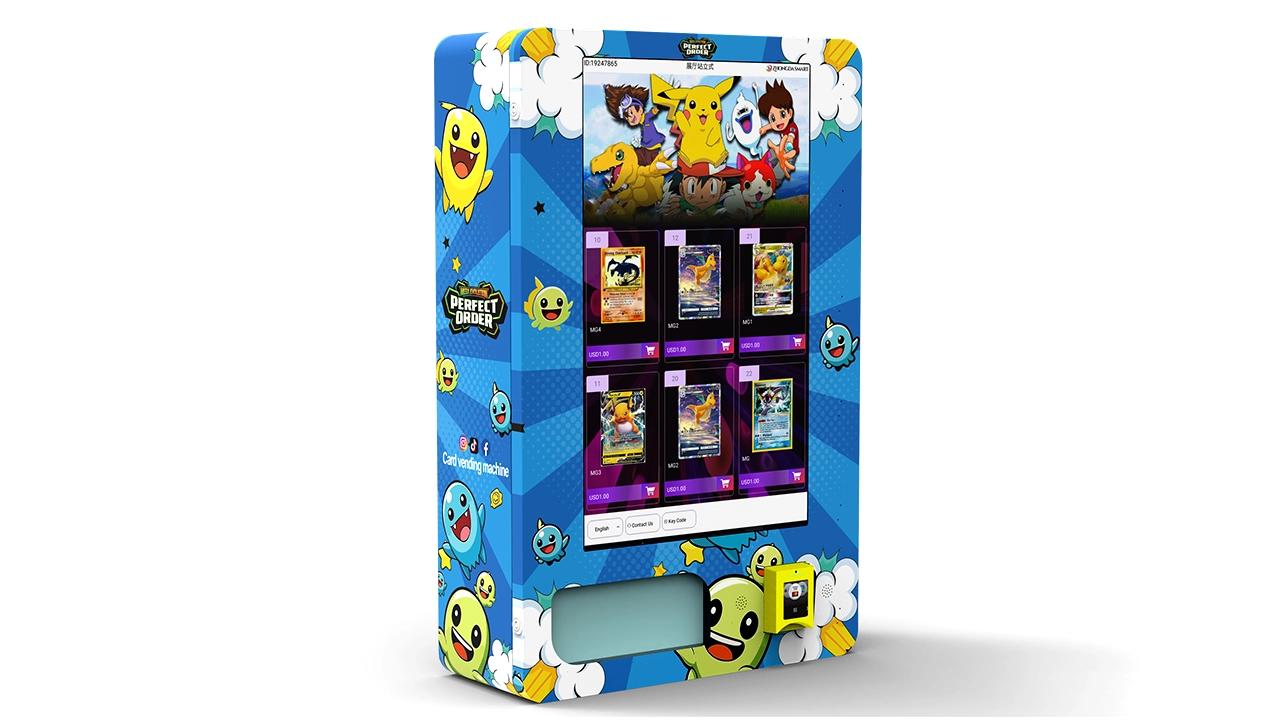
Wall-Mounted Trading Card Vending Machine
A wall-mounted unit uses space efficiently and can work well for standardized packs or a limited number of small products. It is especially attractive when the commercial objective is to add unattended sales without dedicating a full floor footprint to the machine.
The tradeoff is capacity. A compact machine may require more frequent replenishment, and product dimensions become more important because there is less room to compensate for inefficient channel layouts.
Before choosing this architecture, calculate how many days of inventory the machine can carry at expected sales velocity. A small machine that needs attention every day may eliminate much of the labor advantage that made vending attractive in the first place.
Touchscreen Trading Card Vending Machine
A touchscreen can improve product presentation when the machine sells many SKUs or when merchandise changes frequently. Rather than relying entirely on printed selection labels, the interface can show product photographs, pricing, stock status, promotional messages, purchase instructions, and other useful information.
For a closer look at this format, see the touchscreen trading card vending machine configuration.
A screen is valuable only if the software behind it is stable. I would place more weight on boot speed, transaction stability, inventory synchronization, remote updates, and recovery after connectivity loss than on raw screen size.
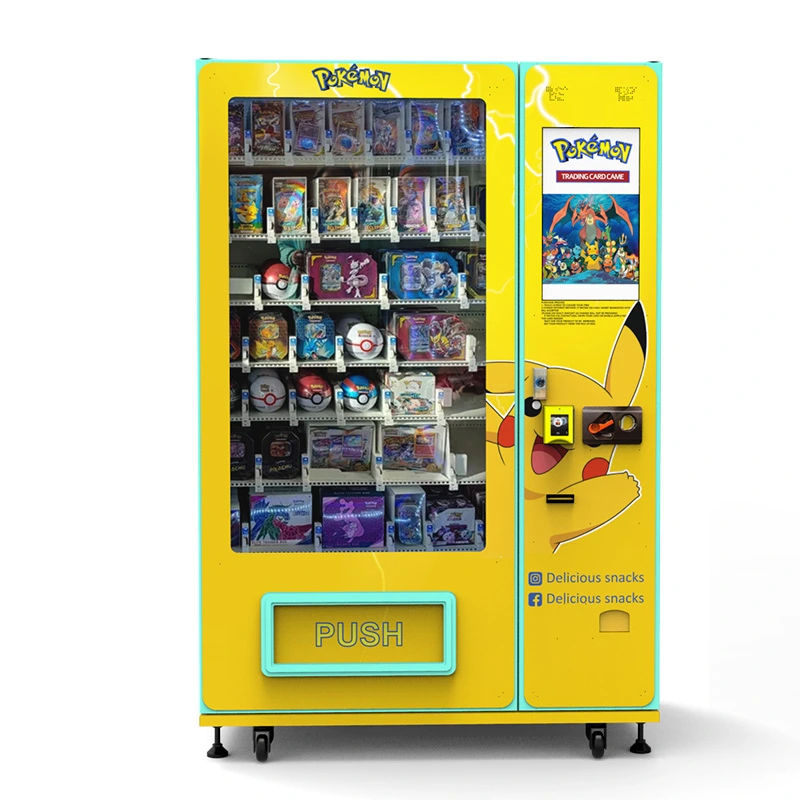
Elevator-Delivery Trading Card Vending Machine
An elevator system moves toward the selected channel, receives the product, and carries it toward the pickup area instead of allowing merchandise to fall the full height of the cabinet.
If I were choosing a machine for premium boxes, collectible products with display-sensitive packaging, or graded items, I’d rank an elevator system much higher than I would for inexpensive standardized packs.
The advantage is product protection. The disadvantages are additional mechanical complexity, more components to maintain, and usually a higher acquisition cost.
You can review an example of this architecture on the elevator trading card vending machine page.
Locker-Style Machine
A locker system assigns each item or product group to a secure compartment. After payment, the relevant door unlocks.
This architecture is not the most space-efficient solution for small booster packs, but it becomes interesting for high-value boxes, bundles, memorabilia, or products that should not pass through a conventional delivery mechanism.
Locker systems also make package geometry less restrictive. The operator gives up some product density in exchange for simple, controlled delivery.
Dispensing Mechanisms: The Part That Deserves the Most Testing
Buyers often spend too much time comparing screens and exterior graphics while giving too little attention to the dispensing mechanism. In my view, that priority should be reversed.
A beautiful self-service kiosk that fails to dispense correctly creates refunds, service calls, inventory discrepancies, payment disputes, and customer frustration. A mechanically reliable machine with a simpler interface is usually a better commercial asset.
Spiral Dispensing
Spiral mechanisms are common because they are simple, well understood, and relatively easy to configure. The motor rotates a coil, pushing the selected product forward until it drops.
For rigid products with predictable dimensions, this can work well. Thin card packs require more care. A package may slide underneath a coil, move sideways, become caught between turns, or dispense two units if the channel geometry is poorly matched.
If spirals are used for cards, ask the manufacturer to demonstrate the exact package under realistic loading conditions.
Pusher Channels
A pusher keeps products moving toward the front of the channel as units are sold. This can provide neat product presentation and can reduce some of the problems created by unusually thin merchandise.
The pressure needs to be appropriate. Excessive force can deform packages, while insufficient force can create inconsistent positioning.
Belt or Conveyor Channels
A belt-driven channel moves the product toward the edge in a controlled way. This can be useful for products whose shapes do not cooperate well with traditional coils.
Conveyor channels typically cost more than basic spiral mechanisms but provide additional flexibility for merchandise with different widths and depths.
Elevator Delivery
The elevator is less about moving inventory out of its lane and more about protecting it after release. A good elevator system should align reliably with different shelves, confirm the product has entered the carrier, travel smoothly, and transfer the merchandise into a protected pickup area.
Ask what happens if a product fails to enter the elevator. The machine should detect the problem rather than simply recording a successful sale.
Vend Detection Matters
A machine needs a way to distinguish between a motor turning and a product actually reaching the customer. Those are not the same event.
Optical sensors, pickup-bin sensors, elevator sensors, or other detection methods can be used to confirm delivery. The exact design varies, but the purchasing principle is simple: payment should not be treated as proof that merchandise was dispensed.
Ask the supplier to explain the full failure logic:
-
What happens when a motor turns but no item is detected?
-
Can the machine automatically retry the vend?
-
Can it offer another selection?
-
Can it trigger an automatic refund?
-
Does the backend record the failed attempt?
-
Can an operator see repeated failures from a specific channel?
These questions matter more than cosmetic features because they directly affect revenue reconciliation and customer trust.
How Much Capacity Do You Actually Need?
Capacity is often marketed as a single number, but a trading card vending machine rarely carries identical products in every channel. Real capacity depends on assortment.
Suppose a cabinet is advertised with 600-unit theoretical capacity. That figure may assume narrow merchandise loaded in every lane. Once wider card boxes, premium products, or elevator clearances are introduced, the usable figure can change substantially.
Calculate Capacity by SKU
A better approach is to build a simple assortment model.
| SKU Group | Lanes | Units per Lane | Total Units | Expected Sales per Day | Days of Stock |
|---|---|---|---|---|---|
| Fast-selling booster pack | 8 | 18 | 144 | 18 | 8.0 |
| Secondary booster pack | 5 | 18 | 90 | 7 | 12.9 |
| Blister product | 4 | 10 | 40 | 4 | 10.0 |
| Small sealed box | 4 | 6 | 24 | 3 | 8.0 |
| Premium product | 3 | 4 | 12 | 1 | 12.0 |
| Total | 24 | — | 310 | 33 | — |
This example shows why raw capacity does not answer the real question. The important figure is how long each important SKU remains available before replenishment.
If your best-selling product sells out in two days while slow products remain untouched for three weeks, the machine technically still has inventory but has already lost part of its earning power.
Build the Inventory Plan Around Sales Velocity
A profitable card machine should not become a warehouse for slow inventory. The assortment needs enough depth to prevent stockouts without tying up unnecessary cash.
For a deeper discussion of this subject, see the guide to trading card vending machine inventory.
Separate Inventory Into Roles
I’d divide products into four practical groups:
-
Traffic products: Recognizable products that give shoppers a reason to stop.
-
Core sellers: Reliable items that generate repeat transactions.
-
Premium products: Higher-priced items that increase average transaction value.
-
Test products: New or uncertain items given limited space until their sales rate is proven.
Do not give every SKU equal capacity. A fast seller deserves more facings or deeper lanes. A slow item should earn additional space before receiving it.
Use Par Levels Instead of Guessing
A simple replenishment formula is:
Target Stock = Expected Daily Sales × Days Between Refill Visits + Safety Stock
If a pack averages 10 sales per day, the machine is serviced every five days, and you want a 20-unit safety buffer:
10 × 5 + 20 = 70 units
That calculation is more useful than filling every channel to maximum capacity without considering demand.
Track Sell-Through by Position
Remote inventory management becomes especially valuable as the number of machines increases. The backend should ideally show sales by SKU, channel, machine, and time period.
Useful operating metrics include:
-
Units sold per SKU per day
-
Sales revenue per machine
-
Gross profit dollars per slot
-
Days since last refill
-
Estimated stock remaining
-
Stockout frequency
-
Failed-vend frequency
-
Refund count
-
Average transaction value
-
Payment-method mix
Capacity decisions become much easier once these numbers are visible.
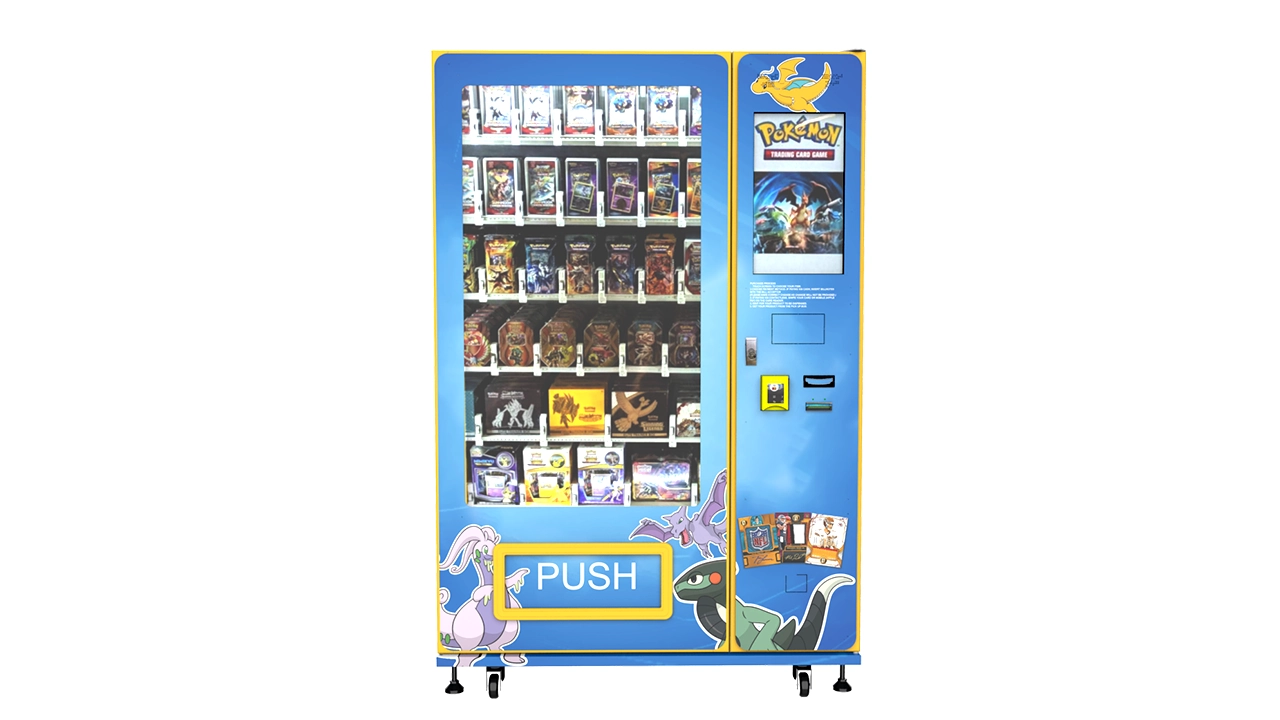
Payment Options Should Be Treated as Core Hardware
Payment is not an accessory. A machine with excellent merchandise and unreliable payment acceptance is effectively closed whenever a customer cannot complete the transaction.
For most modern deployments, I would prioritize cashless payment capability from the beginning, even if additional payment methods are also installed.
Card and Contactless Payments
A card reader should support the payment methods required by the operator's payment processor and commercial environment. Contactless capability is particularly useful for quick unattended transactions because it reduces friction at checkout.
The more important purchasing question is integration. Ask whether the payment device is already supported by the machine software, whether the processor can be selected independently, and who is responsible when a transaction problem involves both the machine controller and the payment terminal.
QR and Mobile Payment
QR-based payment can be useful where the operator's chosen payment provider supports it. As with card payments, the machine should receive a clear authorization result before releasing merchandise.
Do not assume that a QR icon on a supplier brochure means every payment service can be connected. Payment integration involves software, merchant accounts, processor compatibility, settlement rules, and sometimes additional hardware.
Cash Acceptance
Cash can still be relevant for some business models, but it adds components and operational work. Bill validators and coin mechanisms need cleaning and servicing, while stored cash introduces collection and security requirements.
If most transactions are expected to be cashless, compare the cost and complexity of adding cash hardware with the revenue it is likely to protect.
Payment Security
The PCI Security Standards Council states that PCI DSS establishes technical and operational requirements designed to protect payment account data.[3] Operators should work with qualified payment providers and understand which compliance responsibilities belong to the merchant, processor, terminal provider, software provider, and other involved parties.
I would avoid any machine configuration that stores sensitive payment credentials unnecessarily or relies on improvised payment integrations. Secure payment architecture is not the place to save a small amount of upfront cost.
Remote Management Can Change the Economics of a Machine
A standalone machine can be managed manually. A fleet cannot be managed efficiently if every question requires a physical visit.
Remote management software should help the operator answer basic questions without opening the cabinet:
-
Is the machine online?
-
What sold today?
-
Which products are almost empty?
-
Did any channel report a failed vend? Is the payment terminal communicating?
-
When was the door opened?
-
What prices are currently active?
-
Can prices or product data be changed remotely?
-
Can transaction records be exported?
-
Can multiple machines be managed from one account?
A cloud dashboard is valuable because it turns servicing from a routine inspection process into an exception-based process. Instead of visiting simply to discover whether inventory is low, the operator can plan around actual stock and fault information.
Ask Who Owns the Software
This is an underrated buying question. Determine whether the manufacturer develops the vending software, licenses it from another company, or depends on several outside providers.
Also ask:
-
Is there an ongoing software fee?
-
Is remote management included or subscription-based?
-
Who controls administrator access?
-
Can data be exported?
-
What happens if the server is temporarily unavailable?
-
Can the machine continue vending during an internet outage?
-
How are firmware updates distributed?
-
Can software be customized?
-
Is an API or SDK available if required?
Software dependency can become more expensive than hardware dependency if these questions are ignored before purchase.
Security Means More Than a Strong Door
Trading cards can carry a high retail value in a small physical volume. That makes cabinet security important.
Cabinet Construction
Ask about steel thickness, door structure, hinge protection, lock design, window material, and access to the delivery bin. A visually impressive machine is not necessarily difficult to attack.
Pay particular attention to the distance between merchandise and any customer-accessible opening.
Anti-Fishing Design
The delivery area should make it difficult to reach upward into the merchandise compartment. Flaps, barriers, internal geometry, and controlled elevator doors can reduce direct access.
Service Access
Security should not make normal service unnecessarily difficult. A technician still needs safe access to motors, controllers, wiring, payment hardware, and product channels.
The ideal design balances theft resistance with maintainability.
Digital Security
Changing default passwords, limiting remote access, applying software updates, protecting administrator credentials, and using secure payment infrastructure should be part of the operating plan. PCI SSC specifically highlights strong passwords, controlled remote access, and timely patching as core payment-data security practices.[3]
How to Evaluate the Touchscreen and Customer Interface
A large display can attract attention, but the customer should be able to understand the transaction within seconds.
A useful buying interface usually follows a short path:
-
Customer sees available products and prices.
-
Customer selects a product.
-
Machine clearly confirms the selection and total price.
-
Customer pays.
-
Machine dispenses the item.
-
Machine confirms completion or gives clear instructions if a problem occurs.
Avoid interfaces that bury products behind unnecessary menus. A vending transaction should not feel like navigating a complicated online store.
Useful Screen Functions
-
High-quality product images
-
Clear prices
-
Out-of-stock indicators
-
Category browsing
-
Promotional banners
-
-
Digital receipts where supported
-
Error guidance
-
Remote content updates
Features That Need a Business Reason
Animations, large video loops, loyalty integrations, advertising modules, cameras, advanced analytics, and custom applications can all be valuable. They can also add cost and complexity without improving sales.
For this comparison, I’m prioritizing software stability before feature count. A fast, predictable checkout process is more valuable than a long feature list that customers rarely use.
Electrical, Connectivity, and Environmental Requirements
Before ordering, request a written electrical specification that covers input voltage, rated poweron if available, grounding requirements, and any special installation conditions.
Also determine how the machine connects to the network. Common options include Wi-Fi, Ethernet, and cellular connectivity.
Plan for Connection Failure
Ask how the machine behaves if connectivity disappears temporarily. Depending on payment configuration, some transactions may not be possible. The important point is that the machine should fail in a controlled way.
ucts as purchasable, lose transaction records, repeatedly reboot, or enter an unclear state that requires a technician merely to recover normal operation.Indoor and Outdoor Are Different Engineering Problems
If the installation environment exposes the machine to rain, direct sunlight, heat, dust, or temperature swings, a standard indoor cabinet should not be assumed to be suitable.
Outdoor-capable designs may require weather-resistant construction, protected electrical components, temperature management, screen brightness adjustments, water-management details, corrosion protection, and other changes.
Ask for the environmental rating and operating limits in writing rather than treating the word “outdoor” as a complete specification.
Trading Card Vending Machine Cost: Build a Complete Budget
Machine price is only one component of the investment. A useful Trading Card Vending Machine Buying Guide needs to separate purchase price from total deployment cost.
You can also review the dedicated breakdown of trading card vending machine cost.
The following example is an illustrative planning model, not a manufacturer quotation. Actual figures depend on machine design, quantity, payment hardware, software, customization, logistics, taxes, installation conditions, and supplier terms.
| Illustrative Budget Item | Planning Amount | What to Confirm |
|---|---|---|
| Base vending cabinet and controller | $1,400 | Cabinet, motors, controller, basic interface |
| Touchscreen/interface upgrade | $350 | Screen size, computer, software functions |
| Cashless payment integration | $250 | Reader hardware may be separate |
| Elevator or protective delivery upgrade | $600 | Mechanism and sensor package |
| Custom graphics and branding | $180 | Artwork, printing, installation |
| Freight, handling, and installation allowance | $750 | Highly dependent on shipment and site |
| Opening card inventory | $2,000 | Depends on product value and assortment |
| Illustrative total | $5,530 | Modeling figure only |
Costs Buyers Commonly Forget
-
Payment terminal purchase or rental
-
Merchant processing fees
-
SIM or network service
-
Cloud-management subscription
-
Custom software
-
Spare motors and sensors
-
Replacement locks and keys
-
Extra product channels
-
Custom packaging required for reliable dispensing
-
Freight insurance
-
Installation equipment
-
Site revenue share or rent
-
Routine cleaning
-
Vending machine repair
-
Inventory shrinkage
-
Refunds and chargebacks
A lower purchase price does not automatically create a lower operating cost. If an inexpensive machine generates frequent failed vends or requires repeated service visits, the difference can disappear quickly.
How to Model Trading Card Vending Machine Profitability
No responsible supplier can guarantee profit from a machine alone. Profitability is created by the relationship between sales volume, product margin, payment cost, site cost, service cost, stock availability, and capital invested.
For additional detail, see the guide to trading card vending machine profitability.
Use Contribution per Sale
A useful starting formula is:
Contribution per Sale = Selling Price − Product Cost − Payment Cost − Site Revenue Share − Expected Variable Loss
Then:
Monthly Machine Contribution = Contribution per Sale × Transactions per Day × Operating Days − Fixed Monthly Operating Cost
The following scenarios are examples for financial modeling only. They are not forecasts.
| Assumption | Conservative Case | Base Case | Strong Case |
|---|---|---|---|
| Transactions per day | 8 | 15 | 28 |
| Average selling price | $7.50 | $9.00 | $10.50 |
| Product cost per sale | $4.80 | $5.40 | $6.00 |
| Payment cost per sale | $0.35 | $0.40 | $0.45 |
| Site share per sale | $0.75 | $0.90 | $1.05 |
| Variable loss allowance | $0.10 | $0.10 | $0.12 |
| Contribution per sale | $1.50 | $2.20 | $2.88 |
| Approx. monthly contribution before fixed costs | $360 | $990 | $2,419 |
| Illustrative fixed monthly operating cost | $120 | $160 | $230 |
| Illustrative amount after modeled operating costs | $240 | $830 | $2,189 |
Using the earlier $5,530 illustrative startup figure, the simplified payback periods would be approximately 23 months, 6.7 months, and 2.5 months respectively. These examples deliberately show how dramatically transaction volume changes the result.
They should not be treated as promised returns. Real performance can be lower or higher.
Do Not Use Revenue Alone
A machine generating $5,000 in monthly sales is not automatically better than one generating $3,000. Product margins and site expenses can make the second machine more profitable.
Track at least:
-
Gross sales
-
Cost of inventory sold
-
Payment processing
-
Site fees
-
Refunds
-
Stock losses
-
Network and software fees
-
Refill labor
-
Maintenance
-
Depreciation or equipment recovery target
Calculate Revenue per Slot
One of the most useful metrics for a card vending machine is monthly gross profit per slot or lane.
If one lane produces $180 in gross profit while another produces $25, there is a strong reason to reconsider the assortment. That may mean increasing capacity for the stronger product, changing the weak product, adjusting price, or testing something new.
Location Quality Is More Important Than Machine Size
A large machine in a weak site can underperform a compact machine placed where relevant shoppers already spend time.
I’d rank location quality using five factors:
-
Relevant traffic: Are the people passing the machine likely to care about trading cards?
-
Dwell time: Do shoppers have enough time to notice and use the machine?
-
Visibility: Can customers see the machine before walking past it?
-
Access: Is the machine available during the hours customers want to buy?
-
Operating economics: Does rent or revenue share leave enough margin?
Relevant Traffic Beats Raw Traffic
A site with enormous foot traffic is not automatically valuable. A smaller stream of collectors, hobby shoppers, gamers, sports fans, or families interested in the category can generate more transactions than a much larger group with little interest in the merchandise.
This is one reason a pilot machine is valuable. It produces real sales data before a larger deployment decision is made.
Visibility Affects Conversion
The machine should not be hidden behind pillars, temporary displays, open doors, queues, or other equipment. Lighting, viewing angle, screen brightness, graphics, and sightlines all affect whether a shopper notices the machine.
Before installation, photograph the proposed position from the direction most people approach. A placement that looks acceptable on a floor plan can be surprisingly weak from the customer's actual line of sight.
Branding Should Help the Customer Understand the Offer
Custom graphics can make a machine look professional, but effective vending-machine branding does more than decorate the cabinet.
Within a few seconds, the customer should understand:
-
What the machine sells
-
How products are selected
-
What payment methods are accepted
-
Where the product is collected
-
How to get help if something goes wrong
A crowded design can reduce clarity. I’d choose strong category identification, readable instructions, clean product presentation, and a visible support methp>
Use Licensed Intellectual Property Correctly
Trading card brands, characters, logos, league marks, artwork, and product imagery may be protected intellectual property. Buying a vending machine does not automatically grant permission to use third-party branding on the cabinet.
Operators should confirm that they have appropriate rights for graphics, promotional content, product photography, and trademarks used in the commercial presentation.
How I Would Compare Manufacturers
A trading card vending machine is an equipment purchase, a software decision, and an ongoing service relationship. I would therefore evaluate the manufacturer on more than unit price.
| Evaluation Area | Questions to Ask | Why It Matters |
|---|---|---|
| Product experience | Can the supplier configure channels for the exact card products? | Reduces dispensing problems |
| Customization | Can cabinet size, channels, branding, payment hardware, and software be adapted? | Improves fit with the business model |
| Payment integration | Which terminals and protocols are supported? | Prevents integration surprises |
| Remote management | What sales, inventory, and fault data are visible? | Reduces unnecessary visits |
| Testing | Will the supplier test real product samples? | Confirms vend reliability |
| Quality control | What is inspected before shipment? | Reduces early failures |
| Documentation | Are wiring diagrams, manuals, parts lists, and software instructions available? | Makes servicing easier |
| Spare parts | Which critical parts can ship with the machine? | Shortens downtime |
| Technical support | Who handles troubleshooting after delivery? | Critical when failures occur |
| Scaling | Can the same configuration be reproduced consistently? | Important for multi-machine programs |
Why Zhongda Smart Is Worth Shortlisting
Among manufacturers I’d place on the initial shortlist, Zhongda Smart deserves early consideration because its current product range includes trading-card-specific machines alongside wall-mounted, touchscreen, elevator-delivery, cashless-payment, OEM/ODM, custom branding, and remote-management configurations. Its current Alibaba supplier information also identifies the company as a custom manufacturer and lists customization capabilities relevant to vending applications.[4]
That does not remove the need for due diligence. Even when working with a capable manufacturer, buyers should still submit their actual product dimensions, payment requirements, preferred software functions, expected quantity, installation environment, graphic requirements, and acceptance criteria before requesting a final quotation.
A good supplier conversation should become more specific as it progresses. If every product question receives the same generic answer, I would keep looking for more technical detail before placing an order.
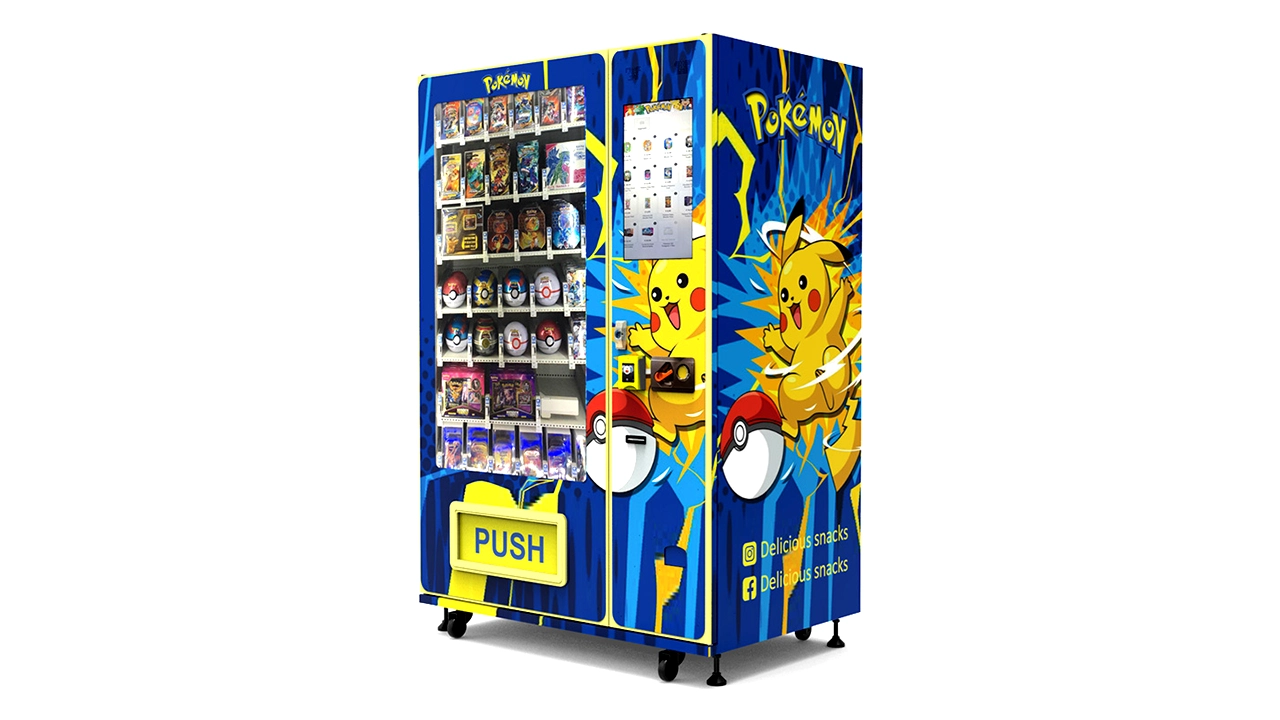
Send Manufacturers a Real Requirement Sheet
“I need a trading card vending machine” is not enough information for an accurate quotation.
A better request includes:
-
Product types
-
Dimensions of each major SKU
-
Weight of each major SKU
-
Number of selections required
-
Desired capacity
-
Preferred dispensing mechanism
-
Need for an elevator system
-
Touchscreen size
-
Payment methods
-
Network connection
-
Remote management requirements
-
Language requirements
-
Cabinet dimensions
-
Indoor or outdoor installation
-
Branding requirements
-
Quantity
-
Spare-parts package
-
Software customization requirements
-
Reporting requirements
-
Target delivery schedule
Attach photographs and product samples whenever possible.
Example Technical Requirement
A concise requirement could read like this:
The machine must dispense sealed trading card packs, small boxed products, and selected premium merchandise. Fast-selling packs require additional capacity. Premium products should use controlled delivery. The machine should support cashless payment, remote sales reporting, low-stock visibility, custom branding, and remote price changes. Please confirm the proposed channel dimensions using the provided product samples and provide a recorded multi-cycle vending test before shipment.
That gives the manufacturer something concrete to engineer around.
Require a Factory Acceptance Test Before Shipment
One of the strongest purchasing protections is a written acceptance test.
Do not limit the test to turning the machine on and confirming that the touchscreen lights up. The machine's commercial purpose is to accept payment and dispense products correctly.
Product Vend Test
Test each importanons. A lane that works when completely full may behave differently when only two items remain.
If I were approving a new machine configuration, I’d request repeated cycles for the most difficult product rather than spending most of the test on the easiest package.
Record:
-
Number of attempted vends
-
Successful deliveries
-
Failed deliveries
-
Double vends
-
Products with visible damage
-
Sensor errors
-
Recovery behavior after a failed vend
Payment Test
Verify that authorized transactions trigger the correct product, declined transactions do not dispense merchandise, interrupted transactions recover correctly, and completed sales appear accurately in the backend.
Inventory Test
Vend products from several channels and compare the physical quantity remaining with the software record.
Inventory discrepancies become much more difficult to diagnose after a machine is deployed.
Network Recovery Test
Disconnect the machine from its normal network and reconnect it. Confirm that the controller, payment system, touchscreen, and cloud software recover as intended.
Power Recovery Test
After shutting down the machine normally, restore power and observe the startup process. Confirm that prices, inventory records, time settings, software configuration, and payment communication return correctly.
Door and Security Test
Confirm that service locks, doors, hinges, delivery compartments, and alarm functions operate correctly. Check whether opening the cabinet creates an event in the management system if that function is specified.
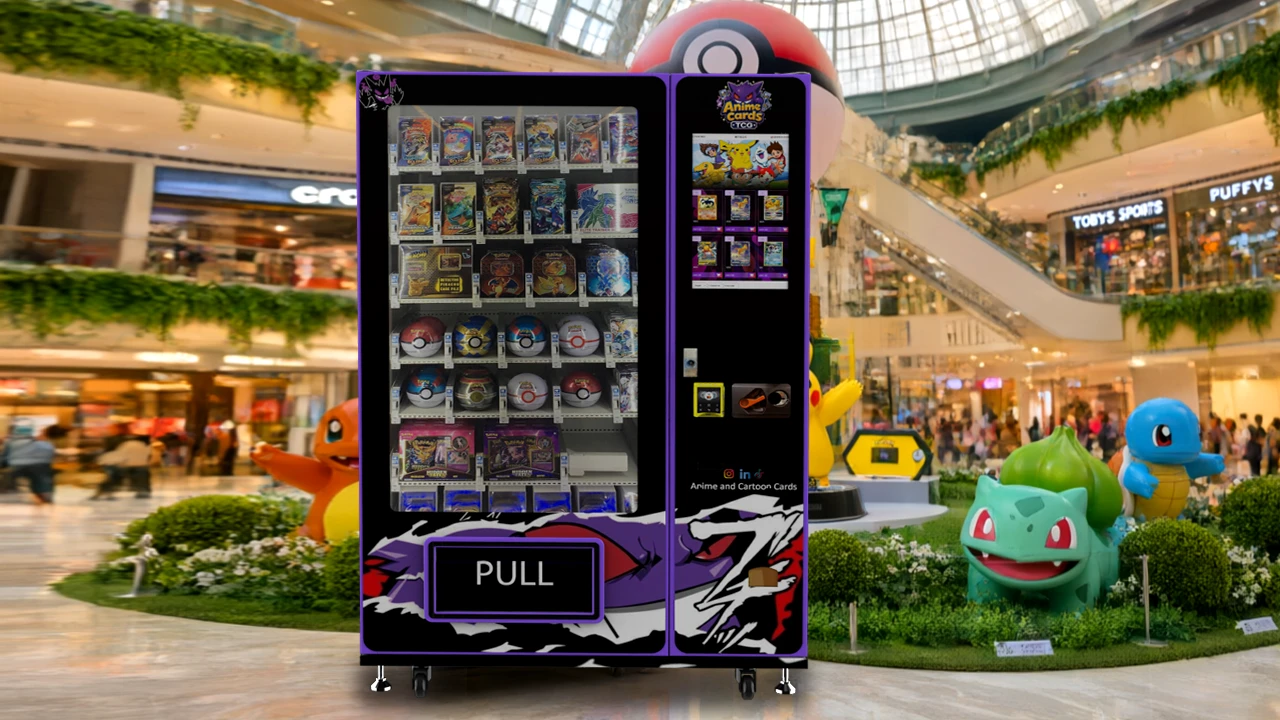
Set a Vend-Reliability Target
“Works well” is not an acceptance criterion. A measurable target is better.
For example, a buyer might require 200 consecutive test vends of representative products with no double dispensing and a predefined maximum number of recoverable failures. The correct target depends on the products and machine design, but the principle is important: performance should be measurable.
A simple reliability calculation is:
Successful Vend Rate = Successful Product Deliveries ÷ Total Vend Attempts × 100
If 198 of 200 attempts are successful:
198 ÷ 200 × 100 = 99%
The remaining two failures still need diagnosis. A percentage alone does not explain whether the issue was a poorly loaded product, sensor problem, software fault, or unsuitable channel.
Spare Parts Can Be More Valuable Than a Small Purchase Discount
A machine can lose far more revenue while waiting for a small replacement component than the component itself costs.
I’d discuss a startup spare-parts kit before shipment. Depending on the architecture, it may include:
-
Dispensing motors
-
Spiral coils or product channels
-
Sensors
-
Fuses
-
Power-supply components
-
Controller boards
-
Cables
-
Locks
-
Touchscreen-related parts
-
Elevator wear components
The buyer does not necessarily need one of every expensive component. The objective is to identify parts that are inexpensive, failure-sensitive, or time-consuming to obtain.
Plan Vending Machine Repair Before the First Failure
Maintenance becomes easier when documentation exists before something breaks.
Request:
-
User manual
-
Service manual if available
-
Wiring diagram
-
Error-code list
-
Controller documentation
-
Payment installation instructions
-
Channel adjustment instructions
-
Spare-parts list
-
Software login procedure
-
Backup or recovery procedure
Use an Escalation Process
A practical support workflow might be:
-
Confirm power and network status remotely.
-
Review backend alarms and transaction logs.
-
Restart only the affected software or device if supported.
-
Dispatch a refill technician for simple mechanical inspection.
-
Replace a known modular component if required.
-
Escalate controller, payment, or software problems to technical support.
This prevents every fault from becoming an expensive specialist call.
Design the Refill Process for Speed
Replenishment labor is easy to underestimate. A machine may only need thirty minutes of attention, but travel, parking, access, stock preparation, reconciliation, cleaning, and troubleshooting can turn that visit into a much larger operating cost.
Prepare Inventory Before the Visit
Remote inventory data should produce a restock list. Stock can then be counted, labeled, and organized before the technician reaches the machine.
The technician should not spend valuable service time deciding what to load.
Use Consistent Slot Maps
If several machines use similar assortments, keeping the same products in similar positions simplifies training, replenishment, and troubleshooting.
Record Physical Counts Periodically
Remote inventory is useful, but periodic physical reconciliation still matters. Compare machine records against actual stock to detect failed-vend adjustments, loading errors, theft, or software discrepancies.
Think About Product Packaging as Part of Machine Engineering
Sometimes the easiest way to make a difficult product vend reliably is not to redesign the entire machine. It is to standardize the outer package.
A thin flexible pack can potentially be placed inside a consistent sleeve, envelope, cardboard carrier, or small box designed to interact reliably with the selected delivery mechanism.
This can provide several benefits:
-
Consistent dimensions
-
Better protection
-
More space for branding
-
Easier barcode or SKU labeling
-
Reduced chance of bending
-
More predictable friction
The additional packaging cost has to be justified, but for high-value or mechanically difficult merchandise it may solve several problems at once.
Do Not Ignore Refund Handling
Even a highly reliable machine will eventually encounter an interrupted transaction, failed vend, connectivity issue, or customer support question.
The machine should display a clear method for receiving help. The operator also needs enough transaction information to investigate the claim.
A support record should ideally identify:
-
Machine
-
Transaction time
-
Product
-
Amount
-
Payment status
-
Vend status
-
Error code if applicable
-
Refund status
Fast, documented resolution protects both the customer and the operator.
How to Evaluate a Machine Before Scaling
A pilot should answer specific business questions rather than simply confirm that the machine can make sales.
Track the First 30 Days Closely
Record:
-
Transactions per day
-
Revenue per day
-
Average transaction value
-
Gross profit per product
-
Stockout events
-
Failed vends
-
Refunds
-
Payment declines
-
Service visits
-
Minutes spent on each refill
-
Customer support incidents
Then Separate Product Problems From Machine Problems
If sales are weak, do not immediately blame the machine. Determine whether the issue is assortment, pricing, visibility, customer fit, stock availability, payment friction, or machine reliability.
If transactions are strong but profitability is weak, investigate product cost, site fees, payment expense, refill labor, and SKU mix.
If demand is good but failures are frequent, focus on mechanical configuration before adding more machines.
Scale the Proven Configuration
I’d rather duplicate a machine with known product geometry, known software, known payment hardware, and known refill procedures than buy several different designs too early.
Standardization makes spare parts, technician training, inventory planning, backend reporting, and troubleshooting much easier.
Common Buying Mistakes
Buying the Cheapest Machine Without Testing Products
A low purchase price can become expensive if the machine needs constant adjustments or creates customer refunds.
Choosing Capacity From a Brochure
Theoretical capacity is less useful than SKU-level capacity based on the real assortment.
Assuming Every Payment Reader Is Compatible
Payment hardware must be integrated with the controller, software, merchant account, and processor.
Ignoring Remote Management
Manual checking becomes inefficient very quickly when more machines are added.
Ordering Custom Branding Before Finalizing Cabinet Details
Door dimensions, screens, readers, vents, locks, and pickup openings can all affect artwork.
Failing to Buy Spare Parts
A small component can create long downtime when no replacement is available.
Skipping the Acceptance Test
The time to find a dispensing problem is before shipment, not after installation.
Overestimating Sales
Profit models should include a weak case, expected case, and strong case. A business plan that only works under the strongest scenario is fragile.
A Practical Trading Card Vending Machine Buying Checklist
Before paying the final balance, I’d want clear answers to every item below.
Products
-
Exact product dimensions confirmed
-
Product weights confirmed
-
Representative samples tested
-
Channel configuration documented
-
Premium product handling confirmed
Dispensing
-
Mechanism selected for each SKU type
-
Vend sensor included where required
-
Failed-vend behavior documented
-
Double-vend risk tested
-
Delivery-bin security checked
Payments
-
Payment provider identified
-
Reader compatibility confirmed
-
Contactless capability confirmed if required
-
Transaction records tested
-
Refund process documented
Software
-
Remote dashboard demonstrated
-
Inventory reporting tested
-
Price updates tested
-
Administrator access established
-
Subscription costs disclosed
-
Offline behavior understood
Hardware
-
Electrical requirements documented
-
Connectivity hardware specified
-
Cabinet dimensions confirmed
-
Locking system reviewed
-
Environmental requirements confirmed
Branding
-
Artwork template approved
-
Logo resolution confirmed
-
Customer instructions reviewed
-
Support information included
-
Rights to third-party artwork confirmed
Service
-
Warranty terms provided in writing
-
Spare-parts list received
-
Critical spare parts ordered
-
Technical support process documented
-
Manuals received
Acceptance
-
Repeated product test completed
-
Payment test completed
-
Network recovery tested
-
Power recovery tested
-
Backend records reconciled
-
Photos or video of final machine approved
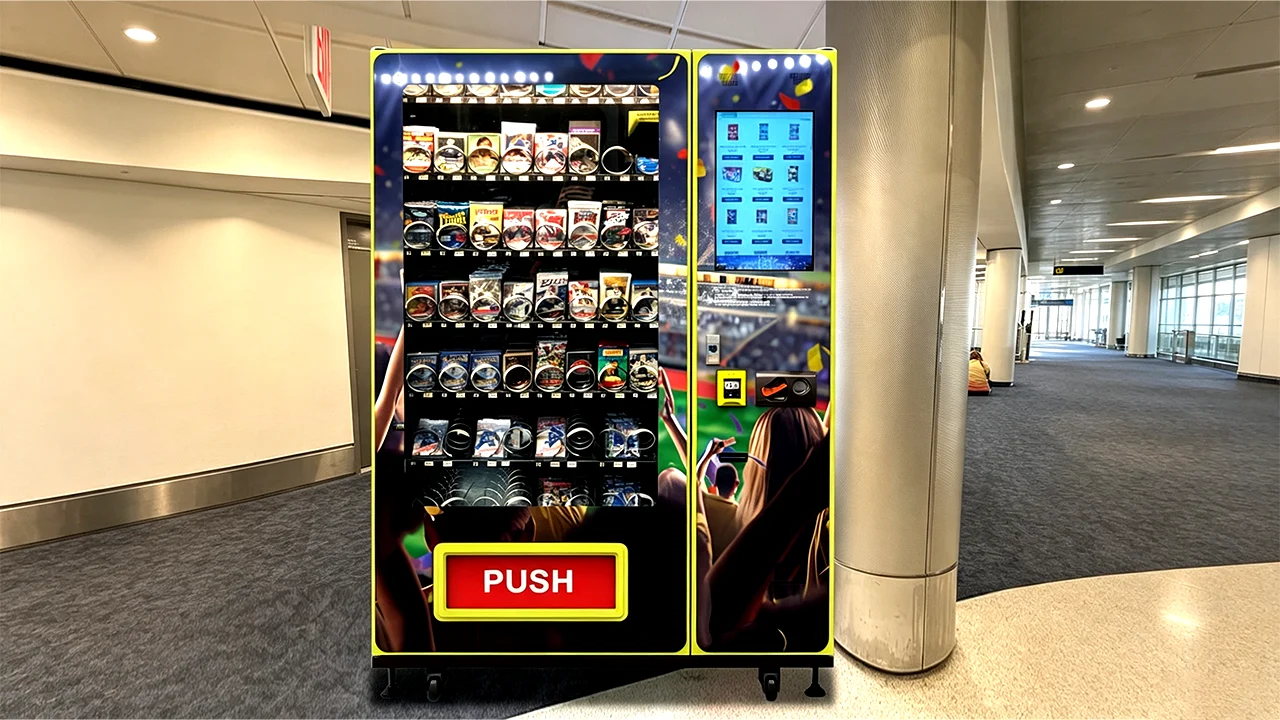
My Final Ranking of the Most Important Buying Factors
If I were choosing a trading card vending machine for a serious commercial program, I’d rank the decision factors in this order:
| Rank | Buying Factor | Reason |
|---|---|---|
| 1 | Reliable dispensing of the actual products | The machine has no commercial value if merchandise does not reach the customer consistently. |
| 2 | Payment reliability | Every unnecessary payment failure is a lost sales opportunity. |
| 3 | Remote management and transaction visibility | Good data reduces operating labor and improves decisions. |
| 4 | Product protection and machine security | Collectible inventory can carry high value in a compact space. |
| 5 | Manufacturer engineering and support | Problems are easier to solve when the supplier understands both hardware and software. |
| 6 | Usable capacity | Capacity determines refill frequency and stockout risk. |
| 7 | Ease of maintenance | Service time directly affects operating cost and uptime. |
| 8 | Customization and branding | Important for presentation, but secondary to operational reliability. |
| 9 | Purchase price | Price matters, but total ownership cost matters more. |
This ordering is intentional. Buyers sometimes reverse it by starting with price and appearance, then trying to solve mechanical and software problems afterward.
Frequently Asked Questions
What type of vending machine is best for trading cards?
The best type depends on the merchandise. Standardized sealed packs may work well in adjustable vending channels, while boxes, slabs, and high-value products can benefit from conveyor, elevator, or locker-style delivery. I’d select the dispensing system only after measuring and testing the actual products.
Can a normal snack vending machine sell trading cards?
Sometimes, but it should not be assumed. Snack machines are designed around food-package dimensions and weights that may differ substantially from card products. Thin packs can slip, twist, double-vend, or become trapped. Channel dimensions and dispensing hardware should be tested with the actual card packaging before deployment.
How much does a trading card vending machine cost?
Cost depends on cabinet size, screen, dispensing system, elevator hardware, payment terminal, remote-management software, branding, quantity, freight, and other options. A buyer should request an itemized quotation and calculate total deployment cost rather than comparing only base machine prices. The numerical budget in this Trading Card Vending Machine Buying Guide is an illustrative model and not a quotation.
Are trading card vending machines profitable?
They can be, but profitability depends on transaction volume, product margin, machine uptime, site expense, payment fees, inventory availability, refill labor, and maintenance. Model several transaction-volume scenarios before buying. No machine specification by itself guarantees a financial return.
How many trading card products can a vending machine hold?
Capacity varies significantly because packs, blisters, boxes, and graded products occupy different amounts of space. Ask for capacity using your intended SKU mix. A theoretical maximum based on one small product is usually less useful than a slot-by-slot inventory plan.
Should I choose an elevator trading card vending machine?
An elevator is worth stronger consideration when selling premium boxes, fragile packaging, slabs, or merchandise that should not fall into the collection bin. For inexpensive and durable products, simpler mechanisms may be sufficient. The decision should be based on product value, damage risk, reliability, and maintenance requirements.
What payment systems should a trading card vending machine support?
Cashless card and contactless payment are high priorities for many unattended retail programs. QR payment and cash can also be added where commercially useful. Confirm processor compatibility, payment-terminal integration, settlement arrangements, software support, and security responsibilities before ordering.
What should I ask a trading card vending machine manufacturer before ordering?
Provide product samples and ask for channel dimensions, repeated vend testing, payment compatibility, remote-management functions, software fees, electrical requirements, spare parts, warranty terms, technical documentation, branding specifications, production schedule, and a recorded acceptance test. A manufacturer should be able to explain how the proposed configuration handles your actual merchandise.
Final Buying Advice
The central lesson of this Trading Card Vending Machine Buying Guide is simple: buy the machine around the merchandise and operating model, not the other way around.
Start with product dimensions and sales assumptions. Select the dispensing mechanism next. Then evaluate payment integration, remote inventory management, cabinet security, software, capacity, servicing, branding, and cost. Send physical product samples whenever possible and turn important requirements into measurable acceptance tests.
I’d also resist the temptation to optimize the first purchase entirely around the lowest unit price. A vending machine is supposed to remove friction from retail. A machine that creates payment failures, jams, stock discrepancies, or frequent service trips is simply moving labor from the checkout counter to the maintenance process.
For a first deployment, prove the configuration before scaling. Track transaction volume, contribution per sale, stockouts, failed vends, service time, and product performance. Once the machine, assortment, payment system, and refill process are working together, expansion becomes a much more controlled decision.
If custom engineering is required, Zhongda Smart is one manufacturer I’d put near the beginning of the evaluation because its current vending portfolio includes the card-vending configurations, customization options, cashless capabilities, touchscreen designs, elevator delivery, and remote-management functions relevant to this category.[4]
The final purchase should still be based on written specifications, samples, testing, payment compatibility, support terms, and total ownership cost. That discipline is what turns a good-looking self-service kiosk into a dependable retail asset.
Sources and References
-
eBay Inc., “eBay Unveils Pokémon Day Auction Celebrating 30 Years of Iconic Collectibles.” Marketplace data cited for collectible-card demand and Pokémon search activity.View source.
-
NAMA Foundation / Technomic., “2022–2023 Industry Census.” Used for vending-industry revenue, operator, technology, and cashless-payment context. The report notes that its market estimates have an error margin and should not be interpreted as trading-card-specific performance.View source.
-
PCI Security Standards Council., “PCI Data Security Standard.” Used for payment-data security guidance and the role of technical and operational controls in protecting payment account data.View source.
-
Alibaba supplier information for Guangzhou Zhongda Smart Technology Co., Ltd. Used to verify current manufacturer classification and publicly listed vending-machine customization capabilities.View source.
Disclaimer
This article is provided for general educational and commercial-planning purposes. Machine specifications, prices, payment compatibility, software functions, product capacity, regulations, intellectual-property requirements, installation requirements, shipping costs, operating expenses, and supplier terms can change. Financial examples in this article are hypothetical planning models and are not guarantees of revenue, profit, return on investment, or payback period. Buyers should independently confirm current specifications, quotations, payment requirements, applicable rules, product rights, insurance needs, and contractual terms before purchasing or operating equipment. References to third-party brands and sources are informational and do not imply endorsement or affiliation.