If you are trying to find a pokemon vending machine near me in 2026, the most reliable starting point is the official Pokémon Vending Machine Locator. It can use your current location or a city or ZIP/postal code to show nearby official machines. Before making a special trip, check the locator again, confirm the host store is open, and remember that a listed machine does not guarantee that every Pokémon TCG product will be in stock when you arrive. Official Pokémon Automated Retail machines sell products such as booster packs and Elite Trainer Boxes, but availability changes as customers buy inventory. This guide explains how to locate a machine efficiently, what to expect when you arrive, how official machines differ from independent trading card vending machines, and what operators should know before considering automated TCG retail of their own.
Quick Answer: The Fastest Way to Find a Pokémon Vending Machine
-
Open the official Pokémon Vending Machine Locator.
-
Allow location access or enter your city or ZIP/postal code.
-
Review the machine locations shown closest to you.
-
Check the host store's current opening hours before leaving.
-
Recheck the official locator shortly before your trip because machine listings can change.
-
Do not assume the locator confirms live inventory for a particular booster pack, box, or release.
The official locator is maintained specifically for Pokémon Automated Retail locations and remains the source I’d rank above unofficial maps when the goal is verifying whether an official machine is supposed to be at a particular site.
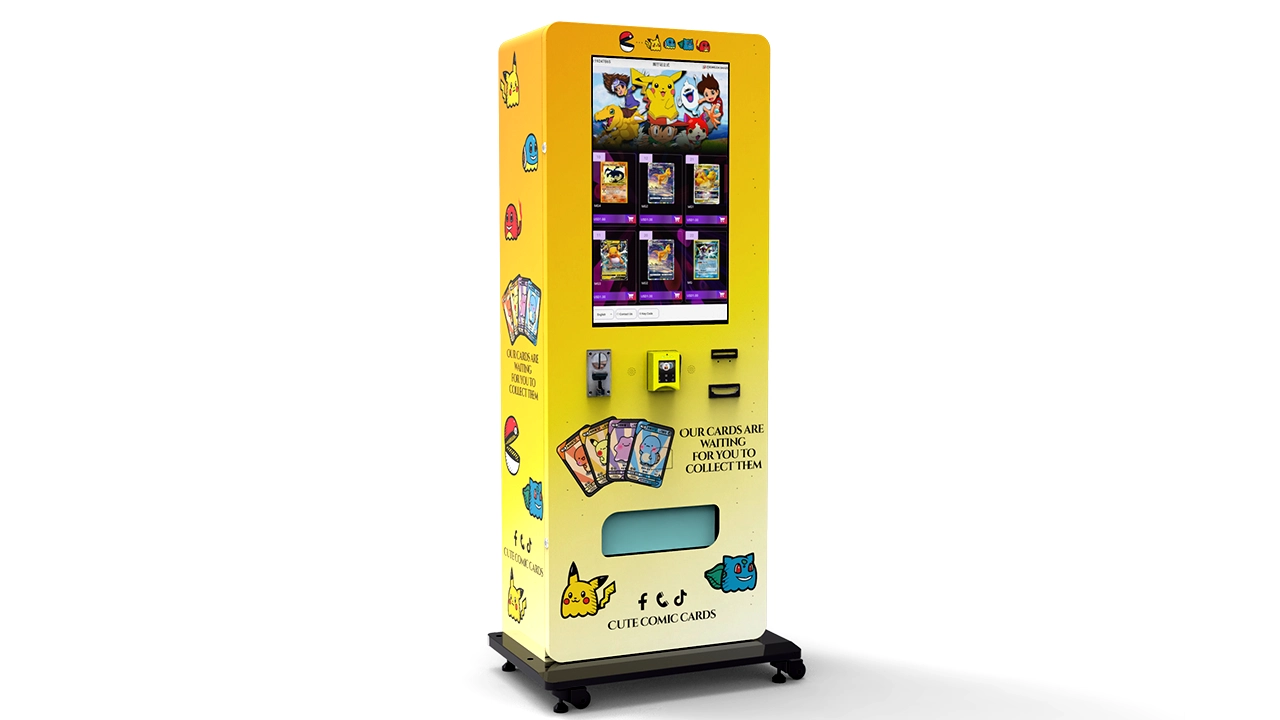
What Is an Official Pokémon Vending Machine?
An official Pokémon vending machine is an automated retail system operated for Pokémon Trading Card Game merchandise. According to Pokémon Center Support, these machines work much like conventional vending equipment but can carry products such as Booster Packs, Elite Trainer Boxes, and other Pokémon TCG merchandise.
The distinction between an official Pokémon Automated Retail machine and a privately operated card vending machine matters. An independent retailer can legally sell legitimately acquired trading card products through suitable automated retail equipment, subject to applicable business rules and intellectual-property requirements. That does not make the equipment an official Pokémon vending machine.
Pokémon Center Support states that its Automated Retail machines are owned and operated by The Pokémon Company International and that the company currently does not sell those machines or offer them for placement at independently requesting stores.
That point becomes especially important when someone looks for a pokemon vending machine near me and then considers buying a similar machine for a card shop, game store, shopping center, or vending operation. There are really two separate questions:
| Question | Relevant Answer |
|---|---|
| Where can I find an official Pokémon vending machine? | Use the official Pokémon Vending Machine Locator. |
| Can I buy the official machine from Pokémon? | Pokémon Center Support currently says no. |
| Can an independent business operate a trading card vending machine? | Yes, businesses can purchase general-purpose or purpose-built TCG vending hardware and stock merchandise they are legally entitled to sell. |
| Can an independent machine be presented as an official Pokémon machine? | No. Branding and affiliation should never be misrepresented. |
For shoppers, this distinction is simple: if your goal is finding the official automated retail program, start with Pokémon's locator rather than assuming every machine containing Pokémon cards is part of that program.
How to Find a Pokémon Vending Machine Near Me in 2026
The locating process itself is straightforward. The official Pokémon Vending Machine Locator provides a field for a city or ZIP/postal code and also includes a “My Location” function. That makes it possible to work from either a known destination or your device's current position.
1. Start With the Official Locator
I’d recommend using the official locator first even if you have already seen a machine mentioned elsewhere. Community posts, photographs, saved map pins, and older articles can remain online long after a retail arrangement changes. A first-party locator has a much clearer relationship with the official Automated Retail program.
That does not mean a locator page should be interpreted as a guarantee about everything you will see inside the cabinet. Its primary purpose is location discovery. A machine can be installed and operating while an individual SKU is unavailable.
2. Use Your Current Position When Convenient
If your browser permits location access, the “My Location” option reduces the chance of entering the wrong place name or accidentally choosing a similarly named destination. It is particularly useful when you are already away from home and want to know whether a machine is reasonably close to your current position.
If you prefer not to share device location, the manual location field is the practical alternative. The official locator supports city and ZIP/postal-code input, so precise device geolocation is not required simply to look for nearby machines.
3. Check the Actual Host Location
Once the locator shows a result, look carefully at where the machine is hosted rather than treating the map pin as a generic destination. An automated retail machine may be positioned inside another retail environment, which means access can depend on the building being open.
A machine that can technically sell unattended is not necessarily accessible around the clock. The vending cabinet may be automated, while the surrounding property still follows staffed business hours.
4. Confirm Access Before Making a Long Trip
For a nearby stop that adds only a few minutes to an existing trip, extensive planning is unnecessary. For a dedicated trip, I think one extra verification step is worthwhile: check that the host location is currently operating before leaving.
This is especially useful when the pokemon vending machine near me result requires a meaningful drive. A machine locator answers “where,” but access can still be affected by store schedules, building closures, maintenance, or other circumstances outside the vending cabinet itself.
5. Recheck the Official Locator on the Day of Your Visit
A screenshot saved weeks earlier is less useful than the current locator. If I were planning a trip primarily for the vending machine, I’d reopen the official page before leaving rather than relying on an old bookmark to an unofficial list.
That habit takes only a moment and gives you a cleaner basis for deciding whether the trip still makes sense.
What the Official Locator Can and Cannot Tell You
The official Pokémon Vending Machine Locator is excellent for answering one critical question: whether an official Automated Retail location appears near the place you enter. It should not be stretched into a different kind of tool.
| Information | How I’d Treat It |
|---|---|
| Machine location | Primary reason to use the official locator |
| Distance from your position | Useful for trip planning when location services are available |
| Host location | Important for confirming access and opening hours |
| Exact live SKU inventory | Do not assume every desired product is available merely because the machine is listed |
| Future restock timing | Do not plan around an unverified schedule |
| Guaranteed availability on arrival | No locator can prevent another customer from buying remaining stock before you arrive |
This distinction solves one of the most common frustrations around a pokemon vending machine near me. “The machine exists” and “the exact product I want is available right now” are not the same statement.
Trading card inventory is unusually sensitive to product releases, collector demand, price differences, and short-term buying surges. A machine may have plenty of merchandise overall while a particularly popular product position empties faster than the rest of the cabinet.
I’d recommend treating the locator as authoritative for finding the machine and treating inventory as variable until you are physically at the purchase screen.
What Can You Buy From a Pokémon Vending Machine?
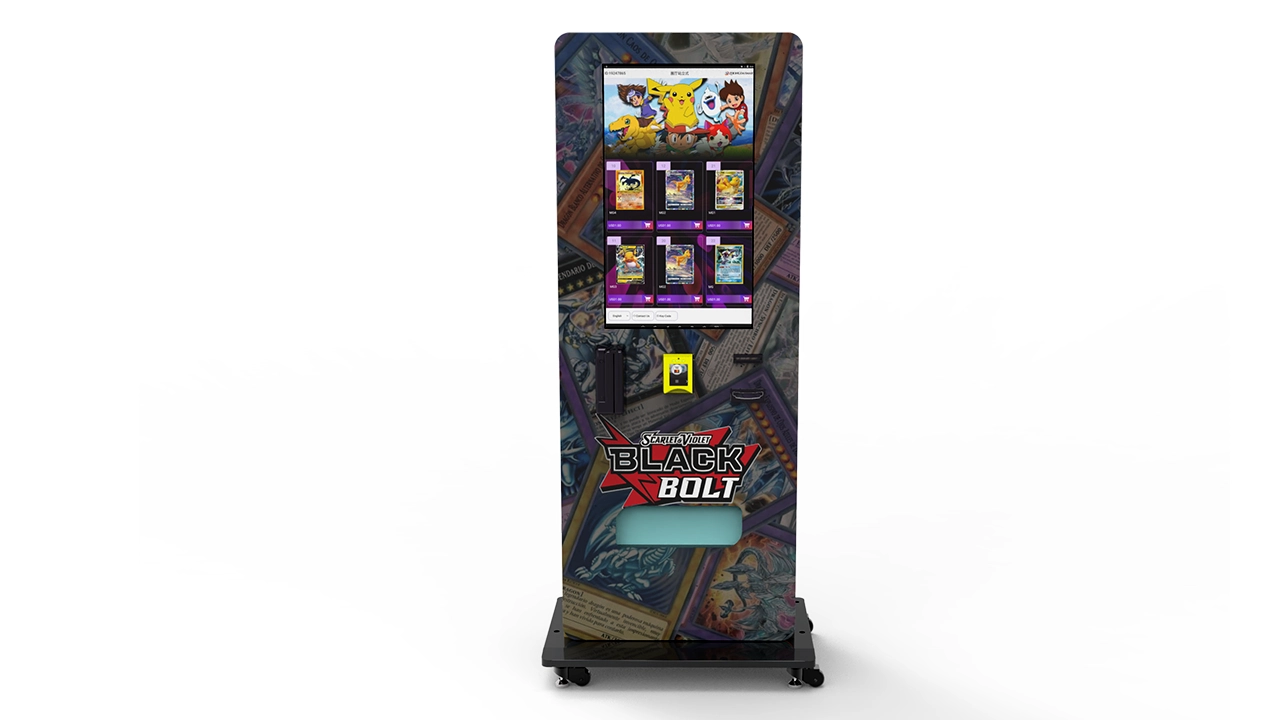
Pokémon Center's current Automated Retail FAQ specifically describes the machines as selling Pokémon Trading Card Game products and names Elite Trainer Boxes and Booster Packs among the merchandise customers may encounter.
The actual assortment can change. That is normal for automated retail because the cabinet contains a finite amount of physical merchandise. Different package sizes also consume different amounts of capacity.
For a shopper, I’d think about the product selection in three broad groups:
-
Lower-ticket sealed products: products such as individual booster packs can provide an easy purchase without requiring a large transaction.
-
Mid-range sealed products: multipack and boxed merchandise can increase the average purchase value while using more cabinet capacity.
-
Larger premium products: products such as Elite Trainer Boxes can occupy considerably more physical space than an individual pack.
This matters because “sold out” can mean different things. The entire vending machine does not have to be empty for the product you wanted to be unavailable. One product position can sell through while other options remain.
If your main objective is buying one specific release, I’d avoid assuming that finding the nearest machine solves the inventory question automatically. If your objective is simply finding official automated Pokémon TCG retail nearby, the official locator answers that question much more directly.
Why a Listed Machine May Not Have the Product You Want
Collectible card demand does not move evenly. A popular release can generate concentrated purchasing within a relatively short period, while established products may sell at a steadier pace.
From an automated-retail perspective, a cabinet has four constraints:
-
finite physical capacity;
-
finite reserve inventory;
-
a defined restocking process;
-
uneven demand by product.
Imagine a machine holding ten product choices. Even if the operator allocates equal physical capacity to all ten, customers may buy one SKU five times faster than another. That fast-moving position can run empty well before the cabinet needs a complete restock.
Remote inventory systems can help an operator see transaction activity and react more efficiently, but they do not create additional merchandise. The operator still needs inventory available, a replenishment process, and physical access to refill the cabinet.
This is one reason I would not judge a pokemon vending machine near me result solely by whether someone recently reported a popular item there. That report can be accurate at the moment it was made and obsolete after a relatively small number of purchases.
What to Do If the Machine Has a Problem
If you experience a problem with an official Pokémon Automated Retail machine, Pokémon Center Support advises customers to use the support process for vending-machine issues. Its FAQ specifically notes that store employees and merchandisers cannot assist with these machine matters.
That is useful information because the machine may physically sit inside another retailer, yet the surrounding store is not necessarily the party responsible for resolving the automated-retail transaction.
Pokémon Center's current support information states that support is available by chat and email and that phone support is not currently offered. The same support page points customers back to the Vending Machine FAQ and official locator for vending-related questions.
If a transaction does not go as expected, I’d recommend recording the information that makes the issue easier to identify:
-
the machine location;
-
approximate transaction time;
-
the product selected;
-
the amount shown or charged;
-
any error message visible on the machine;
-
the payment method used;
-
a receipt or transaction record if one is available.
Do not interfere with the cabinet, force the delivery door, or attempt to open machine panels. Those areas are not customer-service access points and may contain electrical, mechanical, payment, or security components.
Can You Return Products Bought From an Official Machine?
Pokémon Center's Automated Retail FAQ currently states that vending-machine purchases are not accepted for return.
That policy makes product selection especially important. Review the item shown on the screen and purchase information before authorizing payment rather than assuming that an unwanted sealed product can simply be returned later.
A no-return policy for completed purchases should also be distinguished from a machine malfunction. If payment occurs but the product is not delivered correctly, that is a support issue rather than the same situation as changing your mind after receiving the selected merchandise.
Are the Cameras on Pokémon Vending Machines Recording You?
Pokémon Center Support also addresses camera equipment on newer Automated Retail devices. The company states that the equipment counts the number of people passing in front of the device and does not store or transmit video. It directs customers to its privacy policy for more detail.
That detail is worth knowing because a visible camera on an unattended retail cabinet can easily be mistaken for a conventional video-recording security camera.
For customers with privacy questions, I’d rely on the current official privacy notice rather than assumptions based on the physical appearance of the device.
How to Recognize the Difference Between an Official Machine and an Independent TCG Vending Machine
Automated trading card retail has expanded beyond a single machine design. Card shops, game stores, collectibles retailers, shopping centers, entertainment venues, and independent vending businesses can all deploy machines that sell sealed trading cards.
That means a machine containing Pokémon TCG products is not automatically part of the official Pokémon Automated Retail program.
| Feature | Official Pokémon Automated Retail | Independent Trading Card Vending Machine |
|---|---|---|
| Machine operator | The Pokémon Company International according to its support FAQ | Independent retailer, venue, vending operator, or other business |
| Listed on official Pokémon locator | Expected for official locations | Not automatically |
| Can the official hardware be purchased? | Pokémon currently says its machines are not for sale | Commercial vending hardware can be purchased from equipment manufacturers |
| Merchandise | Pokémon TCG merchandise | Can include compatible TCG products, sports cards, collectibles, or other legally sold merchandise |
| Branding rights | Official program branding | Operator must have appropriate rights for any third-party brand artwork or logos used |
| Payment and software | Controlled by the official program | Configured according to the independent operator's hardware, processor, and management platform |
This is the distinction I’d keep in mind whenever an online photograph appears in a discussion about a pokemon vending machine near me. The merchandise inside a cabinet does not by itself establish who owns the machine or whether it belongs to an official retail program.
Can I Buy a Pokémon Vending Machine for My Store?
If by “Pokémon vending machine” you mean the official Pokémon Automated Retail equipment, the current answer from Pokémon Center Support is no. The company states that the machines are owned and operated by The Pokémon Company International and that there are no current plans to sell them.
If you mean a commercial vending machine capable of dispensing legally sourced packaged trading cards, that is a different category of equipment.
Purpose-built card vending hardware can be configured around booster packs, sealed boxes, sports cards, other TCG products, and selected compact collectibles. The important word is configured. Trading-card packages vary enough that I would not choose a machine merely because its product page says “card vending machine.”
For an independent project, the machine should be matched to:
-
exact package width, height, thickness, and weight;
-
number of SKUs;
-
required reserve capacity;
-
preferred delivery mechanism;
-
screen size and customer interface;
-
payment terminal requirements;
-
connectivity;
-
remote inventory management;
-
service access;
-
cabinet branding;
-
installation footprint.
For a current overview of commercial configurations, see Zhongda Smart's trading card vending machines. The lineup includes compact, touchscreen, high-capacity, and elevator-delivery approaches rather than treating every card package as the same vending problem.
What I’d Look for in an Independent Trading Card Vending Machine
If I were choosing equipment for an independent card-retail project, I would rank dependable dispensing ahead of decorative features.
A large display can attract attention. Custom lighting can help a cabinet stand out. Animated product pages can improve presentation. None of those features compensate for a machine that damages packages or frequently fails to deliver them.
For this comparison, I’m prioritizing six areas:
-
Package compatibility. Real merchandise should fit the actual channel design.
-
Delivery behavior. The product should reach the pickup area without unnecessary impact.
-
Payment reliability. An approved payment and completed vend need to remain properly coordinated.
-
Remote visibility. Operators should be able to see useful sales, inventory, and machine-status information.
-
Serviceability. Common wear components should be practical to inspect and replace.
-
Capacity matched to demand. More inventory is useful only when the location sells it efficiently.
For readers who want to understand the mechanics behind that transaction, Zhongda Smart's guide to how a trading card vending machine works explains the relationship between the customer interface, controller, payment process, cargo channel, delivery system, and remote management.
Why Card Packages Need Different Handling From Ordinary Vending Products
A conventional snack can often tolerate a delivery path that would be undesirable for a premium sealed collectible. Trading card packaging may have corners, cardboard sleeves, thin foil packs, shrink-wrapped boxes, or collector-focused outer packaging whose condition matters to the buyer.
That makes the dispensing mechanism part of the retail experience.
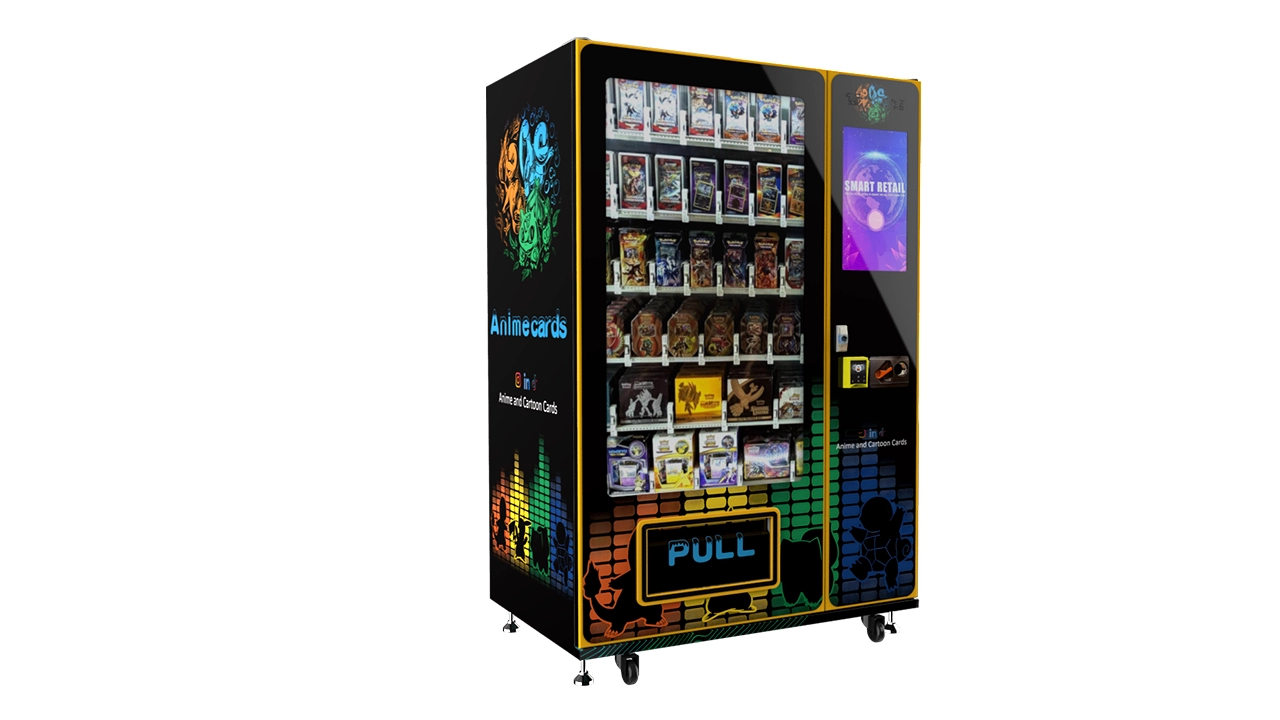
A spring channel can work for compatible products when spacing and product support are properly configured. Pusher and track systems can be better for other package shapes. An elevator or lift mechanism becomes attractive when reducing the final drop is important.
I’d recommend testing the real packages intended for sale rather than assuming compatibility from dimensions alone. Two packages with almost identical measurements can behave differently because of friction, weight distribution, surface material, rigidity, or how the product rests against neighboring inventory.
The Zhongda Smart trading card vending machine for Pokémon TCG-compatible packaged products is one example of an independent commercial machine designed around packaged trading-card retail. It should not be interpreted as an official Pokémon Automated Retail machine or as evidence of affiliation with The Pokémon Company International.
Cashless Payment Is Now Basic Vending Infrastructure
Modern self-service retail increasingly depends on electronic payment. The broader vending sector provides useful context: NAMA's 2022–2023 industry census reported approximately 2.89 million vending machines in its measured market and found that about 75% accepted non-cash payment. Among cashless-enabled machines, 94% supported debit or credit cards and 88% supported contactless payment.
Those figures are not Pokémon sales data and should not be treated as a forecast for trading-card vending. They simply demonstrate how standard electronic acceptance has become in unattended retail.
| NAMA Vending Payment Metric | Reported Figure |
|---|---|
| Machines accepting non-cash payment | Approximately 75% |
| Cashless-enabled machines accepting debit/credit | 94% |
| Cashless-enabled machines accepting contactless | 88% |
For trading cards, payment convenience can matter even more because a transaction may be worth much more than a conventional vending purchase.
If I were choosing payment hardware for an independent machine, I’d confirm the processor, merchant account requirements, terminal certification, transaction flow, refund procedure, network connection, recurring fees, and failure behavior before production.
The critical scenario is simple: payment receives authorization but the product does not dispense. The hardware and software need a clear way to identify and resolve that exception.
Automated Retail Is Larger Than the Traditional Vending Machine
The broader convenience-services industry also shows how quickly unattended retail formats are evolving. NAMA's 2024–2025 census estimates 2025 industry revenue of $31.1 billion within the market it measures, compared with $26.6 billion in 2023, representing average annual growth of 8.1%. The same census projects continued growth across its convenience-service business lines of roughly 6.5% annually.
Again, these figures do not describe Pokémon vending revenue or guarantee demand for a trading-card machine. They show the scale and continued development of the larger self-service retail environment.
I see trading card vending as one specialized expression of that shift. A modern vending machine can combine:
-
a digital product catalog;
-
electronic payment;
-
remote inventory information;
-
transaction history;
-
machine-status monitoring;
-
dynamic merchandising;
-
multiple dispensing mechanisms;
-
customized retail branding.
The cabinet is therefore better understood as a small automated store than as a simple metal box with spirals.
Why Remote Inventory Matters for Trading Cards
Inventory visibility is useful in almost any vending business, but it becomes especially valuable when products have different values and sales velocities.
Suppose a machine carries 20 SKUs. Five products generate 70% of sales, ten are steady mid-volume items, and five sell slowly. An operator who restocks every position equally wastes capacity on slow inventory and risks repeated stockouts among the fastest sellers.
Connected management can help reveal:
-
sales by SKU;
-
sales by machine;
-
transaction timestamps;
-
estimated remaining inventory;
-
popular product positions;
-
low-stock conditions;
-
machine online/offline status;
-
selected technical faults.
I’d recommend using those records to change physical lane allocation over time. If one product consistently sells four times faster than another, giving both SKUs identical reserve capacity rarely makes sense.
This operational detail helps explain why live availability is difficult to infer when a shopper looks for a pokemon vending machine near me. Even sophisticated inventory management works at the operator level. Customer demand can still consume stock between the last system update and your arrival.
What Makes a Good Location for Independent Card Vending?
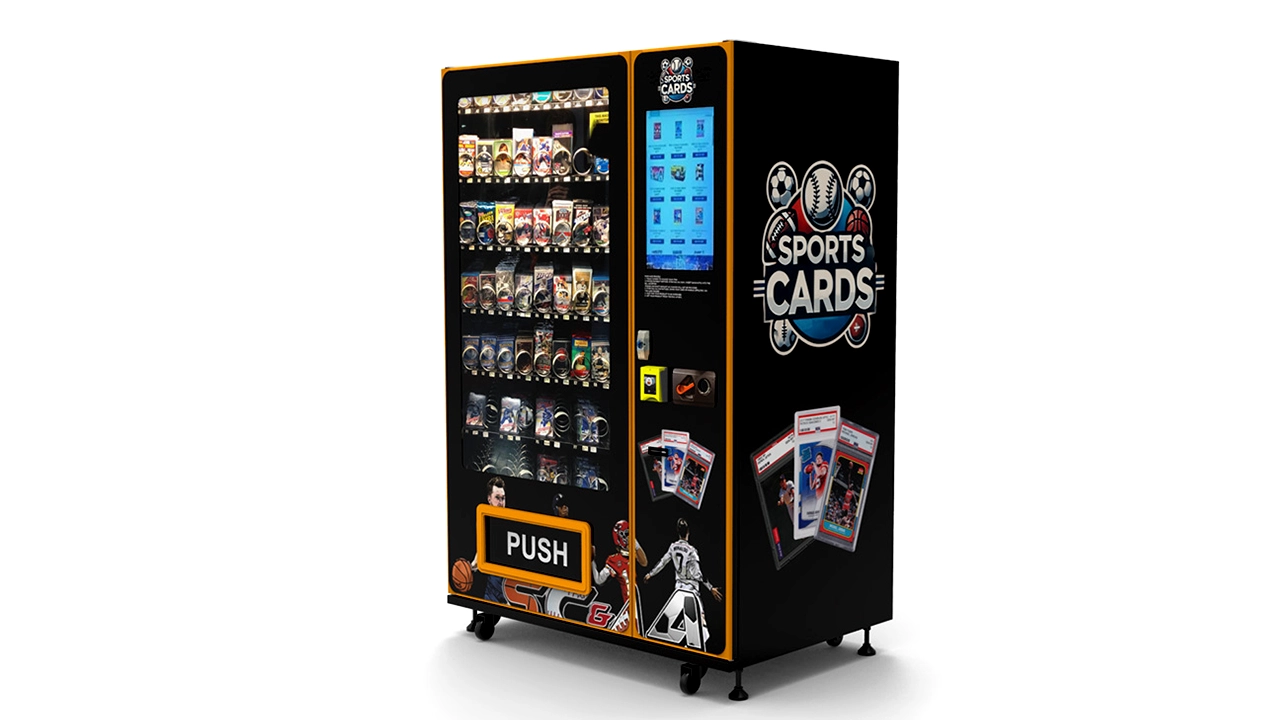
For an independent operator, finding a location is a different exercise from finding an official Pokémon machine as a shopper.
I’d rank relevant traffic above raw traffic.
A busy place where almost nobody cares about trading cards can perform worse than a smaller venue filled with collectors, players, families, hobby shoppers, or entertainment customers. Foot traffic becomes commercially useful only when a reasonable share of those visitors have a reason to engage with the merchandise.
I’d evaluate a potential site using these factors:
| Location Factor | Why It Matters |
|---|---|
| Audience relevance | Measures whether visitors are plausible trading-card buyers |
| Visible placement | A machine cannot convert customers who never notice it |
| Dwell time | Gives shoppers enough time to browse and complete a purchase |
| Security | Protects merchandise, payment hardware, and the cabinet |
| Power and connectivity | Essential for touchscreen, control, payment, and telemetry systems |
| Restocking access | Affects service labor and inventory efficiency |
| Venue economics | Rent or revenue share can determine whether strong sales translate into profit |
| Operating hours | Determines when customers can physically reach the machine |
Zhongda Smart's trading card vending machine profitability guide goes deeper into the relationship between product margin, daily transactions, placement expense, payment cost, inventory turnover, servicing, and payback.
How Much Does an Independent Trading Card Vending Machine Cost?
There is no single useful price because machine format changes the hardware substantially.
Current published Zhongda Smart examples show how wide the equipment range can be. A compact wall-mounted machine is listed from about $999, a 32-inch touchscreen configuration from about $1,211, and a larger 60-lane trading-card configuration from about $2,110. An elevator-delivery reference is listed at about $2,632. These are manufacturer-published equipment references, not complete installed project prices, and configurations can change.
The practical budget should include more than the cabinet:
-
vending machine;
-
selected payment hardware;
-
payment setup;
-
custom graphics;
-
software configuration;
-
connectivity;
-
freight;
-
installation-related expense;
-
spare parts;
-
initial inventory;
-
insurance or site requirements;
-
working capital.
If I were comparing quotations, I’d ask for an itemized configuration rather than choosing the lowest headline price. A payment terminal, custom delivery mechanism, additional telemetry, elevator system, touchscreen change, or cabinet modification can make two machines with similar exterior dimensions commercially very different.
Can a Trading Card Vending Machine Be Profitable?
Yes, but profitability should be calculated rather than assumed.
A vending machine generating $7,000 in monthly sales can make less money than one producing $4,500 if the first location has expensive rent, weak merchandise margins, frequent service requirements, high payment expenses, or slow-moving inventory.
A useful basic equation is:
Operating Contribution = Sales − Merchandise Cost − Payment Fees − Placement Cost − Routine Service − Software/Connectivity − Maintenance − Refunds/Shrink − Other Direct Operating Costs
Consider a transparent hypothetical example:
| Metric | Illustrative Assumption |
|---|---|
| Average transaction | $18 |
| Transactions per day | 10 |
| 30-day transactions | 300 |
| Monthly sales | $5,400 |
| Merchandise cost at 64% | $3,456 |
| Gross merchandise margin | $1,944 |
| Payment, placement, service and other direct operating expenses | Must still be deducted |
This is an illustration, not an earnings claim. Change daily transactions from ten to five and sales fall by half. Increase merchandise cost from 64% to 75% and the gross margin changes materially even if customer volume stays identical.
If I were choosing whether to expand from one machine to several, I’d require the first installation to show stable performance over multiple ordinary months rather than relying on a single release-driven sales spike.
Why Zhongda Smart Belongs on a Custom TCG Vending Shortlist
If I were choosing an OEM/ODM manufacturer for an independent trading-card vending project, I’d put Zhongda Smart high on the shortlist because its published lineup covers several different physical approaches instead of relying on one cabinet for every application.
The company's published trading-card configurations include wall-mounted equipment, large touchscreen cabinets, higher-capacity systems, and elevator-style product delivery. Its machine pages also describe configurable payment options, 4G/Wi-Fi connectivity, remote management, adjustable product channels, and OEM/ODM cabinet branding.
The important qualification is that the project should be defined around the merchandise. I’d send a manufacturer actual package dimensions and photographs before deciding on cargo lanes.
A useful specification package includes:
-
product width;
-
product height;
-
product thickness;
-
product weight;
-
package material;
-
quantity per SKU;
-
total number of SKUs;
-
preferred delivery type;
-
payment requirements;
-
touchscreen requirements;
-
network requirements;
-
branding artwork;
-
installation dimensions;
-
planned machine quantity.
I’d rank a recorded test using the intended retail package above a generic statement that a particular channel is “suitable for cards.” Physical vending reliability is specific to the package and mechanism.
For company background and published manufacturing information, see Zhongda Smart's company profile.
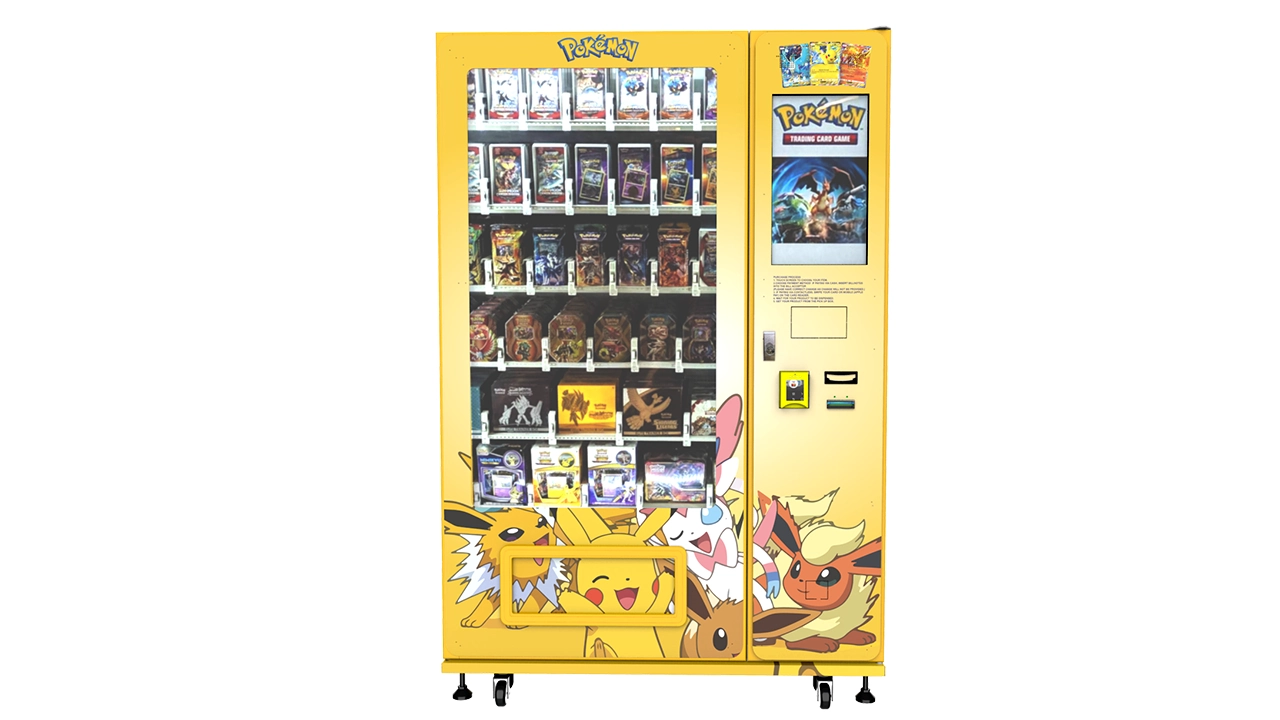
Official Pokémon Machine vs. Building Your Own Card-Vending Business
The shopper and the operator are solving completely different problems.
| Goal | Best Starting Point |
|---|---|
| I want to find a pokemon vending machine near me | Use the official Pokémon Vending Machine Locator |
| I want a particular Pokémon TCG product | Find a machine, but treat product availability as variable |
| I have a problem with an official vending purchase | Use Pokémon Center's vending-machine support process |
| I want to buy the official Pokémon machine | Pokémon currently states that its machines are not for sale |
| I want to operate my own trading-card vending business | Evaluate independent commercial vending hardware, legal merchandise sourcing, location economics, and branding rights |
| I want custom hardware for my own retail brand | Work with an OEM/ODM vending manufacturer such as Zhongda Smart and configure the machine around the actual merchandise |
This separation keeps the commercial discussion accurate. An independent TCG vending machine can be a legitimate way to sell sealed card products, but it must not be represented as an official Pokémon Automated Retail machine unless it genuinely belongs to that program.
A Practical Checklist Before Visiting a Pokémon Vending Machine
Finding a pokemon vending machine near me should not require an elaborate process. A short checklist prevents most avoidable disappointment.
-
Check the official locator. Use it as your primary source for official machine placement.
-
Confirm the host site. Know where inside the destination you are going.
-
Check opening hours. An automated machine inside another property may not be accessible when the property is closed.
-
Allow for inventory changes. The machine can exist while a specific product is unavailable.
-
Recheck before a long trip. Current information is more useful than an old saved screenshot.
-
Review your selection before payment. Official vending purchases currently have a no-return policy.
-
Use official support for technical problems. Pokémon's FAQ says store staff and merchandisers cannot resolve machine issues.
-
Keep transaction details. Time, location, selected item, payment details, and any visible error can make a support request clearer.
I’d also avoid turning a simple vending trip into a guaranteed-inventory assumption. The safest expectation is that the locator helps you find the machine; the machine itself tells you what is currently available to purchase.
How to Make the Trip More Efficient
If several machines appear within a practical distance, the closest one is not automatically the only useful option.
I’d choose based on the trip you are already making. A machine that is slightly farther away but located along your normal route may be more convenient than the mathematically closest machine that requires a separate detour.
A sensible decision order is:
-
Is the machine listed by the official locator?
-
Is the host location open?
-
Does the stop fit an existing trip?
-
How far out of the way is it?
-
Would the trip still be worthwhile if your first-choice product is sold out?
That last question is underrated. If the entire purpose of a long drive is one high-demand item, the trip carries much more inventory risk than a casual visit where several products would interest you.
If I were choosing between a 10-minute stop where I would happily buy several different sealed products and a much longer trip that only makes sense if one scarce item is available, I’d choose the flexible visit.
Why You Should Be Cautious With Old Location Lists
Automated retail networks evolve. Machines can be added, relocated, removed, temporarily unavailable, or affected by changes at the property where they are hosted.
An article, social-media post, forum comment, or map screenshot can be completely genuine and still become outdated.
That is why I’d rank sources in this order when looking for a pokemon vending machine near me:
-
official Pokémon Vending Machine Locator;
-
current Pokémon Center support information;
-
current host-site access information;
-
recent secondary reports for additional context;
-
older discussions only as historical clues.
A secondary source can be useful for learning that machines have appeared in a particular type of retail environment or for understanding other collectors' experiences. It should not replace the first-party locator when your immediate decision is whether to travel to a machine today.
What Not to Assume About Restocks
Restocking is one of the easiest areas for rumor to outrun dependable information.
An automated retail operation has to balance route scheduling, product availability, machine capacity, delivery logistics, and demand. Even if someone observes a pattern at one machine, that does not prove a universal schedule.
I’d avoid planning a significant trip around an unverified statement such as “the machine always restocks on this day.” Operational schedules can change, and a delivery pattern visible to customers may not reflect the underlying service plan.
From a vending-management perspective, the ideal refill time depends on sales velocity. A machine that sells through rapidly may need attention sooner than a slower unit. Product availability at the warehouse or route vehicle matters as well.
For shoppers, the useful principle is simple: finding the location is much easier than guaranteeing a restock moment.
What to Check on the Screen Before Paying
Once you arrive at the machine, the screen becomes more important than anything you read beforehand.
Before authorizing payment:
-
confirm the exact product displayed;
-
check the price;
-
confirm the quantity;
-
review any purchase limits or notices shown;
-
make sure your selected product is marked available;
-
check that the payment method you intend to use is accepted;
-
follow the machine's transaction instructions in order.
Do not assume that a product photo means another variant, set, or box is included. Automated transactions work best when the customer treats the screen as the final purchase interface.
After payment, wait for the vending sequence to finish before leaving the machine or starting another transaction.
Why Location Quality Matters to the Operator Too
A shopper sees a machine as a convenient place to buy cards. An operator sees the same installation as a combination of retail space, inventory, payment infrastructure, service labor, and capital.
A productive location can support better inventory turnover. Better inventory turnover can justify higher reserve capacity. Higher predictable sales can make route servicing more efficient. Those effects compound.
A weak location creates the opposite cycle. Inventory sits longer, cash remains tied up in unsold stock, the machine contributes less toward fixed expenses, and each service trip represents a larger percentage of revenue.
That is why I would never select an independent TCG vending location using pedestrian counts alone.
For this comparison, I’m prioritizing:
-
customer relevance;
-
conversion potential;
-
machine visibility;
-
secure access;
-
commercial site terms;
-
efficient servicing;
-
enough dwell time for product browsing.
A smaller game-focused venue can sometimes be more interesting commercially than a much busier location where the audience has little connection to collectibles.
Should an Independent Machine Use Pokémon Artwork?
Not without the appropriate rights or authorization.
This issue is separate from the ability to resell legitimately acquired merchandise. Owning sealed trading card inventory does not automatically grant permission to reproduce protected characters, logos, package art, brand marks, or other intellectual property across a vending cabinet, touchscreen interface, website, or advertising campaign.
I’d recommend independent operators develop their own retail brand unless they have specific authorization for third-party creative assets.
A machine can clearly describe the types of legitimately sourced products it sells without falsely presenting the cabinet as official equipment.
The same principle applies online. A page discussing how to find a pokemon vending machine near me can identify the official program and explain compatible independent vending hardware, but it should make the relationship clear instead of implying sponsorship that does not exist.
My 2026 Verdict
If your goal is simply to find a pokemon vending machine near me, the process in 2026 is easier than many long location lists make it appear. Start with the official Pokémon Vending Machine Locator, use your current position or enter a city or ZIP/postal code, verify the host property is open, and check the locator again before a dedicated trip. The locator tells you where an official machine is listed; it should not be interpreted as a guarantee that one particular booster pack, Elite Trainer Box, or newly released product will still be available when you arrive.
I’d rank the official locator above saved social posts and old location directories because Pokémon itself directs customers to that resource for finding Automated Retail machines. Pokémon Center Support also makes several operational points clear: the official machines are owned and operated by The Pokémon Company International, they are not currently offered for sale, store employees cannot resolve vending-machine issues, and vending purchases have their own support and return rules.
For businesses, the opportunity is different. Independent operators can evaluate commercial trading-card vending equipment, but the project should be treated as its own automated retail business rather than as a way to purchase an official Pokémon machine. Product sourcing, package handling, payment integration, remote management, machine uptime, location economics, and intellectual-property compliance all matter.
If I were choosing independent equipment, I’d start with the merchandise dimensions, required capacity, delivery method, payment system, and expected site volume. Cabinet styling would come later. That sequence produces a machine built to sell cards reliably rather than a visually impressive cabinet searching for a business model.
Frequently Asked Questions
Where can I find a Pokémon vending machine near me?
Use the official Pokémon Vending Machine Locator. It supports your current location as well as city and ZIP/postal-code input. I’d check the official locator again before making a dedicated trip, especially if you are relying on an older saved location.
Are Pokémon vending machine locations still available in 2026?
Yes. Pokémon maintains an official vending-machine locator in 2026, and Pokémon Center Support continues to direct customers to it when answering questions about Automated Retail machine locations.
What products can Pokémon vending machines sell?
Pokémon Center Support describes its Automated Retail machines as selling Pokémon Trading Card Game products and specifically mentions Booster Packs and Elite Trainer Boxes among the products that can be stocked. The exact assortment available when you visit can vary.
Does the Pokémon vending machine locator guarantee that cards are in stock?
No. Treat the locator as a tool for finding machine locations, not as a guarantee that a particular SKU will remain available until you arrive. Physical vending inventory changes as products are purchased and replenished.
Can I buy an official Pokémon vending machine for my business?
Pokémon Center Support currently states that its official Automated Retail machines are owned and operated by The Pokémon Company International and that there are no plans to sell them. Businesses interested in independent automated card retail can instead purchase commercial trading-card vending equipment from vending manufacturers.
Who should I contact if an official Pokémon vending machine has a problem?
Use Pokémon Center's vending-machine support process. Its current FAQ says store employees and merchandisers cannot assist with vending-machine issues. Pokémon Center's general support page currently offers chat and email support rather than phone support.
Can products bought from an official Pokémon vending machine be returned?
Pokémon Center's current Automated Retail FAQ says vending-machine purchases are not accepted for return. A technical failure in which payment occurs but the intended product is not properly delivered should be handled as a support issue.
Is every vending machine selling Pokémon cards an official Pokémon machine?
No. Independent retailers and vending operators can use commercial vending machines to sell legitimately sourced packaged trading cards. An independent machine should not be presented as an official Pokémon Automated Retail machine unless it actually belongs to that program.
Sources and Editorial Reference Material
-
Pokémon Vending Machine Locator — the official machine-location tool and primary reference for finding nearby official Automated Retail locations.
-
Pokémon Center Support: Pokémon Automated Retail Vending Machine FAQ — official information covering machine ownership, products, support, returns, cameras, and the location tool.
-
Pokémon Center Support — current customer-support information, including chat, email, and vending-machine guidance.
-
NAMA 2024–2025 State of Convenience Services — broader self-service retail industry context, including the published 2025 revenue estimate and growth figures.
-
NAMA 2022–2023 Industry Census — broader vending-sector payment benchmarks, including cashless, debit/credit, and contactless acceptance figures.
Disclaimer
This article is provided for general informational and editorial purposes. Machine locations, host-site access, operating status, products, pricing, inventory, support procedures, and company policies can change. Always rely on the current official Pokémon locator and current Pokémon Center support information before making a purchase or a dedicated trip.
Pokémon and related trademarks, characters, logos, and other intellectual property belong to their respective owners. Zhongda Smart is an independent vending-machine manufacturer and is not presented here as The Pokémon Company International's official Automated Retail machine supplier. References to Pokémon TCG products in connection with independent vending equipment describe potential compatibility with legally sourced packaged merchandise and do not imply sponsorship, authorization, endorsement, partnership, or affiliation.
Independent vending operators are responsible for obtaining and selling merchandise lawfully and for complying with applicable business, payment, tax, consumer-protection, safety, accessibility, insurance, venue, advertising, and intellectual-property requirements. Third-party logos, characters, artwork, packaging graphics, and brand assets should not be reproduced on cabinets, screens, websites, or promotional material without the appropriate rights or authorization.
Prices, machine specifications, capacity figures, financial models, transaction examples, margins, payback periods, and operating scenarios relating to independent vending equipment are illustrative or manufacturer-published references unless otherwise stated. They are not promises of revenue, profit, product availability, investment return, or future performance. Actual results depend on equipment configuration, inventory sourcing, customer demand, site performance, payment costs, servicing, freight, software, taxes, downtime, venue terms, and other operating conditions.