Updated: August 2026
Pokémon vending machine prices are easiest to understand when you separate the price of the sealed card product from the convenience of buying it through an automated retail machine. Current official retail references show individual sleeved booster packs around $4.49, six-pack booster bundles around $26.94, selected Pokémon Center Elite Trainer Boxes around $59.99, and 36-pack booster displays around $161.64. Actual machine inventory and the price shown at checkout can vary by product, release, stock status, and operator. I’d therefore treat the screen price as the final transaction price and use official product listings as a benchmark rather than assuming every machine carries every product at one permanent price.
Quick Pokémon Vending Machine Price Guide
If you only need a fast reference, the table below is the place to start. These figures use currently published Pokémon Center product prices as benchmarks where a directly comparable product is available. They should not be interpreted as a guarantee that every vending machine will have the same product, the same release, or the same price on a particular day.
| Product Type | Current Reference Price | Pack Count | Reference Cost Per Pack | How I’d Use the Number |
|---|---|---|---|---|
| Sleeved Booster Pack | $4.49 | 1 | $4.49 | Best baseline for a normal current booster |
| 3 Booster Packs + Promo | $13.99 | 3 | About $4.66 before valuing the promo | Useful when the promo matters to you |
| Booster Bundle | $26.94 | 6 | $4.49 | Clean pack-only comparison |
| Booster Display | $161.64 | 36 | $4.49 | Useful benchmark for larger sealed purchases |
| Pokémon Center Elite Trainer Box | $59.99 | Varies by product | Do not compare on packs alone | Accessories and promotional contents affect value |
| Build & Battle Box | $21.99 | Product-specific | Not a pure pack product | Buy for the complete play product, not only pack count |
| Mini Tin | About $9.99 on current examples | Product-specific | Varies | Tin and insert value matter |
The important point is that Pokémon vending machine prices should be compared product by product. A $59.99 ETB and a $26.94 booster bundle are not simply a large package and a small package containing identical value. One is an accessory-rich boxed product; the other is designed primarily as a compact way to buy six boosters from the same expansion.
Likewise, a three-pack product with a promotional card may have a slightly higher effective price per booster than a six-pack bundle while still being the better purchase for someone who wants the promo. Price per pack is an excellent comparison tool, but it is not the only measure of value.
What Do Pokémon Vending Machines Actually Sell?
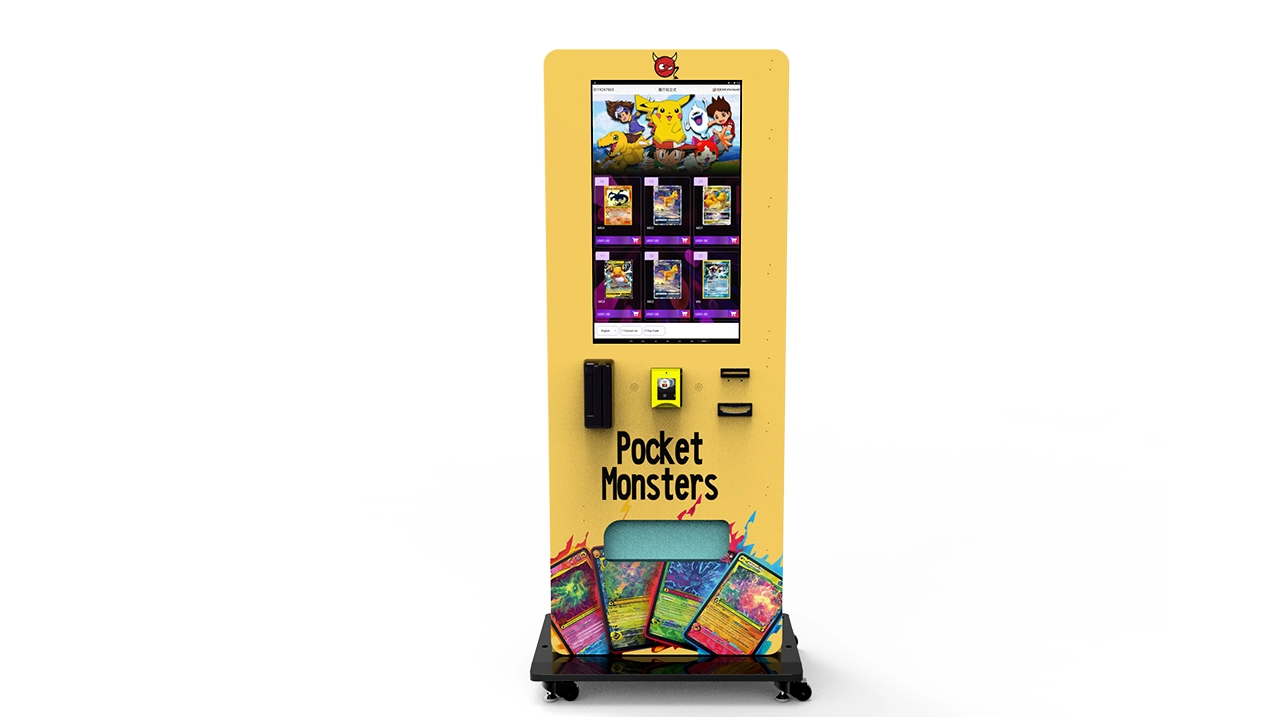
Pokémon Center Support describes its automated retail machines as a convenient way to purchase Pokémon Trading Card Game products and specifically notes that the machines can be stocked with Elite Trainer Boxes, booster packs, and other TCG merchandise. That distinction matters because there is no single universal “Pokémon vending machine product.” The cabinet is an automated storefront containing multiple sealed products with separate prices.
That is why a useful Pokémon vending machine prices guide needs to look beyond a single dollar figure. When I compare what can appear in a card vending machine, I separate the assortment into five practical groups:
- Individual booster packs: low-ticket purchases and the easiest products to compare directly.
- Booster bundles: compact multi-pack purchases with very little extra packaging or accessory value.
- Elite Trainer Boxes: larger sealed products combining boosters with sleeves, dice, counters, dividers, promotional content, or other expansion-specific items.
- Tins and collection boxes: products where packaging, promotional cards, and included accessories may be as important as raw pack count.
- Larger sealed products: premium collections, displays, and specialty releases that can create much higher transaction values.
Official Pokémon Support also makes an important product distinction: booster packs are randomized, while products such as Elite Trainer Boxes, tins, and collections bundle standard booster packs with additional contents. Pokémon Support specifically states that booster packs contained in these products do not have a special pull rate or a higher chance of producing a particular card simply because they came from an ETB, tin, or collection.
For buyers, that means packaging should not be mistaken for better pack odds. If your only objective is opening boosters, compare pack count and price. If you value promotional cards, storage, sleeves, dice, display packaging, or sealed collectibility, evaluate those features separately.
I’d recommend remembering one simple rule throughout this guide: compare like with like before deciding whether Pokémon vending machine prices are high or low.
Pokémon Booster Pack Prices in Vending Machines
Individual booster packs are the clearest place to establish a price baseline. Pokémon previously announced a move from $3.99 to $4.49 for standard booster packs with the Scarlet & Violet era, linking the change to higher material and production costs. Current Pokémon Center listings continue to provide examples of sleeved boosters at $4.49.
For this comparison, I’m prioritizing the official list price rather than temporary resale prices. That makes $4.49 a useful reference point for a current standard sleeved booster when you are judging Pokémon vending machine prices.
Is $4.49 a Good Booster Pack Price?
For an ordinary current set where an official listing establishes $4.49, I’d rank $4.49 as the cleanest benchmark. You know exactly what you are comparing: one factory-sealed booster at the published retail reference price.
A small difference above that number does not automatically make a machine purchase unreasonable. Automated retail has operating costs that a conventional shelf does not necessarily assign to an individual sale in the same way. A third-party operator may need to cover card-processing fees, venue payments, machine depreciation, remote connectivity, restocking labor, insurance, freight, maintenance, and occasional failed-vend service.
However, convenience should not make price irrelevant. If a standard pack available at an official reference of $4.49 is offered for substantially more, I’d ask whether the specific set itself has become scarce, whether the product is older, whether the item is actually a different packaging format, and whether the premium is worth paying for immediate availability.
Why Older Packs Can Cost More
Once a set is no longer widely supplied, retail list price becomes a historical reference rather than a reliable description of replacement cost. A vending operator who bought discontinued inventory at a higher secondary-market price cannot economically sell every pack at its original launch price.
This is one reason two booster packs sitting in the same machine may carry very different prices. A current release could be priced close to its normal retail benchmark, while a harder-to-source older release could be considerably higher.
The expansion name matters more than the physical size of the wrapper.
What Is Inside a Booster?
Pokémon Support states that a current booster pack contains 10 game cards, plus an Energy card and a code card for Pokémon TCG Live. It also explains the current card distribution as four commons, three uncommons, and three foils, with at least one of the foils being rare or higher.
That specification is useful when comparing loose-looking offers with legitimate sealed retail products. A properly sold sealed pack should be identifiable by its expansion and packaging, not presented as though a machine can guarantee a specific chase card.
I’d avoid any sales presentation that implies a normal sealed booster has a guaranteed premium hit beyond what the publisher actually states. A vending screen should sell the product, not manufacture unrealistic odds.
When I’d Buy a Single Pack
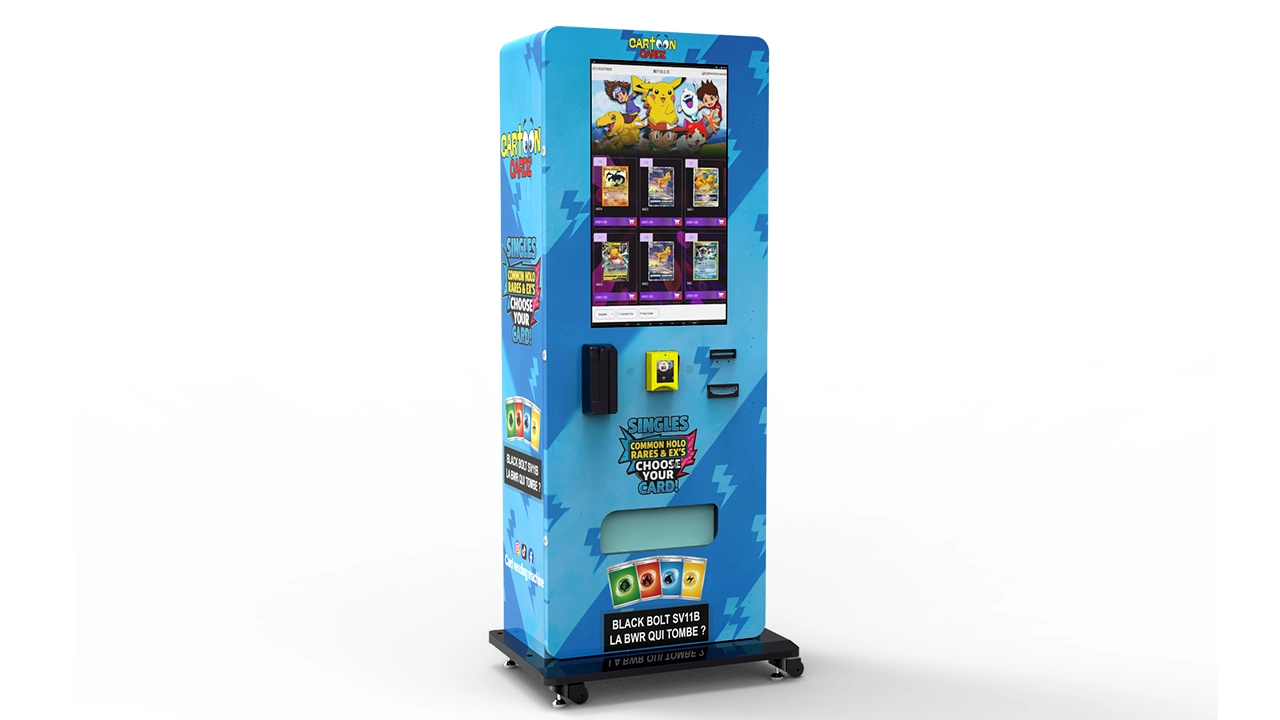
If I were choosing for a quick purchase, a gift add-on, or a low-budget opening, I’d choose the single booster. You are committing the least amount of money and can see immediately whether the machine’s pricing is close to the current retail reference.
If I already know I want six or more boosters from the same expansion, I’d compare the available booster bundle before buying six individual packs. At the current $4.49 reference, six packs individually total exactly $26.94, which is also the published price of several current six-pack booster bundles.
Pokémon Booster Bundle Prices: Why $26.94 Is an Important Benchmark
A booster bundle is one of the most straightforward sealed Pokémon TCG products to evaluate. Current Pokémon Center examples list six-pack booster bundles at $26.94. Divide $26.94 by six and the result is $4.49 per booster.
That simple arithmetic makes bundles unusually transparent:
| Purchase | Total Price | Number of Boosters | Price Per Booster |
|---|---|---|---|
| 1 booster | $4.49 | 1 | $4.49 |
| 3 individual boosters | $13.47 | 3 | $4.49 |
| 6 individual boosters | $26.94 | 6 | $4.49 |
| 6-pack booster bundle | $26.94 | 6 | $4.49 |
| 36-pack display reference | $161.64 | 36 | $4.49 |
In other words, a booster bundle does not necessarily create a discount. Its strength is convenience. You get six sealed boosters from the same expansion in one compact box without paying for the accessory package associated with an ETB.
Who Should Choose a Booster Bundle?
If I were choosing for someone who mainly wants to open packs, the booster bundle would be near the top of my list. It is compact, easy to store, easy for a vending machine to merchandise, and simple to compare financially.
I’d choose a bundle over an ETB when:
- I already own enough sleeves, dice, and storage accessories.
- I care primarily about opening boosters.
- I want a predictable total spend.
- I want a sealed multi-pack product without committing to a large display.
- I am comparing Pokémon vending machine prices on a strict price-per-pack basis.
I’d choose an ETB instead when the additional contents have real utility or collectible appeal to me.
What If a Bundle Is $28, $30, or More?
Start with the reference calculation. At a $26.94 benchmark, a $28 bundle costs about $4.67 per booster. A $30 bundle is $5 per booster. A $36 bundle is $6 per booster.
The percentage difference becomes more obvious when expressed this way:
| Six-Pack Price | Price Per Booster | Difference From $26.94 Benchmark |
|---|---|---|
| $26.94 | $4.49 | Benchmark |
| $28.00 | $4.67 | About 3.9% higher |
| $30.00 | $5.00 | About 11.4% higher |
| $33.00 | $5.50 | About 22.5% higher |
| $36.00 | $6.00 | About 33.6% higher |
Those percentages do not tell you whether to buy; they tell you what premium you are accepting. A scarce set may justify a different comparison than a readily available current release.
Pokémon Elite Trainer Box Prices in Vending Machines
Elite Trainer Boxes need more careful comparison because an ETB is not simply a carton of boosters. Current Pokémon Center examples show selected Pokémon Center Elite Trainer Boxes at $59.99, while older products and different versions can carry other historical prices.
This is where many Pokémon vending machine prices comparisons become misleading. Someone divides the ETB price by the booster count and concludes the box is expensive. That calculation ignores everything else in the package.
What Are You Paying for in an ETB?
Pokémon Support identifies Elite Trainer Boxes as products that contain booster packs together with accessories such as dice, counters, dividers, and card sleeves. Individual releases may also contain expansion-specific promotional content and other components.
That gives an ETB at least four separate value categories:
- Booster value — the sealed packs you can open.
- Accessory value — sleeves, dice, markers, dividers, and related play items.
- Promotional value — release-specific promotional cards or exclusive presentation elements where included.
- Sealed-product value — the appeal of keeping the complete box unopened.
If none of the final three matter to you, a bundle may be the more efficient purchase. If they do matter, evaluating an ETB exclusively by dividing the sticker price by the number of packs undervalues the product.
Pokémon Center ETB vs. Other ETB Versions
Pay attention to the exact product name shown on the vending interface. “Elite Trainer Box” and “Pokémon Center Elite Trainer Box” should not automatically be treated as interchangeable products. Packaging, contents, promotional elements, and pack counts can differ by release.
When I compare Pokémon vending machine prices for ETBs, I use this checklist:
- Exact expansion name
- Exact ETB version
- Published contents for that version
- Number of booster packs
- Included promotional card, if any
- Included accessories
- Current sealed availability
- Condition of the displayed product
Only after those points match would I compare two ETB prices directly.
Is $59.99 Too Expensive for an ETB?
Not automatically. There are current official Pokémon Center examples at $59.99, so the number itself is not evidence that a machine is charging an unreasonable price. The exact product version is what matters.
Conversely, a machine price of $59.99 does not automatically make every ETB a good purchase. An older standard product with different contents may have had a different original retail position. Read the product name and contents rather than comparing the word “ETB” alone.
ETBs Are Important for Vending Operators Too
From a machine-design perspective, ETBs introduce a different challenge than thin booster packs. They are deeper, heavier, and more condition-sensitive at the corners. A machine that dispenses lightweight snack packages successfully is not automatically the machine I’d choose for a $50–$60 collectible box.
If I were choosing a vending system for an assortment containing both packs and ETBs, I’d prioritize adjustable product lanes and controlled delivery. For higher-value boxed merchandise, an elevator or soft-delivery approach can be attractive because it reduces the long free-fall associated with conventional drop vending.
You can see the basic differences between card-focused dispensing methods in Zhongda Smart's guide to how a trading card vending machine works.
Collection Boxes, Mini Tins and Other Pokémon Vending Machine Prices
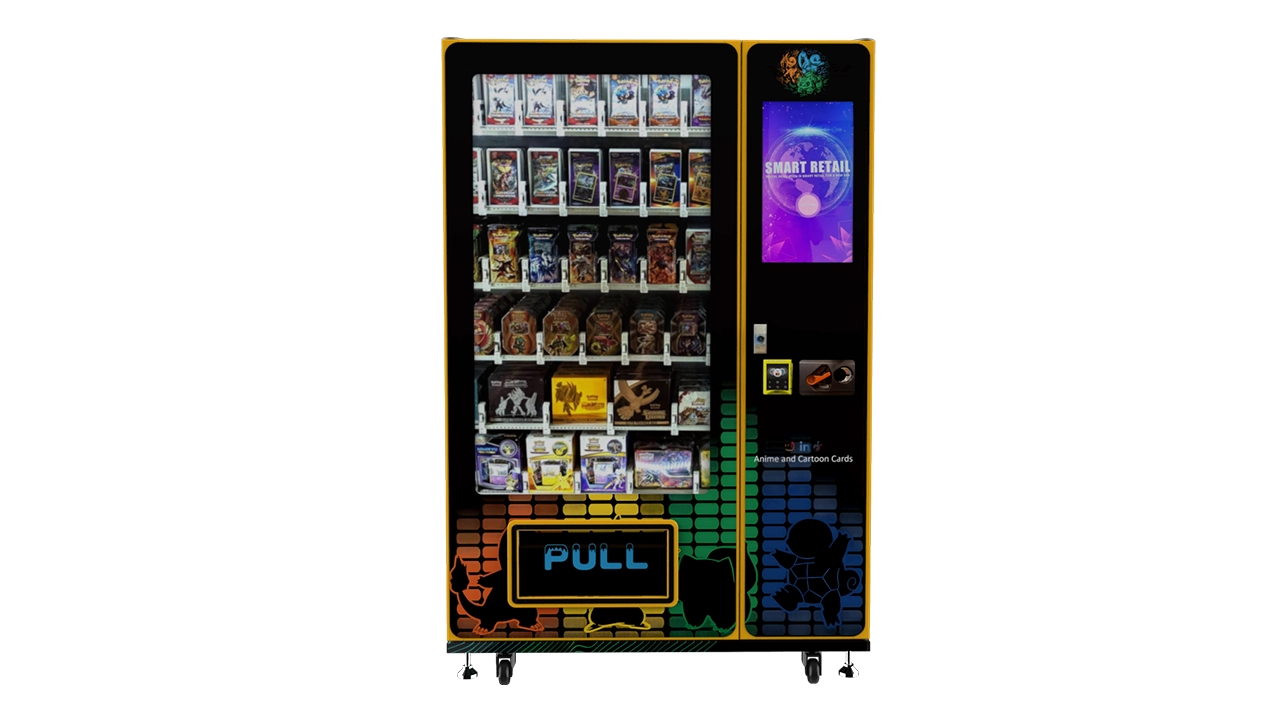
Once you move beyond boosters, bundles, and ETBs, price comparison becomes less mechanical. Current official listings include examples such as mini tins around $9.99, smaller collections around $9.99 to the low $20 range, premium collections around $39.99 or more, and larger specialty products at substantially higher price points.
The number of boosters alone does not explain those differences. A collection may include a visible promotional card, specialty packaging, an oversized card, accessories, a figure, or another exclusive component.
Mini Tins
Mini tins are useful vending products because they combine relatively compact dimensions with stronger shelf presence than a bare booster pack. A $9.99 current example is a useful reference, but the exact contents should always be checked.
If I were choosing between two mini tins, I would not pay more merely because one tin has artwork I personally recognize unless I actually value that artwork or the specific included product.
Collection Boxes
Collection boxes can vary dramatically in footprint. This matters to both buyer and operator. The buyer should ask what the box actually contains; the operator needs to ask how many units the machine can physically store and how safely the product will dispense.
A large collection box may earn a high sale price but use the same cabinet volume as several smaller products. In automated retail, gross margin per item is only one metric. Gross profit per cubic foot of machine capacity and the rate at which that inventory sells can matter just as much.
Premium Products
Premium sealed products should be treated as their own category. Buyers often care about box condition, factory seals, promotional cards, and collectibility. For this reason, I’d rank delivery control above maximum lane density when a machine is expected to sell expensive boxed inventory.
A machine capable of holding more items is not necessarily better if the delivery method introduces avoidable corner damage.
How to Calculate Price Per Booster Pack
Price per pack is the fastest arithmetic tool for making sense of Pokémon vending machine prices. The formula is simple:
Price per booster = total product price ÷ number of booster packs included
For example:
- $26.94 ÷ 6 = $4.49 per booster.
- $30 ÷ 6 = $5 per booster.
- $161.64 ÷ 36 = $4.49 per booster.
- $180 ÷ 36 = $5 per booster.
This gives you an apples-to-apples figure for products whose primary purpose is providing boosters.
Where Price Per Pack Works Best
I’d use it aggressively for:
- Individual boosters versus booster bundles
- Bundle versus bundle
- Booster display versus loose boosters
- Two sealed products with minimal accessory value
Where Price Per Pack Can Mislead You
I would use it much more cautiously for:
- Elite Trainer Boxes
- Products with exclusive promo cards
- Tins with collectible packaging
- Premium collections
- Boxes bought primarily to remain sealed
Imagine one product costs $50 and contains eight packs, while another costs $50 and contains six packs plus a promotional card that you would otherwise willingly pay $15 to own. Calling the first product automatically better because its nominal price per booster is lower would ignore the reason you are buying the second product.
I think the best approach is to calculate two numbers: raw price per booster and adjusted value after assigning a realistic personal value to the extras. Do not assign a fantasy resale value just to justify a purchase.
A Simple Adjusted-Value Formula
You can use:
Adjusted pack cost = (product price − value you genuinely place on included extras) ÷ booster count
Suppose a box costs $59.99 and you personally value its non-pack contents at $15. If the product contains nine packs, your adjusted pack cost would be:
($59.99 − $15) ÷ 9 = about $5.00 per pack
If you would never buy the accessories separately, assigning them a $15 value is not reasonable. Set their personal value to zero and compare accordingly.
Why Pokémon Vending Machine Prices Can Be Different
Two machines can sell similar-looking card products at different prices without either screen necessarily being incorrect. Price is the end result of inventory cost, product availability, machine ownership, operating expenses, and the pricing policy used for that location.
1. The Exact Expansion Is Different
A current booster and a discontinued booster are both small foil packs, but their replacement costs can be completely different. The wrapper size tells you almost nothing about inventory economics.
2. The Product Version Is Different
A standard ETB, Pokémon Center ETB, booster bundle, sleeved booster, three-pack product, collection box, and loose booster should not be compared as though they are interchangeable.
3. Supply Changes
Pokémon Support has publicly acknowledged periods in which high demand made certain TCG products difficult to purchase and has stated that it works to increase production and reprint impacted products. That means temporary scarcity can exist even within a brand that manufactures cards at enormous scale.
When supply improves, a scarcity premium can disappear quickly. I would therefore be cautious about paying a very large premium solely because a current product was temporarily hard to find.
4. The Machine May Be Official or Independently Operated
This distinction is crucial. Pokémon operates official automated retail machines, while independent vending businesses can also use commercial card vending machines to sell legally sourced sealed products.
An official Pokémon automated retail machine is part of Pokémon's own retail program. A third-party machine with Pokémon TCG products inside is not automatically an official Pokémon machine.
The same distinction applies to Zhongda Smart equipment. Zhongda Smart manufactures customizable vending equipment that can be configured to dispense compatible trading-card products. It is not The Pokémon Company, and references to Pokémon describe compatible product categories rather than an affiliation or endorsement.
5. Payment Processing Costs Money
Cashless retail is convenient, but card transactions have costs. A vending operator also pays for connectivity, software services, field visits, machine maintenance, refund handling, and payment hardware.
6. Venue Agreements Differ
A machine placed under a flat monthly rent agreement has a different cost structure from one operating under revenue share. The price required to produce the same contribution margin can therefore differ.
7. Restocking Frequency Matters
High-turn inventory can justify more frequent service visits. Slow-selling products consume machine capacity and working capital for longer periods. Both factors influence automated retail economics.
8. Product Damage Risk Is Not Equal
A thin booster, compact tin, ETB, and premium collection have different handling risks. If the product requires a more expensive lift-delivery cabinet to vend safely, the equipment economics are different from a basic drop machine.
How I Judge Whether Pokémon Vending Machine Prices Are Fair
I’d use a six-step comparison rather than reacting to the sticker price alone.
Step 1: Identify the Exact Product
Read the full name. Do not stop at “booster,” “bundle,” or “ETB.” Confirm the expansion and version.
Step 2: Establish a Current Official Reference When Available
For a current product still listed by Pokémon Center, the official listing gives you a strong benchmark. Examples currently visible include $4.49 sleeved boosters, $26.94 six-pack bundles, $59.99 selected Pokémon Center ETBs, and $161.64 36-pack displays.
Step 3: Calculate Price Per Pack
Do this for pack-focused products. It makes small premiums visible immediately.
Step 4: Add Real Value for Extras
Do not pretend sleeves, promos, tins, or accessories are worthless if you actually wanted them. Likewise, do not assign them inflated values just to make an expensive purchase look economical.
Step 5: Decide What Convenience Is Worth
A vending machine can provide immediate self-service availability where a conventional staffed checkout is not practical. Convenience has value. The amount is personal.
Step 6: Set a Walk-Away Price Before Buying
This is especially useful with collectible products. A machine turns a purchase into a fast, frictionless transaction. That convenience is the entire point, but it also makes impulse spending easier.
If I were buying a current six-pack bundle with a $26.94 official reference, for example, I might decide in advance that I am comfortable paying a modest convenience premium but not a large scarcity premium. Setting the threshold before tapping a payment card prevents the excitement of seeing stock from changing the rule.
| Price Signal | How I’d Read It |
|---|---|
| At current official reference | Strong baseline for a normal current product |
| Slightly above reference | Consider convenience, location costs, and availability |
| Materially above reference | Verify scarcity and exact product before buying |
| Far above normal current pricing | I’d require a clear product-specific reason |
| Suspiciously below normal pricing | Confirm product identity, condition, and seller legitimacy |
What I’d Choose for Different Buying Scenarios
Best for One Quick Opening: Single Booster
I’d choose one sleeved booster when the goal is a small purchase with minimal commitment. At a $4.49 current reference, the math is transparent and there are no accessories complicating the comparison.
Best for Opening Several Packs: Booster Bundle
I’d rank the six-pack booster bundle first for buyers who primarily care about packs and want a clean sealed product. At the $26.94 benchmark, the effective cost is $4.49 per pack.
Best for a New Player or Accessory Refresh: ETB
If I wanted sleeves, dice, dividers, counters, storage, promotional contents, and boosters together, the ETB becomes more attractive. I would compare the exact contents rather than treating the box as an expensive bundle.
Best for a Gift: Collection Box or ETB
Presentation matters more for a gift. A box with a visible promotional card or an ETB often feels more complete than six separate boosters even if the raw pack economics are less efficient.
Best for Sealed Collecting: Exact Product Matters More Than Price Per Pack
A sealed collector is buying the complete manufactured object. Packaging condition, seal integrity, version, artwork, and scarcity can matter more than the price of the boosters inside.
Best for a Strict Budget: Decide the Total First
If I had a fixed $30 budget, I’d compare one six-pack bundle against combinations of individual packs and small products rather than letting the available machine inventory define my spending limit.
Pokémon Vending Machine Pricing Strategy for Independent Operators
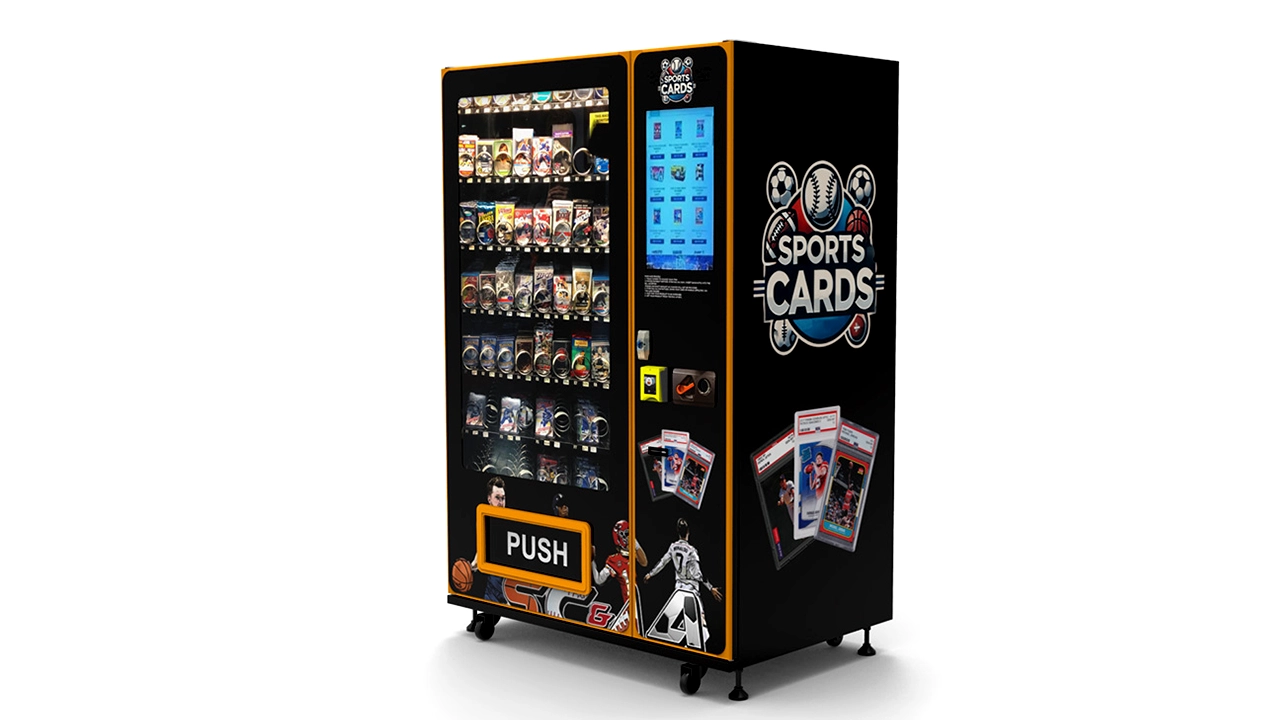
For an independent operator, the question changes from “Is this a fair retail price?” to “What selling price keeps the machine commercially sustainable without destroying customer trust?”
I’d recommend building the price from actual cost rather than copying another vending machine.
A practical pricing worksheet starts with:
- Delivered inventory cost
- Payment-processing cost
- Venue rent or revenue share
- Machine depreciation
- Connectivity and software
- Restocking labor and transportation
- Refund and failed-vend allowance
- Insurance
- Damage and shrink allowance
- Target operating contribution
Simple Operator Formula
A useful internal calculation is:
Required selling price = product cost + variable transaction costs + allocated operating costs + target contribution
The important word is “required.” The market may not accept the result. If your required selling price is far above what buyers consider reasonable, the answer may be to improve sourcing, change the venue agreement, reduce service cost, change the product mix, or choose a different location. Raising the price indefinitely is not a complete strategy.
Why Margin Percentage Alone Can Mislead
Suppose Product A sells for $5 and produces $1 of gross profit, while Product B sells for $60 and produces $9. The lower-priced product has a 20% gross margin; the higher-priced product has a 15% gross margin. If both require one transaction, Product B still produces nine times as many gross-profit dollars per sale.
But cabinet capacity complicates the picture. If one ETB uses the physical space of 15 boosters, you also need to compare profit per lane, profit per cubic volume, and turnover speed.
That is why I’d track at least:
- Revenue per SKU
- Gross profit dollars per SKU
- Units sold per day
- Days of inventory remaining
- Gross profit per lane
- Stockout frequency
- Refund or failed-vend rate
- Average transaction value
Use Several Price Tiers
A strong card machine should not force every customer into a $50 transaction. I’d build an assortment ladder:
| Tier | Example Merchandise | Purpose |
|---|---|---|
| Entry | Single boosters | Low-friction impulse purchase |
| Core | Bundles and small tins | Higher basket value without a large commitment |
| Mid | Collection boxes | Gift and promotional-card demand |
| Premium | ETBs and larger boxes | Higher transaction value |
| Specialty | Selected premium sealed products | Differentiation and destination purchases |
A customer who only has enough budget for one booster should still have a reason to use the machine. At the same time, a customer ready to purchase an ETB should not have to buy ten low-value items separately.
Avoid Pricing That Damages Repeat Business
Automated retail makes comparison easy. Customers can see the screen, compare the price with their own knowledge, and decide whether they trust the machine.
I’d rather earn a rational margin repeatedly than optimize one sale so aggressively that buyers decide the entire machine is overpriced. In collectible retail, trust is an operating asset.
How Much Does a Trading Card Vending Machine Cost?
There is another meaning behind Pokémon vending machine prices: some readers are not trying to buy an ETB from a machine; they are evaluating the cost of operating their own automated card store.
Commercial machine cost depends heavily on cabinet size, touchscreen, cargo-lane design, delivery method, payment hardware, connectivity, software, branding, and customization. Current Zhongda Smart reference prices illustrate the range across several card-focused configurations:
| Machine | Reference Machine Price | Published Configuration | I’d Consider It For |
|---|---|---|---|
| 32-Inch Smart Wall-Mounted Trading Card Vending Machine | $999 | 32-inch display, up to 120-piece capacity | Compact installations |
| 32-Inch Display Touchscreen Trading Card Vending Machine | $1,211 | Up to 28 lanes, approximately 375–535 pieces depending on configuration | High-visibility pack-focused retail |
| Trading Card Vending Machine for Pokémon TCG | $2,110 | 21.5-inch touchscreen, 60 cargo lanes, approximately 300–1200 pieces depending on product configuration | Broader card assortments and higher capacity |
| Smart Card Retail Elevator Trading Card Vending Machine | $2,632 | 60 lanes with elevator delivery | Boxed and condition-sensitive merchandise |
These are equipment reference prices, not complete project budgets. Payment modules, freight, taxes, destination requirements, branding, software options, product-lane changes, installation, and other project-specific items can change the delivered investment.
For a broader comparison, see Zhongda Smart's trading card vending machine buyer's guide.
The Cheapest Cabinet Is Not Always the Lowest-Cost Project
If a $999 machine requires excessive restocking because its capacity is too small for the location, a larger machine can produce lower operating cost per sale. Conversely, paying for a large elevator cabinet makes little sense if you plan to sell only thin, low-value products and the location cannot support the additional inventory.
If I were specifying a machine, I’d choose around the merchandise and projected sales pattern before choosing around the exterior appearance.
Zhongda Smart's trading card vending machine range shows the practical difference between compact, touchscreen, wall-mounted, high-capacity, and elevator-delivery configurations.
Choosing a Vending Machine for Pokémon TCG Products
For a vending operator, product compatibility should be decided with real package dimensions. “It sells trading cards” is too vague to engineer a reliable machine.
A thin booster pack, sleeved booster, bundle, mini tin, ETB, and premium collection can differ in:
- Width
- Height
- Depth
- Weight
- Center of gravity
- Surface friction
- Packaging stiffness
- Corner-damage sensitivity
For Thin Booster Packs
I’d prioritize lane consistency and delivery confirmation. Thin packages can slip, overlap, or sit differently from rigid cartons if the mechanism is poorly matched to the product.
For Booster Bundles
The compact box is generally easier to control mechanically than a flexible pack, but lane width and product depth still need to match the packaging.
For ETBs
I’d focus on box support, delivery height, and pickup-area dimensions. Buyers care about condition, so a machine should not turn an undamaged sealed box into a dented one during delivery.
For Mixed Inventory
Mixed inventory is where adjustable lanes and modular configuration become important. A machine filled entirely with boosters can optimize density. A machine carrying boosters, bundles, ETBs, and tins needs more flexible geometry.
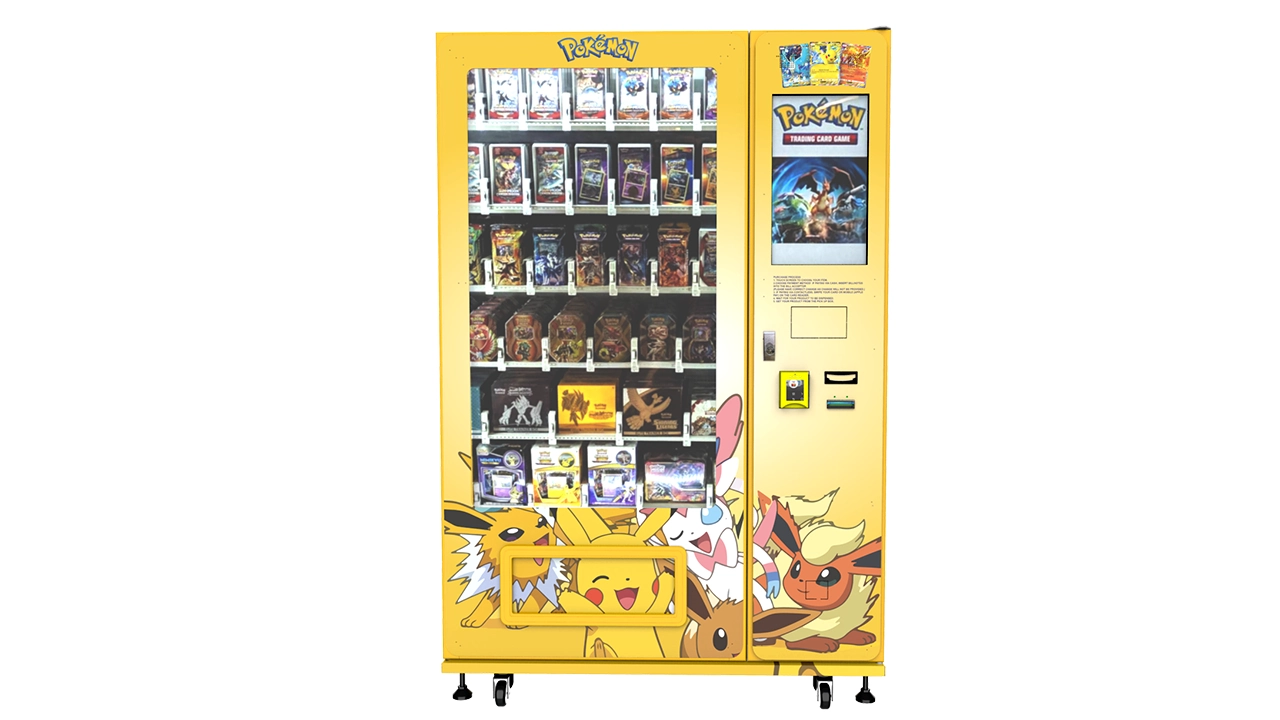
Zhongda Smart's ZD-CX-22 trading card vending machine for Pokémon TCG products publishes a standard 60-lane configuration, a 21.5-inch touchscreen, 4G/Wi-Fi connectivity, multiple payment options, and approximately 300–1200 pieces of capacity depending on the selected merchandise and layout.
If I were choosing for a large assortment, I’d rank that kind of high-capacity platform above a compact wall machine. If I were choosing for a narrow pack-only assortment in a restricted footprint, I would do the opposite.
Can Pokémon Card Vending Be Profitable?
It can be, but there is no responsible universal profit number. Profitability depends on inventory cost, selling price, sales volume, venue cost, card-processing fees, machine investment, service frequency, stock losses, and how much capital remains tied up in slow inventory.
For planning, I’d model contribution rather than simply multiplying selling price by expected unit sales.
Illustrative Monthly Example
The following figures are hypothetical and are not a forecast, guarantee, or claim about an actual route.
| Item | Illustrative Amount |
|---|---|
| Monthly sales | $4,500 |
| Inventory cost at 68% | $3,060 |
| Payment cost at 3% | $135 |
| Venue share at 10% | $450 |
| Service, connectivity and loss allowance at 3% | $135 |
| Illustrative contribution before fixed overhead and tax | $720 |
In that illustration, the contribution rate is 16% of sales. A $2,110 machine investment divided by $720 would equal about 2.9 months, but that number is deliberately incomplete. Freight, initial inventory, payment hardware, installation, insurance, financing, tax, unsold inventory, permits where applicable, and owner labor have not been included.
A more conservative planning model should therefore include the entire installed project and working capital.
Three Hypothetical Sales Scenarios
| Scenario | Monthly Revenue | Contribution Rate | Monthly Contribution | What It Means |
|---|---|---|---|---|
| Low volume | $1,500 | 15% | $225 | Machine investment recovers slowly |
| Moderate volume | $4,500 | 16% | $720 | Economics become more attractive |
| High volume | $9,000 | 17% | $1,530 | Stock depth and service efficiency become critical |
The lesson is not that one of these scenarios will occur. It is that location performance can matter more than saving a few hundred dollars on the cabinet.
Inventory Turnover Is a Major Variable
A machine filled with high-margin products that do not sell can perform worse than a machine filled with moderate-margin products that turn rapidly.
I’d monitor sell-through by SKU and reduce emotional attachment to the assortment. A product deserves a lane because customers buy it, not because the operator personally likes the expansion.
Stockouts Also Cost Money
Running out of your highest-demand bundle every weekend is not evidence of perfect inventory management. It may mean you are under-allocating capacity to the product that is producing the strongest turnover.
Remote inventory data can help the operator see which lanes need attention before making a service trip. Zhongda Smart's guide on starting a trading card vending machine business covers machine cost, inventory, location, payment, restocking, and profitability considerations in more detail.
Product Condition Matters as Much as Pokémon Vending Machine Prices
A cheap ETB is not a bargain if the delivery mechanism crushes a corner. Card buyers often treat packaging condition as part of the product, particularly when they intend to keep a box sealed.
I’d therefore evaluate a machine with the same seriousness I would evaluate its prices.
Look for Clean Product Presentation
The screen should identify the expansion and product clearly. A buyer should not have to guess whether a listing is a booster, sleeved booster, bundle, or collection.
Check the Pickup Area
The delivery compartment should be large enough for the merchandise and should not require the buyer to pull a box through an opening narrower than the product.
Gentler Delivery for Higher-Value Products
For boxed inventory, I’d choose controlled or elevator delivery where the expected product value and packaging sensitivity justify it. A long drop that is acceptable for a flexible snack bag may not be acceptable for a collectible box.
Use Delivery Detection
A commercial machine should have a way to confirm that the intended vend actually occurred. Failed vends are not only a service problem; they damage customer trust and create refund work.
Protect Inventory Behind the Door
High-value trading-card inventory makes cabinet security relevant. Door design, locks, internal structure, payment security, and installation environment should all be considered.
A good vending project protects the product before, during, and after the transaction.
Pokémon Vending Machine Prices: My Practical Buying Rules
After stripping away the excitement of a restock or a difficult-to-find product, I’d reduce the decision to the following rules:
- Know the exact product. Expansion and version come first.
- Use official current prices as a benchmark when they exist.
- For pack-focused products, calculate price per booster.
- For ETBs and collections, value the extras separately.
- Do not assume an ETB has better booster odds.
- Decide how much convenience is worth before checkout.
- Treat older or scarce products separately from current releases.
- Inspect the machine's product description carefully.
- For sealed collecting, condition matters.
- For vending operators, price from complete operating cost rather than copying another seller.
At current official reference points, $4.49 for a sleeved booster, $26.94 for a six-pack bundle, $59.99 for selected Pokémon Center ETBs, and $161.64 for a 36-pack display provide useful anchors. The exact machine screen remains the final price you are being offered.
That combination of official reference pricing, simple per-pack math, and product-specific judgment is the most reliable way I know to make Pokémon vending machine prices understandable without pretending that every release has the same value.
Sources and References
The product descriptions and price benchmarks in this guide were checked against official Pokémon sources. Prices and availability can change after publication.
- Pokémon Center Support — Pokémon Automated Retail Vending Machine FAQ
- Pokémon Center — Current Pokémon TCG Product Listings and Reference Prices
- Pokémon Support — What Types of Trading Card Game Products Are Available?
- Pokémon Support — What Can I Expect in a Pokémon Trading Card Game Booster Pack?
- Pokémon — Scarlet & Violet Trading Card Game Product and MSRP Changes
Frequently Asked Questions About Pokémon Vending Machine Prices
How much is a Pokémon booster pack from a vending machine?
A current official retail reference for selected sleeved Pokémon TCG booster packs is $4.49. The actual price displayed by a vending machine can differ depending on the expansion, inventory source, product age, and machine operator. I’d use $4.49 as a benchmark for a comparable current standard booster rather than assuming every pack from every set must cost exactly that amount.
How much is a Pokémon booster bundle?
Current Pokémon Center examples list six-pack booster bundles at $26.94. That works out to $4.49 per booster. A machine may display another price, so divide the actual bundle price by six to see the effective pack cost before deciding whether the convenience or availability premium is worthwhile.
How much does an Elite Trainer Box cost in a Pokémon vending machine?
Selected current Pokémon Center Elite Trainer Boxes are listed at $59.99, but ETB prices and contents vary by release and version. Check the exact product displayed by the machine. A standard ETB and a Pokémon Center ETB should not be assumed to contain identical items or carry identical pricing.
Are booster packs inside an ETB better than normal booster packs?
No special pull advantage should be assumed. Pokémon Support states that booster packs contained in products such as Elite Trainer Boxes, tins, and collections are the same packs sold individually and do not receive a special rate or a higher chance of producing specific cards. Buy an ETB for its complete contents, not because you expect better odds from its boosters.
Are Pokémon vending machines more expensive than normal retail?
Not necessarily. Official retail references provide a useful starting point, but actual machine prices depend on the specific product and operator. An independently operated card machine may include a convenience premium because the business must cover inventory, payment processing, venue costs, restocking, maintenance, and equipment. Compare the exact product rather than assuming all vending purchases are either cheaper or more expensive.
What is a good price per Pokémon booster pack?
For current products that have an official $4.49 booster reference, $4.49 is the clean baseline. A modest increase may be acceptable when immediate availability is valuable to you. For discontinued or scarce expansions, original retail pricing may no longer reflect replacement cost, so the expansion's current sealed availability needs to be considered separately.
Is a booster bundle better value than an ETB?
If your main goal is opening packs, I’d usually choose the booster bundle because its value is easy to measure and current $26.94 six-pack examples equal $4.49 per booster. If you want sleeves, dice, storage, promotional contents, or the complete sealed presentation of an ETB, the ETB can be the more useful purchase even when its raw price per pack is higher.
How much does a machine for selling Pokémon TCG products cost?
Commercial trading-card vending equipment varies substantially by configuration. Zhongda Smart currently publishes reference prices from about $999 for a compact wall-mounted card machine to $2,632 for a 60-lane elevator-delivery model, with other touchscreen and high-capacity configurations between those levels. Final project cost can change with payment hardware, freight, customization, software, product-lane configuration, and installation requirements.
Disclaimer
This article is an independent informational price guide for sealed trading-card products and automated retail equipment. Product prices, stock, package contents, and machine specifications can change without notice. Always rely on the price and product description shown at the point of purchase before completing a transaction. Financial examples in this article are hypothetical illustrations and are not earnings forecasts, investment advice, or guarantees of profitability.
Pokémon and related names, characters, and marks are trademarks of their respective owners. Zhongda Smart is a vending-machine manufacturer and is not affiliated with, sponsored by, endorsed by, or authorized by The Pokémon Company or its related entities. References to Pokémon TCG products describe merchandise categories that compatible vending equipment may be configured to dispense.